U-Solar Revenue to Cross Rs. 10 bn as 200 MW Projects Advance
POWER & RENEWABLE ENERGY

U-Solar Revenue to Cross Rs. 10 bn as 200 MW Projects Advance

Bengaluru-based clean energy solutions provider U-Solar is set to deliver an additional 200 MW of renewable energy assets, taking its total delivered capacity beyond 500 MW once the projects are completed. The company said its turnover has risen by more than 100 per cent, from about Rs. 4.25 bn in the previous year to more than Rs. 10 bn in the current fiscal year.

The company outlined its growth and technology strategy at IITMAA Sangam 2026 in Bengaluru, an event that brought together representatives from the government, industry and academia to discuss India’s clean energy transition. U-Solar said it is moving beyond its conventional role as an engineering, procurement and construction contractor to become an integrated renewable energy management partner.

The event was addressed by Shri Pralhad Joshi, Minister of Education, Government of India, who emphasised the importance of advanced technology, innovation and domestic manufacturing in strengthening India’s power infrastructure and supporting long-term self-reliance. U-Solar’s participation focused on the growing role of technology-led solutions in meeting industrial and commercial energy requirements.

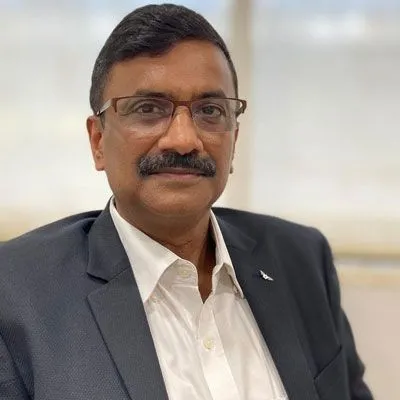
Founder and chief executive officer K. R. Harinarayan said the company is developing solutions aligned with specific customer load profiles. Its activities include building-integrated photovoltaics for data centres, large-scale floating solar facilities and off-grid island hybrid systems, supported by in-house artificial intelligence tools and battery storage technologies.

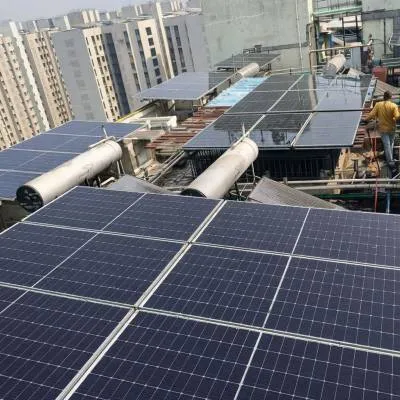
U-Solar has a more than 100-member engineering and project delivery team. Its completed work includes building-integrated photovoltaics installations for commercial hubs and data centres in Chennai and Mumbai, floating solar projects for Damodar Valley Corporation at Maithon Dam and the Bhilai Steel Plant, and a government-supported island hybrid power project across three islands north of Jaffna in Sri Lanka.

The company has an established presence in Sri Lanka and Nepal and is pursuing further expansion in the Middle East. It said its international strategy is focused on providing technology-backed decarbonisation solutions to industrial and commercial customers while broadening its renewable energy project portfolio.

Bengaluru-based clean energy solutions provider U-Solar is set to deliver an additional 200 MW of renewable energy assets, taking its total delivered capacity beyond 500 MW once the projects are completed. The company said its turnover has risen by more than 100 per cent, from about Rs. 4.25 bn in the previous year to more than Rs. 10 bn in the current fiscal year. The company outlined its growth and technology strategy at IITMAA Sangam 2026 in Bengaluru, an event that brought together representatives from the government, industry and academia to discuss India’s clean energy transition. U-Solar said it is moving beyond its conventional role as an engineering, procurement and construction contractor to become an integrated renewable energy management partner. The event was addressed by Shri Pralhad Joshi, Minister of Education, Government of India, who emphasised the importance of advanced technology, innovation and domestic manufacturing in strengthening India’s power infrastructure and supporting long-term self-reliance. U-Solar’s participation focused on the growing role of technology-led solutions in meeting industrial and commercial energy requirements. Founder and chief executive officer K. R. Harinarayan said the company is developing solutions aligned with specific customer load profiles. Its activities include building-integrated photovoltaics for data centres, large-scale floating solar facilities and off-grid island hybrid systems, supported by in-house artificial intelligence tools and battery storage technologies. U-Solar has a more than 100-member engineering and project delivery team. Its completed work includes building-integrated photovoltaics installations for commercial hubs and data centres in Chennai and Mumbai, floating solar projects for Damodar Valley Corporation at Maithon Dam and the Bhilai Steel Plant, and a government-supported island hybrid power project across three islands north of Jaffna in Sri Lanka. The company has an established presence in Sri Lanka and Nepal and is pursuing further expansion in the Middle East. It said its international strategy is focused on providing technology-backed decarbonisation solutions to industrial and commercial customers while broadening its renewable energy project portfolio.

Related Stories

Gold Stories

Next Story
Infrastructure Energy

DMRC Invites Bids for Solar-Linked BESS Power Procurement

Delhi Metro Rail Corporation (DMRC) has invited bids for renewable energy from an Inter-State Transmission System (ISTS)-connected generating plant combining a solar photovoltaic (PV) system with a co-located Battery Energy Storage System (BESS). The procurement will be conducted through competitive bidding followed by an e-reverse auction. The last date for submitting online bids is December 10, 2026, at 3 PM. DMRC will open the technical bids on December 11, 2026, at 3 PM. The opening of financial bids and the e-reverse auction will be scheduled after completion of the technical evaluation. ..

Next Story
Infrastructure Energy

Solar Growth May Slow Beyond FY28 on Awards, Grid Constraints

India’s solar capacity growth could face headwinds beyond FY28 as slower renewable energy project awards, delays in signing power agreements and transmission constraints threaten expansion, according to a report by Yes Securities. Near-term additions remain supported by a construction pipeline exceeding 150 GW and rising rooftop installations, but weaker award activity could affect capacity additions and industry volumes in FY29 and FY30. Solar capacity additions nearly doubled to 44.61 GW in FY26 from 23.83 GW in FY25. Installations remained strong in the first half of FY27, when 21 GW of s..

Next Story
Infrastructure Transport

India’s First High-Speed Rail Service to Begin in 2027

India’s first high-speed rail service will commence in 2027, with the Surat-Vapi section of the Mumbai-Ahmedabad High-Speed Rail corridor scheduled to open first, Railway Minister Ashwini Vaishnaw said. The remaining sections to Mumbai will be opened in phases. Vaishnaw said 456 km of pier work and 371 km of viaduct construction had been completed by September. About 600,000 noise barriers had been installed along a 299 km stretch, while 9,300 overhead equipment masts had been erected across a 206 km viaduct. Four mountain tunnels have been excavated, and 5 km of the 21 km Maharashtra tunnel..

Advertisement

Subscribe to Our Newsletter

Get daily newsletters around different themes from Construction world.

STAY CONNECTED

Advertisement

SPECIAL OFFER
QR Code