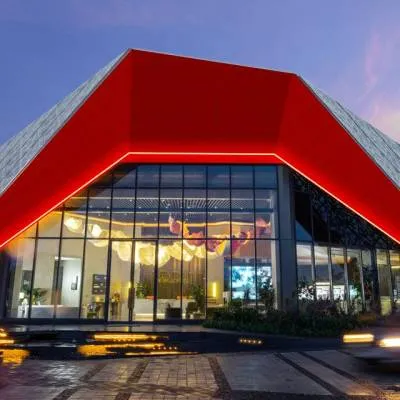
The façade of a structure is called the face of the building; however, it is so much more than just an outer skin. It is the interface between architecture, structure and environment — the first visual statement of design intent and the primary barrier protecting the structure from heat, rain, wind, pollution, and time, and plays a vital role in modern architecture today, ultimately influencing the building’s durability and aesthetics both. The façade’s role is neither superficial nor symbolic alone. In India’s diverse climatic conditions, facades today must achieve a balance between aesthetic freedom, thermal efficiency, durability, moisture protection, and low maintenance. Durable facades are not only sustainable but economically smarter, reducing repainting cycles, leakage repairs, and maintain occupant comfort. Integrated facade systems supported by advanced construction chemistry are transforming the way buildings are designed and built. The effective combination of beauty and performance is now regarded as a fundamental need in the development of sustainable and resilient infrastructure. As cities densify and climatic extremes intensify, façades are increasingly tested not just for their looks, but for performance over decades. Leading material solution providers such as Pidilite Industries are increasingly enabling such system-driven approaches by offering compatible layers from substrate preparation to final finish.Globally, the façade market is being reshaped by an unprecedented alignment of aesthetics, performance standards, and environmental accountability as durability and sustainability become non-negotiable features of modern buildings.Closer to home in India, as we are still in the ‘Verticalisation Phase’ and with tightening ESG and energy regulations, the façade and building envelope solutions segment is rapidly expanding, as urbanization and climate-responsive design take hold and the market size in India is expected to grow from an estimated current size of around USD 8-10 billion to over USD 18 billion over the next 10 years at a growth rate that is expected to be 1.5 x – 2 X faster than the global market . These figures reflect not only construction activity but a mindset shift, clients and designers are insisting on building skins that perform as beautifully as they appear. There is a clear recognition increasingly being seen that façade = identity + comfort + resale value. Durability is not an afterthought; it is designed into the system from the outset. A façade does not weather the elements by chance; it thrives through thoughtful material selection, precise detailing, and execution discipline. Just as I often remind peers and clients, ‘Know Your Construction’, akin to the banking industry’s KYC is the foundational mantra for long-lasting buildings. It demands clarity on what is being built, how, and with what. A façade’s performance hinges on its integrated system, waterproofing, insulation, surface finishes, and joint detailing working in concert. Moisture ingress, temperature cycling, and UV exposure over years can deteriorate materials that are otherwise visually compelling. Choosing solutions that protect the envelope against these stressors extends building life and reduces life-cycle costs.Beautiful façades inspire, they tell a story, they enhance the public realm. But aesthetics should never be divorced from performance. In my view, excellence lies in the art of marrying form and function.Today’s architects and designers are pushing boundaries with innovative materials, from ventilated façades that improve thermal comfort and moisture control to unitized systems that balance sleek aesthetics with improved installation efficiencies. Yet, beauty needs substance. Smart façades, including shading elements, adaptive glass, and responsive coatings are redefining what it means to be both elegant and robust. The demand for façades with integrated environmental control features is rising, reflecting a global priority for energy efficiency and occupant comfort.At Pidilite Industries, our ethos has always been rooted in solutions, not just products. Whether through advanced waterproofing, thermal insulation, green roofs, or specialised façade coatings, we aim to offer systems that perform across seasons and stand the test of time. In high heat climates like India’s, proper insulation is one of the most effective ways to reduce thermal stress on the building envelope, protect waterproofing layers, and ultimately improve durability. Strengthening this commitment to performance-led innovation, Pidilite has further elevated its façade solutions through its joint venture with Spain’s Grupo Puma, one of Europe’s largest and most advanced producers of technical and decorative mortars. Through this collaboration, Pidilite now offers globally benchmarked façade technologies engineered for Indian climatic conditions, backed by Spanish research, robust production systems, and proven application methodologies. The joint venture ensures that Indian buildings gain access to the same world class façade technologies trusted across Europe and global markets.We firmly believe that the success of contemporary facades depends on the compatibility of the system rather than any single product. Increasingly, clients’ project teams are moving towards integrated solution providers who can supply tested facade systems rather than isolated materials. Hence, through our Pidilite Professional Solutions (PPS) team our work with architects and builders starts at the design table and continues through diagnostics, training, and life-cycle support. This holistic approach ensures façades don’t just meet initial visual expectations; they sustain performance through decades of weather cycles and daily use. The art of creating durable and beautiful façades is a continuum, where design innovation, material science, and meticulous execution converge. For the industry, the challenge and opportunity lie in education, collaboration, and adoption of forward-looking standards. This means creating a collaborative environment to strengthen our systems and develop systems that are durable, energy efficient, and aesthetically pleasing.Collectively, as custodians of the built environment, our success will not only be measured by its initial appeal or attractiveness, but also by the way in which it endures over time, how well it protects and enriches the lives of the people using them, and how it will remain relevant over decades. Thus, the art of façades lies in the fact that durability and aesthetics do not have separate objectives; rather, they are opposing sides of the same coin. By combining architectural vision with system-backed solutions from reliable construction chemical partners such as Pidilite Industries, the industry can ensure that beauty is not only created but sustained.