Bengaluru Plans 40 km Tunnel Roads and 44 km Double-Decker Roads
ECONOMY & POLICY

Bengaluru Plans 40 km Tunnel Roads and 44 km Double-Decker Roads

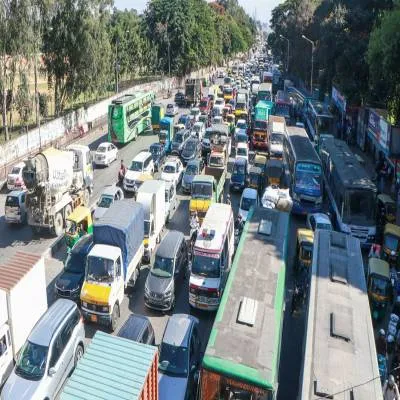
The Karnataka chief minister said the state government was investing Rs 1,500 billion (bn) solely to improve mobility infrastructure in Bengaluru. He announced the allocation at the Katalyst Connect event organised by the IT-BT Department and the Karnataka Digital Economy Mission. The minister indicated the funding formed part of a wider strategy to address chronic congestion and support economic activity. The announcement was presented as aligning mobility upgrades with the wider digital economy objectives for the region.

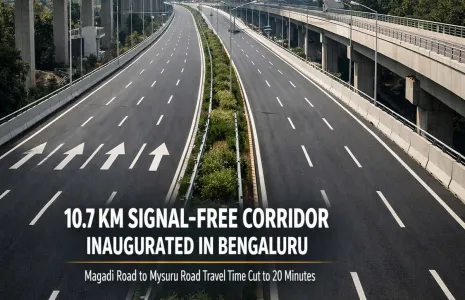
The programme includes plans to establish 40 km more of tunnel roadway and over 44 km of double-decker roadway across the city. The administration has outlined a 133-km flyover project and is constructing a 123-km Bangalore Business Corridor, with Rs 260 bn allocated to the first phase. Officials said those corridors were intended to ease traffic on arterial routes and improve freight and commuter movement. Early works were described as focusing on detailed design, utility relocation and junction improvements to integrate the new corridors.

The chief minister met more than 150 representatives from global capability centres based in the state to discuss last-mile connectivity and related concerns. He recalled that the Hebbal Tunnel Road was prioritised after he took office despite political criticism and framed it as part of a sequential approach to infrastructure delivery. Plans were also announced to expand the Metro network to 500 km by next year. The discussions addressed technical measures to improve access to business campuses and to strengthen transit interchange points for employees and suppliers.

Authorities stressed that the measures formed a package combining surface, subterranean and elevated options designed to increase capacity and reduce travel time for residents and business users. The government positioned the investments as catalysts for sustaining Bengaluru's role as an information technology and services hub. Implementation timelines and funding disbursement were described as subject to project scheduling and approvals. Officials said coordination among departments and staged procurement would shape the pace and sequencing of delivery.

The Karnataka chief minister said the state government was investing Rs 1,500 billion (bn) solely to improve mobility infrastructure in Bengaluru. He announced the allocation at the Katalyst Connect event organised by the IT-BT Department and the Karnataka Digital Economy Mission. The minister indicated the funding formed part of a wider strategy to address chronic congestion and support economic activity. The announcement was presented as aligning mobility upgrades with the wider digital economy objectives for the region. The programme includes plans to establish 40 km more of tunnel roadway and over 44 km of double-decker roadway across the city. The administration has outlined a 133-km flyover project and is constructing a 123-km Bangalore Business Corridor, with Rs 260 bn allocated to the first phase. Officials said those corridors were intended to ease traffic on arterial routes and improve freight and commuter movement. Early works were described as focusing on detailed design, utility relocation and junction improvements to integrate the new corridors. The chief minister met more than 150 representatives from global capability centres based in the state to discuss last-mile connectivity and related concerns. He recalled that the Hebbal Tunnel Road was prioritised after he took office despite political criticism and framed it as part of a sequential approach to infrastructure delivery. Plans were also announced to expand the Metro network to 500 km by next year. The discussions addressed technical measures to improve access to business campuses and to strengthen transit interchange points for employees and suppliers. Authorities stressed that the measures formed a package combining surface, subterranean and elevated options designed to increase capacity and reduce travel time for residents and business users. The government positioned the investments as catalysts for sustaining Bengaluru's role as an information technology and services hub. Implementation timelines and funding disbursement were described as subject to project scheduling and approvals. Officials said coordination among departments and staged procurement would shape the pace and sequencing of delivery.

Next Story
Infrastructure Transport

Surya Roshni delivers customised lighting for NCRTC RRTS stations

Surya Roshni has supplied customised indoor lighting solutions for 18 elevated stations on the National Capital Region Transport Corporation's (NCRTC) Rapid Rail Transit System (RRTS), strengthening its presence in India's infrastructure lighting segment.The project involved the design and deployment of lighting systems for platforms, concourses, foot overbridges (FOBs) and back-of-house (BOH) areas. According to the company, the luminaires were developed specifically to meet NCRTC's design, operational and performance requirements rather than using standard products.Surya introduced two custo..

Next Story
Real Estate

Hilton debuts Tapestry Collection brand in Vietnam

Hilton has opened NHAAN Resort & Spa Hoi An, Tapestry Collection by Hilton, marking the debut of the Tapestry Collection brand in Vietnam and expanding its lifestyle hospitality portfolio in Southeast Asia.Located along the Co Co River in Cam Thanh village, the 174-key resort provides access to Hoi An Ancient Town, Cua Dai Beach and the Cam Thanh Nipa Forest. The property has been designed by Vietnamese architect Vo Trong Nghia, incorporating biophilic architecture, locally sourced materials and riverfront landscapes.The resort offers a mix of guest rooms and suites, including family-frien..

Next Story
Building Material

Electrent expands lithium energy storage system portfolio

Electrent Energy has expanded its lithium-based energy storage portfolio with the launch of the ESS 850 and ESS 1050, targeting compact and maintenance-free power backup solutions for Indian homes.The new systems integrate a Home UPS and a LiFePO4 lithium battery into a single unit, extending the company's product range following the launch of its ESS 1350 and ESS 2500 models.Designed for apartments and smaller homes, the ESS 850 provides up to 1 hour 15 minutes of backup, while the ESS 1050 offers up to 1 hour 45 minutes on a typical 400 W household load. The systems can power essential appli..

Advertisement

Subscribe to Our Newsletter

Get daily newsletters around different themes from Construction world.

STAY CONNECTED

Advertisement

Advertisement

Advertisement