Bhashini Samudaye Onboards Over 10,000 Contributors
ECONOMY & POLICY

Bhashini Samudaye Onboards Over 10,000 Contributors

Bhashini Samudaye is a centralised digital platform that brings together individual contributors, startups, academic institutions and research organisations to support the development of a multilingual AI ecosystem. The platform facilitates access to language resources for training AI models and supports creation of datasets, domain-specific glossaries and AI models through a structured onboarding mechanism. Over 10,000 contributors have been onboarded to participate in data creation and annotation tasks that strengthen capacity and ecosystem development.

An AI-powered, real-time speech-to-text transcription and translation tool called Shrutlekh enables services across 22 Indian languages. It has been deployed in over 100 sessions at national and international platforms including the India AI Impact Summit, the World Summit on Disaster Management in Dehradun, Veer Bal Diwas in Puducherry, the AI4Agri Summit 2026, the Reserve Bank of India Hindi Seminar and the TiE Global Summit Rajasthan chapter. Shrutlekh supported multiple sessions at the World Disaster Summit and has been integrated with the TAARA device being developed by Niti Aayog. These deployments have demonstrated practical utility for conference accessibility and cross-platform interoperability.

The Bhasha Daan initiative continues to crowdsource diverse linguistic data at scale, inviting citizens, volunteers and institutions to contribute text and speech data across low-resource and underrepresented languages to build an inclusive language ecosystem. The effort has facilitated creation of large-scale, high-quality datasets, including parallel corpora, speech datasets and transliteration resources that are being used to train and improve AI models for translation, speech recognition and language technologies. Voice-first AI tools enabled by Bhashini have improved accessibility and delivery of digital services for non-literate and semi-literate populations, particularly in rural areas.

MahaVISTAAR-AI, a mobile application developed by the Department of Agriculture, Government of Maharashtra, leverages Bhashini-enabled multilingual capabilities to provide real-time advisory services to farmers. It offers personalised guidance on sowing, pest management, yield prediction and climate-resilient practices, along with updates on weather and market prices. The information was submitted by the Union Minister of State for Electronics and Information Technology, Jitin Prasada, in Rajya Sabha on 27 March 2026.

Bhashini Samudaye is a centralised digital platform that brings together individual contributors, startups, academic institutions and research organisations to support the development of a multilingual AI ecosystem. The platform facilitates access to language resources for training AI models and supports creation of datasets, domain-specific glossaries and AI models through a structured onboarding mechanism. Over 10,000 contributors have been onboarded to participate in data creation and annotation tasks that strengthen capacity and ecosystem development. An AI-powered, real-time speech-to-text transcription and translation tool called Shrutlekh enables services across 22 Indian languages. It has been deployed in over 100 sessions at national and international platforms including the India AI Impact Summit, the World Summit on Disaster Management in Dehradun, Veer Bal Diwas in Puducherry, the AI4Agri Summit 2026, the Reserve Bank of India Hindi Seminar and the TiE Global Summit Rajasthan chapter. Shrutlekh supported multiple sessions at the World Disaster Summit and has been integrated with the TAARA device being developed by Niti Aayog. These deployments have demonstrated practical utility for conference accessibility and cross-platform interoperability. The Bhasha Daan initiative continues to crowdsource diverse linguistic data at scale, inviting citizens, volunteers and institutions to contribute text and speech data across low-resource and underrepresented languages to build an inclusive language ecosystem. The effort has facilitated creation of large-scale, high-quality datasets, including parallel corpora, speech datasets and transliteration resources that are being used to train and improve AI models for translation, speech recognition and language technologies. Voice-first AI tools enabled by Bhashini have improved accessibility and delivery of digital services for non-literate and semi-literate populations, particularly in rural areas. MahaVISTAAR-AI, a mobile application developed by the Department of Agriculture, Government of Maharashtra, leverages Bhashini-enabled multilingual capabilities to provide real-time advisory services to farmers. It offers personalised guidance on sowing, pest management, yield prediction and climate-resilient practices, along with updates on weather and market prices. The information was submitted by the Union Minister of State for Electronics and Information Technology, Jitin Prasada, in Rajya Sabha on 27 March 2026.

Related Stories

Gold Stories

Next Story
Infrastructure Urban

KONE Opens India's First Digital Experience Centre in Pune

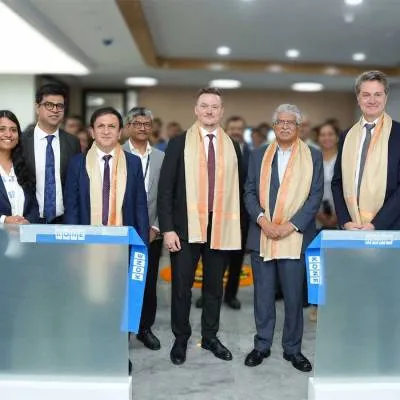
KONE, a global elevator and escalator manufacturer, has inaugurated its first Digital Experience Centre (DEC) in India, located in Pune. The facility aims to showcase how artificial intelligence (AI), connectivity and data-driven technologies can enhance customer experiences and improve building operations.The centre was inaugurated by Jussi Herlin, Executive Vice Chair, KONE Corporation; Philippe Delorme, President and CEO, KONE; and Nandan Nilekani, Co-founder and Chairman of the Board, Infosys.Designed as an interactive customer environment, the facility demonstrates digital solutions cover..

Next Story
Infrastructure Urban

CII GreenCo Launches Circularity Guidelines for Indian Industry

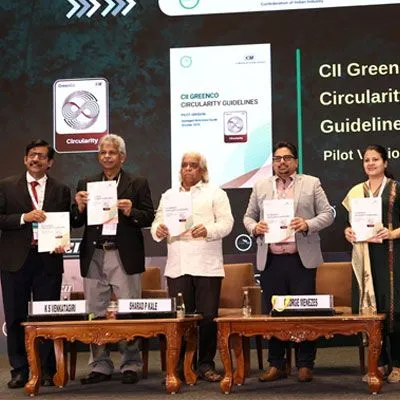
The Confederation of Indian Industry (CII) GreenCo Council has launched the CII GreenCo Circularity Guidelines – Pilot Version at the 17th CII GreenCo Waste & Resource Management Summit 2026 in Chennai. The initiative aims to strengthen resource efficiency, waste reduction and circular economy practices across Indian manufacturing and process industries.The guidelines introduce a structured framework with circularity indices covering raw materials, consumables, packaging and other resource inputs. These indicators will help industries assess existing practices, identify opportunities to ..

Next Story
Infrastructure Energy

Global Electronics Association Launches IPC-1783-CO2E Standard

The Global Electronics Association has introduced IPC-1783-CO2E, a new international standard aimed at improving consistency, transparency and comparability in product carbon footprint reporting across the electronics manufacturing industry.The standard, titled International Standard for Data Collection and Reporting of CO2 Equivalent (CO2e) Emissions for the Electronics Manufacturing Supply Chain, provides industry-specific guidance for collecting, estimating and reporting carbon emissions data.With increasing regulatory requirements and customer expectations, electronics manufacturers face c..

Advertisement

Subscribe to Our Newsletter

Get daily newsletters around different themes from Construction world.

STAY CONNECTED

Advertisement

SPECIAL OFFER
QR Code