




+
Bihar Plans 126-km Ganga Corridor at Rs 700 bn
ECONOMY & POLICY

Bihar Plans 126-km Ganga Corridor at Rs 700 bn

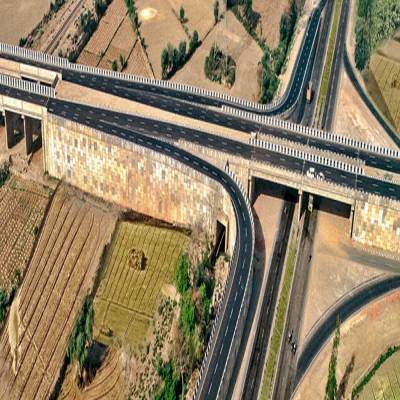
Bihar plans to extend its J P Ganga Path into a 126-km corridor along the Ganga at an estimated cost of Rs 700 billion (bn). The chief minister announced that the corridor will run from Koilwar on the Sone River and form part of a larger riverside development strategy. The project was presented as a means to accelerate infrastructure and urban expansion across the state.

The government said the expansion is intended to attract private investment and generate employment through linked industrial and connectivity projects. Funding was outlined as a mix of government and private resources, with the state expected to provide Rs 200 bn and private entities expected to contribute about Rs 500 bn. Officials described the financing plan as indicative while underlining a commitment to convert agreements into actionable projects.

The existing 21-km J P Ganga Path was reported to have been built at a cost of around Rs 60 bn and was initiated by the previous chief minister in 2013, with completion recorded in 2025. The present chief minister acknowledged the earlier government's role in starting the scheme and said the state had developed the initial stretch using its own funds. He also drew a parallel with other coastal promenades to describe the intended urban transformation.

The announcement arrived amid questions from opposition figures about the financial capacity of a firm that signed a Rs 225 bn memorandum of understanding for a nuclear energy project. Critics pointed to the company's incorporation in February 2026 and to its authorised capital of Rs one million (mn) and paid-up capital of Rs zero point one million (mn) as items requiring scrutiny. The government said it would prioritise converting investment proposals into implemented projects to support economic expansion.

Bihar plans to extend its J P Ganga Path into a 126-km corridor along the Ganga at an estimated cost of Rs 700 billion (bn). The chief minister announced that the corridor will run from Koilwar on the Sone River and form part of a larger riverside development strategy. The project was presented as a means to accelerate infrastructure and urban expansion across the state. The government said the expansion is intended to attract private investment and generate employment through linked industrial and connectivity projects. Funding was outlined as a mix of government and private resources, with the state expected to provide Rs 200 bn and private entities expected to contribute about Rs 500 bn. Officials described the financing plan as indicative while underlining a commitment to convert agreements into actionable projects. The existing 21-km J P Ganga Path was reported to have been built at a cost of around Rs 60 bn and was initiated by the previous chief minister in 2013, with completion recorded in 2025. The present chief minister acknowledged the earlier government's role in starting the scheme and said the state had developed the initial stretch using its own funds. He also drew a parallel with other coastal promenades to describe the intended urban transformation. The announcement arrived amid questions from opposition figures about the financial capacity of a firm that signed a Rs 225 bn memorandum of understanding for a nuclear energy project. Critics pointed to the company's incorporation in February 2026 and to its authorised capital of Rs one million (mn) and paid-up capital of Rs zero point one million (mn) as items requiring scrutiny. The government said it would prioritise converting investment proposals into implemented projects to support economic expansion.

Related Stories

Gold Stories

Next Story
Real Estate

BMC OC Amnesty Scheme Requires Key Approvals from Mumbai Societies

The Brihanmumbai Municipal Corporation (BMC) has clarified that housing societies applying under its Occupation Certificate (OC) amnesty scheme must possess key approvals linked to the original construction. The requirements include a valid Intimation of Disapproval (IOD), an approved building plan and a Commencement Certificate (CC), along with a No Objection Certificate (NOC) from the developer or original construction applicant. The Standard Operating Procedure (SOP) makes clear that the absence of an OC alone will not qualify a building for relief. Societies must establish that their build..

Next Story
Real Estate

Gurugram Emerges as Luxury Senior Living Hub

Gurugram is emerging as a potential hub for luxury senior living, supported by available land, healthcare infrastructure, connectivity and a concentration of affluent professionals, high-net-worth individuals and non-resident Indians. These factors could give the city an advantage over land-constrained metros such as Mumbai. A report by the Association of Senior Living India (ASLI) and JLL estimates that India’s organised senior living market could represent a $10.1 bn opportunity by 2030. The sector had about 25,050 organised units as of June 2026, while penetration stood at only 1.5 per ce..

Next Story
Real Estate

Corrosion Costs India’s Infrastructure Rs. 142 bn Annually

Corrosion costs India an estimated Rs. 1.42 tn annually, equivalent to 4.3 per cent of gross domestic product, according to a report by the Confederation of Indian Industry and the National Research Institute. Infrastructure accounts for Rs. 142 bn of the annual burden, making it the sector with the largest absolute cost among those examined. The report, presented at the CII Annual Infrastructure Summit 2026, said the infrastructure-sector cost equals about 2.9 per cent of the sector’s gross domestic product. It estimated that effective measures could generate maximum savings of Rs. 495.8 bn..

Advertisement

Subscribe to Our Newsletter

Get daily newsletters around different themes from Construction world.

STAY CONNECTED

Advertisement

SPECIAL OFFER
QR Code