Centre Expands Aviation Relief With Rs 100 Billion ATF Fund
ECONOMY & POLICY

Centre Expands Aviation Relief With Rs 100 Billion ATF Fund

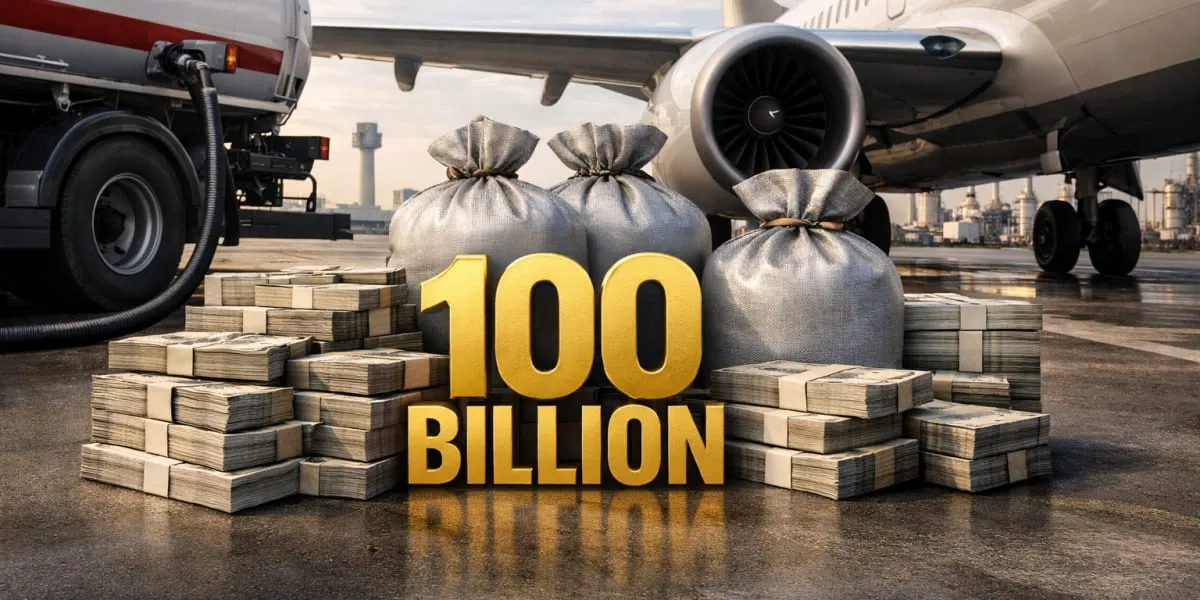
The Union Cabinet approved a Rs 100 billion (Rs 100 bn) aviation turbine fuel price stabilisation fund to support airlines and oil marketing companies. The budgetary support will be provided as an interest-free advance to oil marketing companies to enable supply of aviation turbine fuel at a benchmark price for domestic and international operations.

The Rs 100 bn fund will be administered through a tripartite arrangement among the ministries of civil aviation and petroleum and fuel retailers. The mechanism will compensate retailers whenever import parity prices exceed the benchmark and relief will be available to willing scheduled carriers, while a clawback provision will recover gains from any moderation in international fuel prices and return them to the Consolidated Fund of India.

The intervention follows an earlier announcement of Rs 50 billion of credit support for airlines under the Emergency Credit Line Guarantee Scheme 5.0 and is intended to ease liquidity strains. International aviation turbine fuel prices rose from Rs 60.50 per litre in March 2026 to Rs 142 per litre in May 2026, substantially increasing operating costs. Closure of Pakistan airspace has forced longer routings to Europe, North America and Central Asia, further raising costs.

The ministry of civil aviation said aviation turbine fuel accounts for 40 per cent of airline operating costs and can rise to 60 per cent during extreme volatility. Oil marketing companies are estimated to be losing about Rs 30 per litre, which translates into an under-recovery of Rs 930 million per day at current consumption levels. Credit rating agency Icra described the pressure as severe and saw the measures as intended to stem immediate cash flow strains.

The arrangement will operate for 36 months subject to annual review or until the full support amount is recovered, and implementation details will be finalised by the participating ministries and retailers. The government said the scheme is expected to moderate fare volatility, support connectivity and preserve employment across airlines, airports, maintenance and repair organisations, tourism and logistics.

The Union Cabinet approved a Rs 100 billion (Rs 100 bn) aviation turbine fuel price stabilisation fund to support airlines and oil marketing companies. The budgetary support will be provided as an interest-free advance to oil marketing companies to enable supply of aviation turbine fuel at a benchmark price for domestic and international operations. The Rs 100 bn fund will be administered through a tripartite arrangement among the ministries of civil aviation and petroleum and fuel retailers. The mechanism will compensate retailers whenever import parity prices exceed the benchmark and relief will be available to willing scheduled carriers, while a clawback provision will recover gains from any moderation in international fuel prices and return them to the Consolidated Fund of India. The intervention follows an earlier announcement of Rs 50 billion of credit support for airlines under the Emergency Credit Line Guarantee Scheme 5.0 and is intended to ease liquidity strains. International aviation turbine fuel prices rose from Rs 60.50 per litre in March 2026 to Rs 142 per litre in May 2026, substantially increasing operating costs. Closure of Pakistan airspace has forced longer routings to Europe, North America and Central Asia, further raising costs. The ministry of civil aviation said aviation turbine fuel accounts for 40 per cent of airline operating costs and can rise to 60 per cent during extreme volatility. Oil marketing companies are estimated to be losing about Rs 30 per litre, which translates into an under-recovery of Rs 930 million per day at current consumption levels. Credit rating agency Icra described the pressure as severe and saw the measures as intended to stem immediate cash flow strains. The arrangement will operate for 36 months subject to annual review or until the full support amount is recovered, and implementation details will be finalised by the participating ministries and retailers. The government said the scheme is expected to moderate fare volatility, support connectivity and preserve employment across airlines, airports, maintenance and repair organisations, tourism and logistics.

Related Stories

Gold Stories

Next Story
Infrastructure Urban

KONE Opens India's First Digital Experience Centre in Pune

KONE, a global elevator and escalator manufacturer, has inaugurated its first Digital Experience Centre (DEC) in India, located in Pune. The facility aims to showcase how artificial intelligence (AI), connectivity and data-driven technologies can enhance customer experiences and improve building operations.The centre was inaugurated by Jussi Herlin, Executive Vice Chair, KONE Corporation; Philippe Delorme, President and CEO, KONE; and Nandan Nilekani, Co-founder and Chairman of the Board, Infosys.Designed as an interactive customer environment, the facility demonstrates digital solutions cover..

Next Story
Infrastructure Urban

CII GreenCo Launches Circularity Guidelines for Indian Industry

The Confederation of Indian Industry (CII) GreenCo Council has launched the CII GreenCo Circularity Guidelines – Pilot Version at the 17th CII GreenCo Waste & Resource Management Summit 2026 in Chennai. The initiative aims to strengthen resource efficiency, waste reduction and circular economy practices across Indian manufacturing and process industries.The guidelines introduce a structured framework with circularity indices covering raw materials, consumables, packaging and other resource inputs. These indicators will help industries assess existing practices, identify opportunities to ..

Next Story
Infrastructure Energy

Global Electronics Association Launches IPC-1783-CO2E Standard

The Global Electronics Association has introduced IPC-1783-CO2E, a new international standard aimed at improving consistency, transparency and comparability in product carbon footprint reporting across the electronics manufacturing industry.The standard, titled International Standard for Data Collection and Reporting of CO2 Equivalent (CO2e) Emissions for the Electronics Manufacturing Supply Chain, provides industry-specific guidance for collecting, estimating and reporting carbon emissions data.With increasing regulatory requirements and customer expectations, electronics manufacturers face c..

Advertisement

Subscribe to Our Newsletter

Get daily newsletters around different themes from Construction world.

STAY CONNECTED

Advertisement

SPECIAL OFFER
QR Code