
+
DRDO Qualifies Gaganyaan Drogue Parachute
ECONOMY & POLICY

DRDO Qualifies Gaganyaan Drogue Parachute

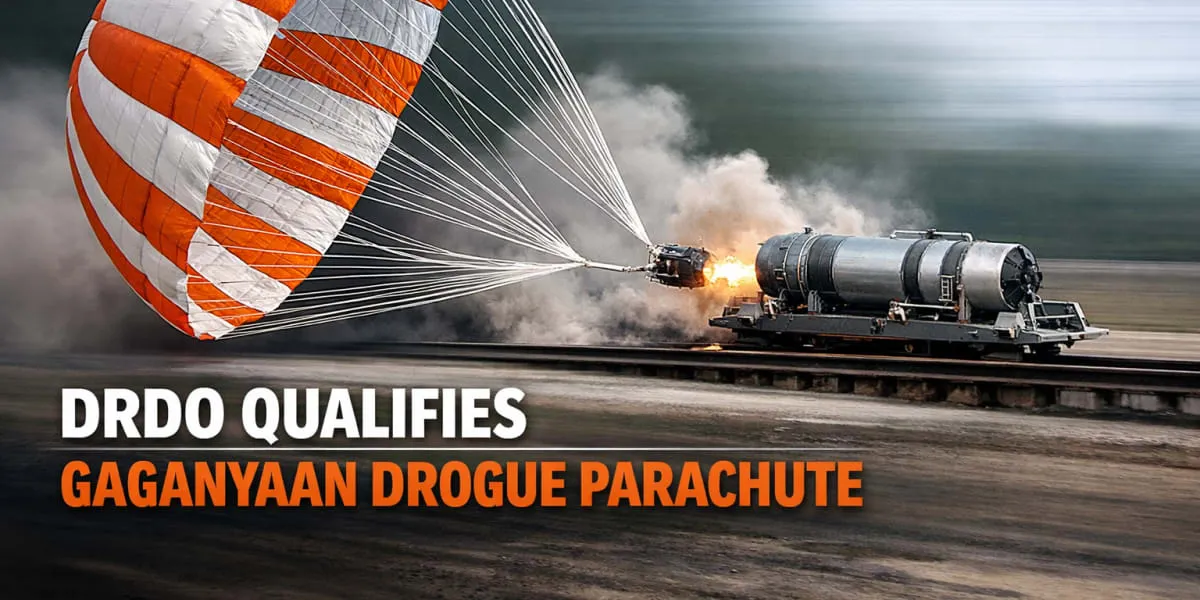
India's human spaceflight programme has reached a significant milestone after the Defence Research and Development Organisation (DRDO) conducted a successful qualification level load test of the drogue parachute for the Gaganyaan programme at the Rail Track Rocket Sled (RTRS) facility of the Terminal Ballistics Research Laboratory (TBRL) in Chandigarh. The RTRS is a specialised dynamic test facility used for high speed aerodynamic and ballistic evaluations. The qualification level load test simulated loads higher than maximum flight loads to demonstrate additional design safety margins.

The trial on 18 February 2026 brought together teams from the Vikram Sarabhai Space Centre (VSSC), the Indian Space Research Organisation (ISRO), the Aerial Delivery Research and Development Establishment (ADRDE) of DRDO and TBRL technical staff. Engineers assessed the performance of high strength ribbon parachute designs under dynamic conditions to validate strength, deployment characteristics and resilience under qualification stresses. The outcome underlined the ability to design and manufacture parachutes meeting stringent safety requirements for crewed missions.

DRDO officials credited TBRL for providing advanced test facilities, instrumentation and technical expertise that supported the validation effort, emphasising the laboratory's contributions to space and defence programmes. The Ministry of Defence described the test as a key step towards enabling a reliable recovery system for the crew module and as advancing broader goals of self-reliance in critical technologies. Senior leaders from the Department of Defence R and D acknowledged the collaborative effort across agencies and industry partners that enabled the test.

The successful qualification level load test is expected to inform subsequent design refinements and certification activities for the Gaganyaan mission and to strengthen domestic capabilities in parachute systems. Teams will integrate lessons from instrumentation and data analysis into further tests and manufacturing processes for flight hardware. The development is presented as reinforcing the vision of Atmanirbhar Bharat in high technology sectors.

India's human spaceflight programme has reached a significant milestone after the Defence Research and Development Organisation (DRDO) conducted a successful qualification level load test of the drogue parachute for the Gaganyaan programme at the Rail Track Rocket Sled (RTRS) facility of the Terminal Ballistics Research Laboratory (TBRL) in Chandigarh. The RTRS is a specialised dynamic test facility used for high speed aerodynamic and ballistic evaluations. The qualification level load test simulated loads higher than maximum flight loads to demonstrate additional design safety margins. The trial on 18 February 2026 brought together teams from the Vikram Sarabhai Space Centre (VSSC), the Indian Space Research Organisation (ISRO), the Aerial Delivery Research and Development Establishment (ADRDE) of DRDO and TBRL technical staff. Engineers assessed the performance of high strength ribbon parachute designs under dynamic conditions to validate strength, deployment characteristics and resilience under qualification stresses. The outcome underlined the ability to design and manufacture parachutes meeting stringent safety requirements for crewed missions. DRDO officials credited TBRL for providing advanced test facilities, instrumentation and technical expertise that supported the validation effort, emphasising the laboratory's contributions to space and defence programmes. The Ministry of Defence described the test as a key step towards enabling a reliable recovery system for the crew module and as advancing broader goals of self-reliance in critical technologies. Senior leaders from the Department of Defence R and D acknowledged the collaborative effort across agencies and industry partners that enabled the test. The successful qualification level load test is expected to inform subsequent design refinements and certification activities for the Gaganyaan mission and to strengthen domestic capabilities in parachute systems. Teams will integrate lessons from instrumentation and data analysis into further tests and manufacturing processes for flight hardware. The development is presented as reinforcing the vision of Atmanirbhar Bharat in high technology sectors.

Next Story
Equipment

Kabelschlepp India Installs Robotic VMC in Bengaluru

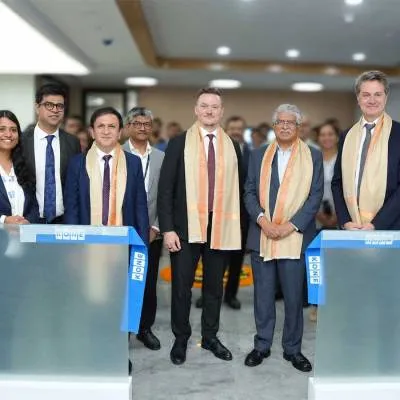
Kabelschlepp India, part of the Tsubaki Group, has installed a state-of-the-art Vertical Machining Center (VMC) integrated with robotic automation at its Bengaluru facility. The inauguration was held in the presence of Henning Preis, President & CEO, Kabelschlepp Group, Jörg Schulz, Vice President – Production, and Srinivas P. Kamisetty, Managing Director, Kabelschlepp India.The high-precision CNC VMC is designed for advanced milling, drilling, tapping and multi-axis machining. Equipped with a vertical spindle orientation, automatic tool changer and intelligent CNC control system, it en..

Next Story
Infrastructure Transport

Highway Delivery Reset!

Project delays and inefficiencies continue to bedevil the progress of India’s National Highways network. A multi-pronged reform agenda is needed to inject greater transparency and accountability at every stage – from planning and procurement to execution, maintenance and oversight. This article offers key recommendations and reform strategies that government stakeholders – from the Ministry of Road Transport & Highways (MoRTH) and the National Highways Authority of India (NHAI) to state agencies and oversight bodies – should pursue to put highway development on a better track.Decen..

Next Story
Infrastructure Transport

MSIDC Executes ₹37,000 Crore Road Programme

With Rs 37,000 crore worth of road projects under execution across Maharashtra, Maharashtra State Infrastructure Development Corporation (MSIDC) is driving one of the state’s largest infrastructure programmes. Dr Brijesh Dixit, Managing Director, discusses the institutional reforms, execution frameworks, financing strategies and technology adoption enabling timely, high-quality delivery, in conversation with PRATAP PADODE, Editor-in-Chief, CW.With over Rs 37,000 crore worth of road projects underway across districts – many under tight timelines – what institutional and executio..

Advertisement

Subscribe to Our Newsletter

Get daily newsletters around different themes from Construction world.

STAY CONNECTED

Advertisement

Advertisement

Advertisement

Open In App