First Instalment Released For Court Infrastructure Scheme
ECONOMY & POLICY

First Instalment Released For Court Infrastructure Scheme

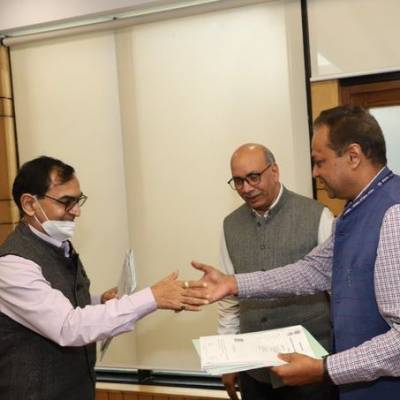
The Union Minister of State for Law and Justice Arjun Ram Meghwal issued the first instalment of a mother sanction of Rs 4,015.0 million (mn) for fiscal year 2026-27 through the PFMS system to States and Union Territories under the Centrally Sponsored Scheme for Development of Infrastructure Facilities for District and Subordinate Courts. The release was undertaken at Kartavya Bhawan-2, New Delhi, with High Court and State and UT representatives joining by video.

He said the scheme aimed to strengthen court infrastructure to promote ease of justice and a citizen centric approach. He informed the High Courts and State and UT governments that the present tenure had a sunset date of 31 March 2026 and that an extension for a further period of five years from fiscal year 2026-27 to 2030-31 was under process. He added that a waiting hall for litigants was proposed and that the scheme had been temporarily extended to 30 September 2026 by the Ministry of Finance.

The Chief Justice of India constituted a Judicial Infrastructure Advisory Committee on 12 May 2026 under the chairmanship of Justice Aravind Kumar to coordinate infrastructure development. The Secretary of the Department of Justice recalled efforts since 1993-94 to modernise district and subordinate court infrastructure. A video presentation outlined that Rs 128,447.2 mn has been released since inception with Rs 94,004.1 mn, or 73.18 per cent, released during the last 12 years in a prescribed Central:State sharing pattern.

The funding supported construction of 6,345 court halls and 4,023 residential units up to 31 March 2026, with a further 3,161 court halls and 3,245 residential units under construction. Three action research reports under the non scheme for action research and studies on judicial reforms were released and financial assistance of up to Rs 2.5 mn is available to support relevant research. Three e books on customary laws of Hrangkhol, Biate and Hajong communities from the north east were released in collaboration with the Law Research Institute of the Gauhati High Court to preserve indigenous legal traditions and widen public access to region specific knowledge.

The Union Minister of State for Law and Justice Arjun Ram Meghwal issued the first instalment of a mother sanction of Rs 4,015.0 million (mn) for fiscal year 2026-27 through the PFMS system to States and Union Territories under the Centrally Sponsored Scheme for Development of Infrastructure Facilities for District and Subordinate Courts. The release was undertaken at Kartavya Bhawan-2, New Delhi, with High Court and State and UT representatives joining by video. He said the scheme aimed to strengthen court infrastructure to promote ease of justice and a citizen centric approach. He informed the High Courts and State and UT governments that the present tenure had a sunset date of 31 March 2026 and that an extension for a further period of five years from fiscal year 2026-27 to 2030-31 was under process. He added that a waiting hall for litigants was proposed and that the scheme had been temporarily extended to 30 September 2026 by the Ministry of Finance. The Chief Justice of India constituted a Judicial Infrastructure Advisory Committee on 12 May 2026 under the chairmanship of Justice Aravind Kumar to coordinate infrastructure development. The Secretary of the Department of Justice recalled efforts since 1993-94 to modernise district and subordinate court infrastructure. A video presentation outlined that Rs 128,447.2 mn has been released since inception with Rs 94,004.1 mn, or 73.18 per cent, released during the last 12 years in a prescribed Central:State sharing pattern. The funding supported construction of 6,345 court halls and 4,023 residential units up to 31 March 2026, with a further 3,161 court halls and 3,245 residential units under construction. Three action research reports under the non scheme for action research and studies on judicial reforms were released and financial assistance of up to Rs 2.5 mn is available to support relevant research. Three e books on customary laws of Hrangkhol, Biate and Hajong communities from the north east were released in collaboration with the Law Research Institute of the Gauhati High Court to preserve indigenous legal traditions and widen public access to region specific knowledge.

Related Stories

Gold Stories

Next Story
Infrastructure Urban

KONE Opens India's First Digital Experience Centre in Pune

KONE, a global elevator and escalator manufacturer, has inaugurated its first Digital Experience Centre (DEC) in India, located in Pune. The facility aims to showcase how artificial intelligence (AI), connectivity and data-driven technologies can enhance customer experiences and improve building operations.The centre was inaugurated by Jussi Herlin, Executive Vice Chair, KONE Corporation; Philippe Delorme, President and CEO, KONE; and Nandan Nilekani, Co-founder and Chairman of the Board, Infosys.Designed as an interactive customer environment, the facility demonstrates digital solutions cover..

Next Story
Infrastructure Urban

CII GreenCo Launches Circularity Guidelines for Indian Industry

The Confederation of Indian Industry (CII) GreenCo Council has launched the CII GreenCo Circularity Guidelines – Pilot Version at the 17th CII GreenCo Waste & Resource Management Summit 2026 in Chennai. The initiative aims to strengthen resource efficiency, waste reduction and circular economy practices across Indian manufacturing and process industries.The guidelines introduce a structured framework with circularity indices covering raw materials, consumables, packaging and other resource inputs. These indicators will help industries assess existing practices, identify opportunities to ..

Next Story
Infrastructure Energy

Global Electronics Association Launches IPC-1783-CO2E Standard

The Global Electronics Association has introduced IPC-1783-CO2E, a new international standard aimed at improving consistency, transparency and comparability in product carbon footprint reporting across the electronics manufacturing industry.The standard, titled International Standard for Data Collection and Reporting of CO2 Equivalent (CO2e) Emissions for the Electronics Manufacturing Supply Chain, provides industry-specific guidance for collecting, estimating and reporting carbon emissions data.With increasing regulatory requirements and customer expectations, electronics manufacturers face c..

Advertisement

Subscribe to Our Newsletter

Get daily newsletters around different themes from Construction world.

STAY CONNECTED

Advertisement

SPECIAL OFFER
QR Code