+
Hindustan Zinc, JNCASR Advance Zinc-Ion Batteries for Grid Storage
ECONOMY & POLICY

Hindustan Zinc, JNCASR Advance Zinc-Ion Batteries for Grid Storage

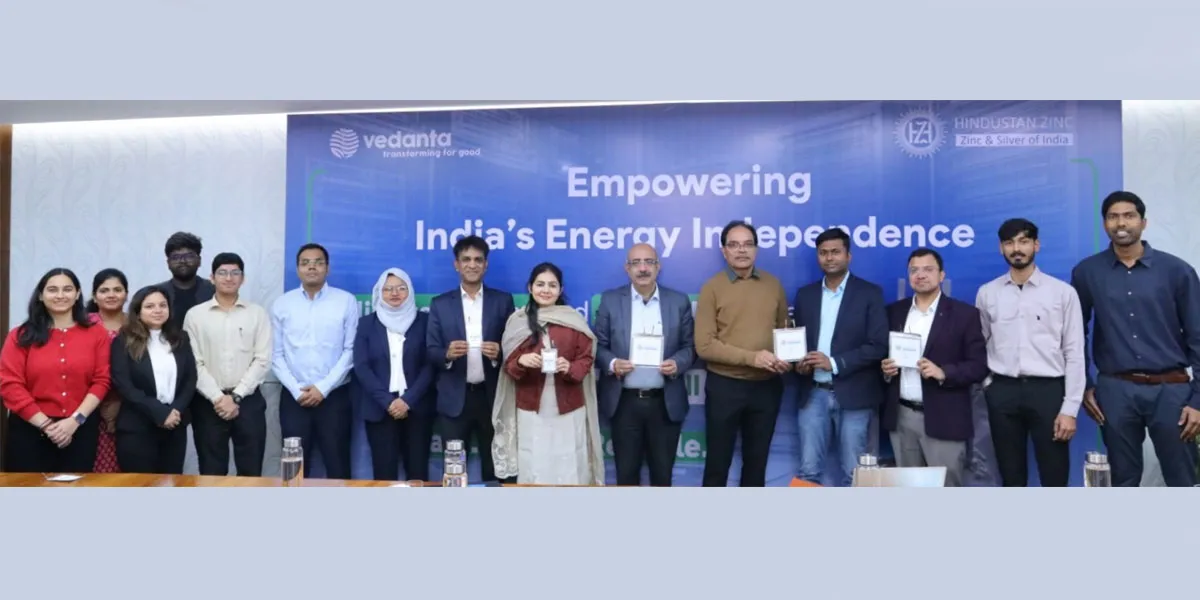
Hindustan Zinc, the world’s largest integrated zinc producer and among the top five silver producers globally, has partnered with the Jawaharlal Nehru Centre for Advanced Scientific Research (JNCASR) to advance zinc-ion battery technology for large-scale renewable energy storage. The collaboration has resulted in the development of stable and reliable zinc-ion battery pouch cell prototypes, marking a key milestone in India’s indigenous energy storage research.

Zinc-ion batteries are gaining traction as a promising alternative for stationary energy storage, supported by zinc’s abundance, low cost and widespread availability. While challenges remain around improving cycle life and energy density through electrode and electrolyte optimisation, the Hindustan Zinc–JNCASR partnership is addressing these gaps by developing low-cost electrolyte formulations and robust battery prototypes designed for grid-scale applications.

Under the collaboration, JNCASR researchers, with support from Hindustan Zinc, have formulated new electrolytes that enhance battery stability and enable longer cycle life. The zinc-ion pouch cell prototypes have been tested under realistic operating conditions, including solar energy capture and discharge profiles, demonstrating their suitability for renewable energy integration.

Commenting on the development, Arun Misra, CEO and Whole Time Director, Hindustan Zinc, said, “Zinc-ion battery technology represents an important opportunity to leverage India’s abundant zinc resources for the energy transition. Our partnership with the Jawaharlal Nehru Centre for Advanced Scientific Research reflects our commitment to enabling safe, cost-effective, and scalable energy storage solutions that can support the growing integration of renewable energy.”

Although zinc-ion batteries currently lag lithium-ion systems in performance metrics, they offer significant advantages such as enhanced safety, lower material costs and non-flammable aqueous electrolytes, making them well-suited for long-duration and large-scale deployments.

Dr Prem Senguttuvan, Associate Professor, Jawaharlal Nehru Centre for Advanced Scientific Research, said: “Zinc batteries hold immense promise for sustainable and secure energy storage. This partnership with Hindustan Zinc underscores JNCASR’s commitment to impactful industry–academia collaborations. It will strengthen indigenous research capabilities and contribute to building reliable, India-centric solutions for the clean energy transition.”

Through this initiative, Hindustan Zinc continues to strengthen zinc’s role across sectors including renewable energy, battery storage and mobility, while supporting India’s transition to a safer, greener and more self-reliant energy ecosystem.

Hindustan Zinc, the world’s largest integrated zinc producer and among the top five silver producers globally, has partnered with the Jawaharlal Nehru Centre for Advanced Scientific Research (JNCASR) to advance zinc-ion battery technology for large-scale renewable energy storage. The collaboration has resulted in the development of stable and reliable zinc-ion battery pouch cell prototypes, marking a key milestone in India’s indigenous energy storage research.Zinc-ion batteries are gaining traction as a promising alternative for stationary energy storage, supported by zinc’s abundance, low cost and widespread availability. While challenges remain around improving cycle life and energy density through electrode and electrolyte optimisation, the Hindustan Zinc–JNCASR partnership is addressing these gaps by developing low-cost electrolyte formulations and robust battery prototypes designed for grid-scale applications.Under the collaboration, JNCASR researchers, with support from Hindustan Zinc, have formulated new electrolytes that enhance battery stability and enable longer cycle life. The zinc-ion pouch cell prototypes have been tested under realistic operating conditions, including solar energy capture and discharge profiles, demonstrating their suitability for renewable energy integration.Commenting on the development, Arun Misra, CEO and Whole Time Director, Hindustan Zinc, said, “Zinc-ion battery technology represents an important opportunity to leverage India’s abundant zinc resources for the energy transition. Our partnership with the Jawaharlal Nehru Centre for Advanced Scientific Research reflects our commitment to enabling safe, cost-effective, and scalable energy storage solutions that can support the growing integration of renewable energy.”Although zinc-ion batteries currently lag lithium-ion systems in performance metrics, they offer significant advantages such as enhanced safety, lower material costs and non-flammable aqueous electrolytes, making them well-suited for long-duration and large-scale deployments.Dr Prem Senguttuvan, Associate Professor, Jawaharlal Nehru Centre for Advanced Scientific Research, said: “Zinc batteries hold immense promise for sustainable and secure energy storage. This partnership with Hindustan Zinc underscores JNCASR’s commitment to impactful industry–academia collaborations. It will strengthen indigenous research capabilities and contribute to building reliable, India-centric solutions for the clean energy transition.”Through this initiative, Hindustan Zinc continues to strengthen zinc’s role across sectors including renewable energy, battery storage and mobility, while supporting India’s transition to a safer, greener and more self-reliant energy ecosystem.

Next Story
Infrastructure Urban

Taural India Commissions Second Aluminium Casting Plant in Maharashtra

Taural India recently commissioned its second aluminium sand casting manufacturing facility in India at Supa, Maharashtra, marking a major expansion after its first plant in Pune. The 30-acre facility was inaugurated by the Honourable Chief Minister of Maharashtra, Shri Devendra Fadnavis, and represents a significant addition to the state’s advanced manufacturing ecosystem.Designed to meet global engineering and sustainability benchmarks, the Supa plant integrates automation, digital process controls and advanced quality systems. It will manufacture complex, high-tolerance aluminium componen..

Next Story
Real Estate

Mumbai Sees 14-Year High January Stamp Duty Collection

Mumbai city, under the Brihanmumbai Municipal Corporation (BMC) jurisdiction, recorded 11,219 property registrations in January 2026, generating over Rs 10.12 billion in stamp duty revenue for the Maharashtra government. This marked the highest January revenue collection in the past 14 years, despite an eight per cent year-on-year decline in registration volumes compared to January 2025.Stamp duty collections rose two per cent year-on-year, indicating a growing share of higher-value transactions in the city’s housing market. Residential properties continued to dominate activity, accounting f..

Next Story
Infrastructure Urban

RSPL Group’s SOKA Doubles Soda Ash Capacity to 1 MTPA in Gujarat

RSPL Group, one of India’s leading FMCG conglomerates, has achieved a major milestone in its chemicals business with its soda ash manufacturing arm, SOKA, securing environmental clearance to double production capacity at its Gujarat coastal plant. With this approval, SOKA will scale up soda ash manufacturing from 500,000 tonnes per annum to one million tonnes per annum, positioning itself among the country’s largest soda ash producers.As part of its phased expansion strategy, SOKA is already implementing plans to raise capacity to 7,50,000 tonnes per annum over the next two years by adding..

Advertisement

Subscribe to Our Newsletter

Get daily newsletters around different themes from Construction world.

STAY CONNECTED

Advertisement

Advertisement

Advertisement

Open In App