India Delivers First High-Speed Ferry To Maldives
ECONOMY & POLICY

India Delivers First High-Speed Ferry To Maldives

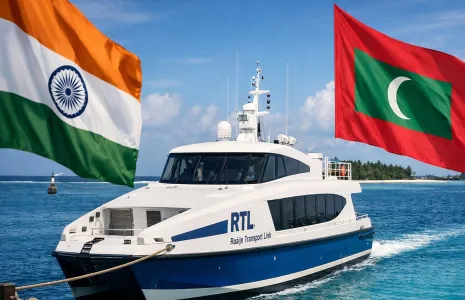
India has delivered the first of 12 high-speed ferries to the Maldives under the High Impact Community Development Project (HICDP) Phase Three as part of an assistance programme to strengthen regional maritime links. The vessel will operate on the Raajje Transport Link (RTL) network and is intended to serve Faafu and Dhaalu Atolls, where inter-island connectivity is a persistent challenge. The handover represents the initial delivery in a 12-ferry package agreed under the bilateral arrangement.

The project is designed to bolster public transport links between dispersed island populations and to improve access to services and markets. India is supplying the ferries to provide reliable, faster sea transport that can reduce travel times and support local economic activity. The assistance falls under a broader framework of community-focused infrastructure support and aims to deliver tangible benefits to resident communities. The programme is expected to include training for local crews and support for maintenance arrangements to ensure longevity.

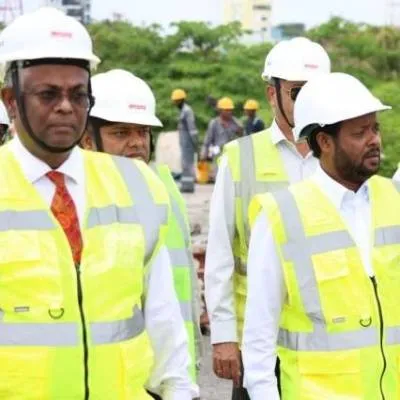
The Indian High Commissioner to the Maldives, G Balasubramaniam, reiterated that New Delhi remained committed to backing projects that directly benefit local communities and strengthen bilateral cooperation. Officials noted that the ferries are tailored to the operational needs of short coastal routes and will be integrated into existing schedules operated by local authorities. Authorities from both countries outlined plans to continue collaboration on maritime connectivity initiatives under the HICDP. Stakeholders also emphasised the importance of technical support and predictable spare parts supply to maintain operational reliability.

Observers described the delivery as a practical demonstration of India's neighbourhood-first policy and of priorities to deepen regional cooperation on transport and logistics. The continuity of the 12-ferry programme is expected to support sustained improvements in mobility across atoll chains and to complement other cooperative measures in the maritime domain. Further deliveries are scheduled as part of Phase Three implementation.

India has delivered the first of 12 high-speed ferries to the Maldives under the High Impact Community Development Project (HICDP) Phase Three as part of an assistance programme to strengthen regional maritime links. The vessel will operate on the Raajje Transport Link (RTL) network and is intended to serve Faafu and Dhaalu Atolls, where inter-island connectivity is a persistent challenge. The handover represents the initial delivery in a 12-ferry package agreed under the bilateral arrangement. The project is designed to bolster public transport links between dispersed island populations and to improve access to services and markets. India is supplying the ferries to provide reliable, faster sea transport that can reduce travel times and support local economic activity. The assistance falls under a broader framework of community-focused infrastructure support and aims to deliver tangible benefits to resident communities. The programme is expected to include training for local crews and support for maintenance arrangements to ensure longevity. The Indian High Commissioner to the Maldives, G Balasubramaniam, reiterated that New Delhi remained committed to backing projects that directly benefit local communities and strengthen bilateral cooperation. Officials noted that the ferries are tailored to the operational needs of short coastal routes and will be integrated into existing schedules operated by local authorities. Authorities from both countries outlined plans to continue collaboration on maritime connectivity initiatives under the HICDP. Stakeholders also emphasised the importance of technical support and predictable spare parts supply to maintain operational reliability. Observers described the delivery as a practical demonstration of India's neighbourhood-first policy and of priorities to deepen regional cooperation on transport and logistics. The continuity of the 12-ferry programme is expected to support sustained improvements in mobility across atoll chains and to complement other cooperative measures in the maritime domain. Further deliveries are scheduled as part of Phase Three implementation.

Related Stories

Gold Stories

Next Story
Infrastructure Urban

KONE Opens India's First Digital Experience Centre in Pune

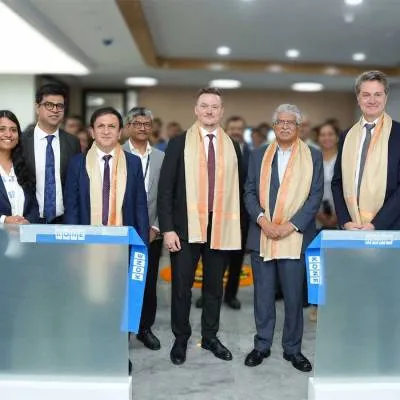
KONE, a global elevator and escalator manufacturer, has inaugurated its first Digital Experience Centre (DEC) in India, located in Pune. The facility aims to showcase how artificial intelligence (AI), connectivity and data-driven technologies can enhance customer experiences and improve building operations.The centre was inaugurated by Jussi Herlin, Executive Vice Chair, KONE Corporation; Philippe Delorme, President and CEO, KONE; and Nandan Nilekani, Co-founder and Chairman of the Board, Infosys.Designed as an interactive customer environment, the facility demonstrates digital solutions cover..

Next Story
Infrastructure Urban

CII GreenCo Launches Circularity Guidelines for Indian Industry

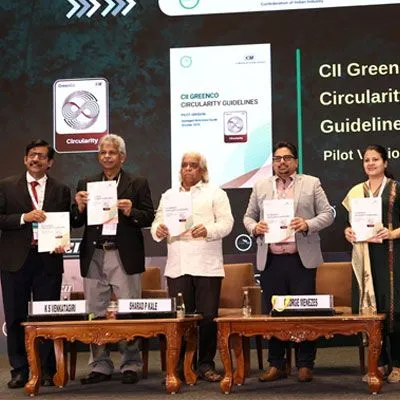
The Confederation of Indian Industry (CII) GreenCo Council has launched the CII GreenCo Circularity Guidelines – Pilot Version at the 17th CII GreenCo Waste & Resource Management Summit 2026 in Chennai. The initiative aims to strengthen resource efficiency, waste reduction and circular economy practices across Indian manufacturing and process industries.The guidelines introduce a structured framework with circularity indices covering raw materials, consumables, packaging and other resource inputs. These indicators will help industries assess existing practices, identify opportunities to ..

Next Story
Infrastructure Energy

Global Electronics Association Launches IPC-1783-CO2E Standard

The Global Electronics Association has introduced IPC-1783-CO2E, a new international standard aimed at improving consistency, transparency and comparability in product carbon footprint reporting across the electronics manufacturing industry.The standard, titled International Standard for Data Collection and Reporting of CO2 Equivalent (CO2e) Emissions for the Electronics Manufacturing Supply Chain, provides industry-specific guidance for collecting, estimating and reporting carbon emissions data.With increasing regulatory requirements and customer expectations, electronics manufacturers face c..

Advertisement

Subscribe to Our Newsletter

Get daily newsletters around different themes from Construction world.

STAY CONNECTED

Advertisement

SPECIAL OFFER
QR Code