+
India Plans 100 New Ships To Cut Foreign Freight Bill
ECONOMY & POLICY

India Plans 100 New Ships To Cut Foreign Freight Bill

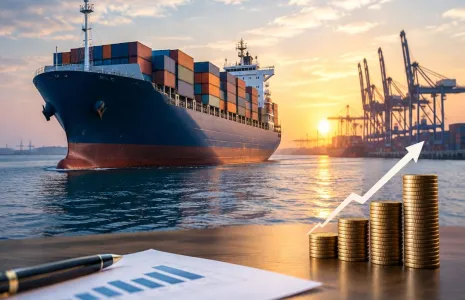
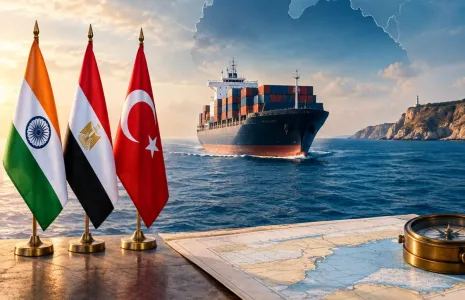
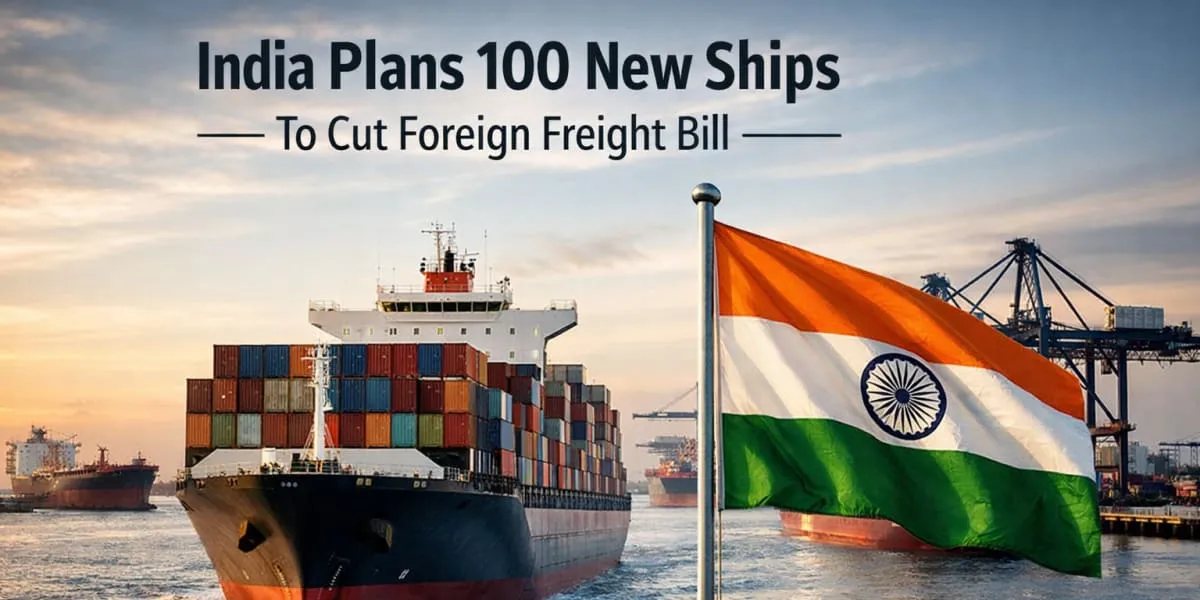
India plans to add 100 vessels to its merchant fleet over the next five years to reduce dependence on foreign shipping lines and retain a larger share of freight spending. The minister of state for ports, shipping and waterways, Shantanu Thakur, said India pays close to $75 bn annually to foreign shipping lines to transport crude oil, natural gas, coal and urea. The plan was discussed at the National Shipping Board's first Sagar Samvad and forms part of a five pillar roadmap to make Indian flagged shipping more competitive.

Industry representatives said Indian flagged vessels face a 16 to 20 per cent cost disadvantage compared with foreign flagged ships, citing taxes on imports, maintenance services and higher domestic financing costs. The shortfall is intensified by tax treatment of seafarers' wages and freight income and by the Right of First Refusal framework, which requires domestic owners to match foreign freight rates to secure cargo. That combination makes fleet expansion difficult despite strategic reasons to increase domestic tonnage.

The NSB panel proposed fiscal reforms, assured cargo support, access to competitive financing, regulatory streamlining and improved ease of doing business, and said these measures could enable the addition of 100 ships in five years. The government is pursuing Maritime India Vision 2030 and Maritime Amrit Kaal Vision 2047 and is targeting a quadrupling of port capacity to 10 bn t annually by 2047. The Rs 100 bn Container Manufacturing Assistance Scheme has already attracted orders from a global shipping major.

Officials said expansion will require long term, low cost capital and a stronger domestic maritime ecosystem, including shipbuilding and skilled employment. Labour ministry officials said India's seafarer pool could become a significant source of employment as global demand rises. India's fleet comprises 1,544 vessels, including 492 overseas and 1,052 coastal vessels, and gross tonnage (GT) crossed 14.2 mn in March after 92 vessels were added in FY26, contributing a combined GT of 1.584 mn. The union minister for ports, shipping and waterways had earlier said the country may add about 62 vessels in FY27, creating an additional 2.85 mn GT capacity.

India plans to add 100 vessels to its merchant fleet over the next five years to reduce dependence on foreign shipping lines and retain a larger share of freight spending. The minister of state for ports, shipping and waterways, Shantanu Thakur, said India pays close to $75 bn annually to foreign shipping lines to transport crude oil, natural gas, coal and urea. The plan was discussed at the National Shipping Board's first Sagar Samvad and forms part of a five pillar roadmap to make Indian flagged shipping more competitive. Industry representatives said Indian flagged vessels face a 16 to 20 per cent cost disadvantage compared with foreign flagged ships, citing taxes on imports, maintenance services and higher domestic financing costs. The shortfall is intensified by tax treatment of seafarers' wages and freight income and by the Right of First Refusal framework, which requires domestic owners to match foreign freight rates to secure cargo. That combination makes fleet expansion difficult despite strategic reasons to increase domestic tonnage. The NSB panel proposed fiscal reforms, assured cargo support, access to competitive financing, regulatory streamlining and improved ease of doing business, and said these measures could enable the addition of 100 ships in five years. The government is pursuing Maritime India Vision 2030 and Maritime Amrit Kaal Vision 2047 and is targeting a quadrupling of port capacity to 10 bn t annually by 2047. The Rs 100 bn Container Manufacturing Assistance Scheme has already attracted orders from a global shipping major. Officials said expansion will require long term, low cost capital and a stronger domestic maritime ecosystem, including shipbuilding and skilled employment. Labour ministry officials said India's seafarer pool could become a significant source of employment as global demand rises. India's fleet comprises 1,544 vessels, including 492 overseas and 1,052 coastal vessels, and gross tonnage (GT) crossed 14.2 mn in March after 92 vessels were added in FY26, contributing a combined GT of 1.584 mn. The union minister for ports, shipping and waterways had earlier said the country may add about 62 vessels in FY27, creating an additional 2.85 mn GT capacity.

Related Stories

Gold Stories

Next Story
Infrastructure Urban

Emiza Expands Bhiwandi Fulfilment Capacity by 2.32 Lakh Sq Ft

Emiza, a leading third-party logistics (3PL) provider, has expanded its Mumbai operations with the launch of two new fulfilment facilities in Bhiwandi, adding a combined capacity of 2.32 lakh sq ft to its network.The new facilities, spread across 75,000 sq ft and 1,57,000 sq ft, mark Emiza’s fifth and sixth warehouses in the Mumbai region. The expansion strengthens the company’s fulfilment infrastructure in Western India amid the rapid growth of India’s digital commerce ecosystem.With increasing online consumption, wider product categories and rising customer expectations for faster deli..

Next Story
Infrastructure Urban

Ingersoll Rand Showcases Air Solutions for Semiconductor Sector

Ingersoll Rand will showcase its advanced compressed air solutions for India’s growing semiconductor ecosystem at SEMICON India 2026, scheduled from September 17–19 at Yashobhoomi, New Delhi.The company will display its portfolio of oil-free compressors, centrifugal compression technologies and advanced air treatment systems at Stall No. 1156, Hall No. 1. The solutions are designed to address the stringent air quality, reliability and efficiency requirements of semiconductor manufacturing applications.With India accelerating investments across semiconductor manufacturing, packaging, equipm..

Next Story
Infrastructure Energy

RECPDCL Transfers Musalgaon Transmission SPV to MSETCL

REC Power Development and Consultancy Limited (RECPDCL), a wholly owned subsidiary of REC Limited, has handed over Musalgaon Power Transmission Limited, a project-specific Special Purpose Vehicle (SPV), to Maharashtra State Electricity Transmission Company Limited (MSETCL).MSETCL emerged as the successful bidder through the Tariff-Based Competitive Bidding (TBCB) process conducted by RECPDCL, the Bid Process Coordinator, for developing Maharashtra’s intra-state transmission project on a Build, Own, Operate and Transfer (BOOT) basis.The SPV was handed over by Shri Ratnesh Kumar, General Manag..

Advertisement

Subscribe to Our Newsletter

Get daily newsletters around different themes from Construction world.

STAY CONNECTED

Advertisement

SPECIAL OFFER
QR Code