






Prayagraj Division Reports Revenue Rise In June
ECONOMY & POLICY

Prayagraj Division Reports Revenue Rise In June

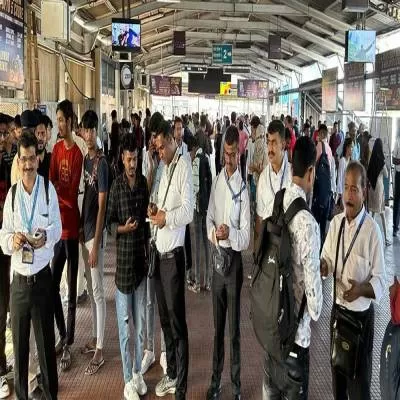
Prayagraj division of Indian Railways recorded a notable rise in revenue in June as operations saw renewed demand across passenger and freight segments. The uptick was supported by increased passenger volumes on key suburban and long distance services and by steadier freight of essential commodities that utilised available rake capacity more efficiently. Officials said that improvements in punctuality and ancillary services, including ticketing and customer assistance, helped consistently strengthen overall commercial throughput during the month.

Revenue management measures included enhanced commercial checks and a renewed push on occupancy across reserved and unreserved classes, with digital platforms facilitating easier reservations and cancellations. Freight optimisation focused on better scheduling and faster turnaround at loading points, enabling smoother movement of essential goods and reducing idle time for wagons. Station teams concentrated on improving amenities and streamlining passenger flows, which in turn supported higher ticket realisation and ancillary income and retention for the division.

Operational vigilance was maintained through targeted inspections and capacity augmentation on busy corridors, and staff were deployed to manage peak services and ensure safe handling of freight consignments. Commercial teams monitored fare realisation and introduced focused offers for certain routes to capture latent demand while maintaining revenue integrity. Maintenance units prioritised track and signalling work in non-peak hours to limit disruptions and to sustain the improved service levels that underpinned the revenue gain across operations.

The divisional administration said it will continue to focus on balancing demand and capacity, strengthening safety protocols and enhancing customer experience to consolidate the commercial improvement. Plans include closer coordination with adjacent divisions to optimise rake utilisation, greater use of analytics for demand forecasting and continued investment in station and train upkeep. Officials added that sustained attention to operational discipline and commercial initiatives is expected to support stable revenue performance in the coming months ahead.

Prayagraj division of Indian Railways recorded a notable rise in revenue in June as operations saw renewed demand across passenger and freight segments. The uptick was supported by increased passenger volumes on key suburban and long distance services and by steadier freight of essential commodities that utilised available rake capacity more efficiently. Officials said that improvements in punctuality and ancillary services, including ticketing and customer assistance, helped consistently strengthen overall commercial throughput during the month. Revenue management measures included enhanced commercial checks and a renewed push on occupancy across reserved and unreserved classes, with digital platforms facilitating easier reservations and cancellations. Freight optimisation focused on better scheduling and faster turnaround at loading points, enabling smoother movement of essential goods and reducing idle time for wagons. Station teams concentrated on improving amenities and streamlining passenger flows, which in turn supported higher ticket realisation and ancillary income and retention for the division. Operational vigilance was maintained through targeted inspections and capacity augmentation on busy corridors, and staff were deployed to manage peak services and ensure safe handling of freight consignments. Commercial teams monitored fare realisation and introduced focused offers for certain routes to capture latent demand while maintaining revenue integrity. Maintenance units prioritised track and signalling work in non-peak hours to limit disruptions and to sustain the improved service levels that underpinned the revenue gain across operations. The divisional administration said it will continue to focus on balancing demand and capacity, strengthening safety protocols and enhancing customer experience to consolidate the commercial improvement. Plans include closer coordination with adjacent divisions to optimise rake utilisation, greater use of analytics for demand forecasting and continued investment in station and train upkeep. Officials added that sustained attention to operational discipline and commercial initiatives is expected to support stable revenue performance in the coming months ahead.

Related Stories

Gold Stories

Next Story
Infrastructure Urban

KONE Opens India's First Digital Experience Centre in Pune

KONE, a global elevator and escalator manufacturer, has inaugurated its first Digital Experience Centre (DEC) in India, located in Pune. The facility aims to showcase how artificial intelligence (AI), connectivity and data-driven technologies can enhance customer experiences and improve building operations.The centre was inaugurated by Jussi Herlin, Executive Vice Chair, KONE Corporation; Philippe Delorme, President and CEO, KONE; and Nandan Nilekani, Co-founder and Chairman of the Board, Infosys.Designed as an interactive customer environment, the facility demonstrates digital solutions cover..

Next Story
Infrastructure Urban

CII GreenCo Launches Circularity Guidelines for Indian Industry

The Confederation of Indian Industry (CII) GreenCo Council has launched the CII GreenCo Circularity Guidelines – Pilot Version at the 17th CII GreenCo Waste & Resource Management Summit 2026 in Chennai. The initiative aims to strengthen resource efficiency, waste reduction and circular economy practices across Indian manufacturing and process industries.The guidelines introduce a structured framework with circularity indices covering raw materials, consumables, packaging and other resource inputs. These indicators will help industries assess existing practices, identify opportunities to ..

Next Story
Infrastructure Energy

Global Electronics Association Launches IPC-1783-CO2E Standard

The Global Electronics Association has introduced IPC-1783-CO2E, a new international standard aimed at improving consistency, transparency and comparability in product carbon footprint reporting across the electronics manufacturing industry.The standard, titled International Standard for Data Collection and Reporting of CO2 Equivalent (CO2e) Emissions for the Electronics Manufacturing Supply Chain, provides industry-specific guidance for collecting, estimating and reporting carbon emissions data.With increasing regulatory requirements and customer expectations, electronics manufacturers face c..

Advertisement

Subscribe to Our Newsletter

Get daily newsletters around different themes from Construction world.

STAY CONNECTED

Advertisement

SPECIAL OFFER
QR Code











