+
RSPL Group Drives Women-Led Manufacturing Transformation
ECONOMY & POLICY

RSPL Group Drives Women-Led Manufacturing Transformation

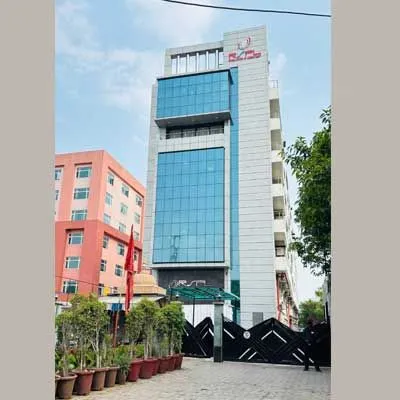
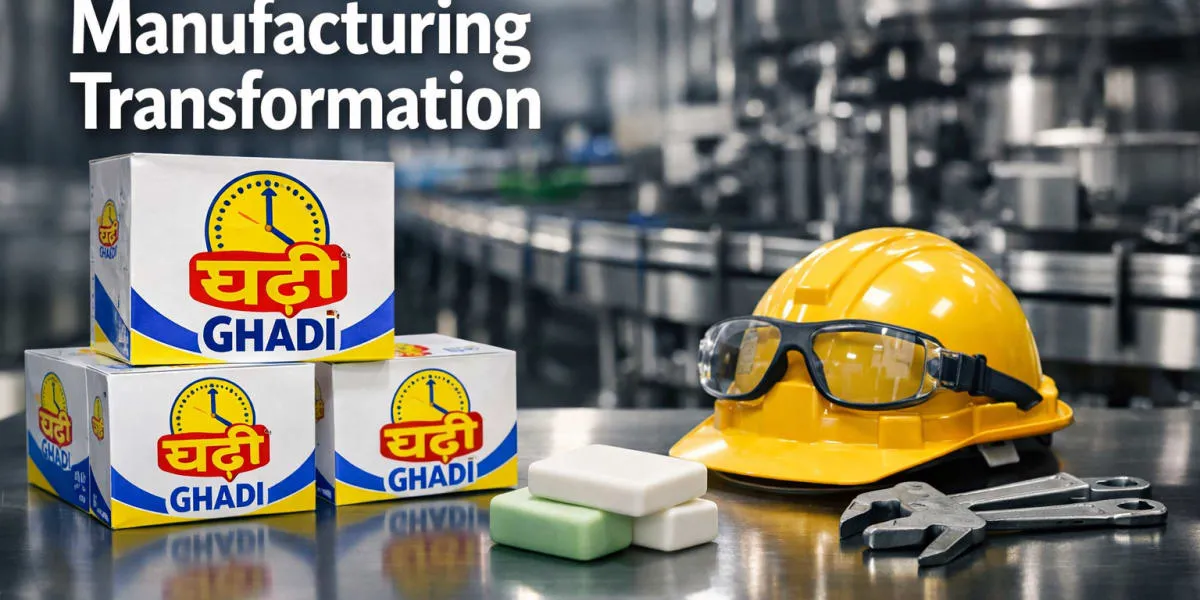
In the small town of Chaubepur in Uttar Pradesh, RSPL Group has advanced a transformation that is reshaping factory life and livelihoods by placing women at the centre of manufacturing operations at its Ghadi detergent and soap complex. The initiative has established structured employment pathways to move workers from informal roles into formal jobs with statutory benefits. The development reflects a strategic push for inclusion alongside operational improvement.

Over the past 10 months the Chaubepur plant has significantly strengthened female participation across its operations and women now form the driving force behind daily activity on the shop floor. The detergent division produces 360 metric tonne (t) per day while the cake division produces 173 t per day, and production lines have been redesigned for operational ease with smart process integration and appropriate technology to support the women workforce. Time management discipline, ownership of tasks and enhanced productivity have been recorded since the programme was expanded.

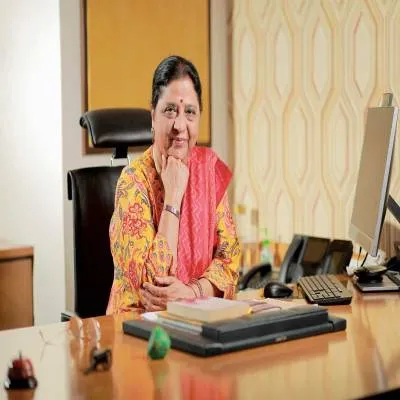
Employees at the unit now work fixed hours under defined leave policies and receive comprehensive protections under labour laws, enabling better work-life balance and financial contribution to households while remaining close to families. Plant leadership has focused on formalising roles, providing statutory benefits and improving workforce engagement, and the unit is now fully operational with measurable productivity gains. Kushalta Gyanchandani said that the vision was to create a workplace where women feel comfortable, confident and empowered and that formalisation was intended to strengthen operations while supporting long term societal transformation.

The Chaubepur unit is presented as an example of how inclusive workforce strategies can drive social change and business performance by advancing skilling, technical capability and digital learning through hands-on experience with modern manufacturing systems. RSPL Group, which employs over 25,000 people, has combined operational objectives with community centred initiatives led by its charitable trusts and welfare foundation to promote education, healthcare and community development. The approach is portrayed as a sustainable growth strategy that aligns commercial expansion with social responsibility.

In the small town of Chaubepur in Uttar Pradesh, RSPL Group has advanced a transformation that is reshaping factory life and livelihoods by placing women at the centre of manufacturing operations at its Ghadi detergent and soap complex. The initiative has established structured employment pathways to move workers from informal roles into formal jobs with statutory benefits. The development reflects a strategic push for inclusion alongside operational improvement. Over the past 10 months the Chaubepur plant has significantly strengthened female participation across its operations and women now form the driving force behind daily activity on the shop floor. The detergent division produces 360 metric tonne (t) per day while the cake division produces 173 t per day, and production lines have been redesigned for operational ease with smart process integration and appropriate technology to support the women workforce. Time management discipline, ownership of tasks and enhanced productivity have been recorded since the programme was expanded. Employees at the unit now work fixed hours under defined leave policies and receive comprehensive protections under labour laws, enabling better work-life balance and financial contribution to households while remaining close to families. Plant leadership has focused on formalising roles, providing statutory benefits and improving workforce engagement, and the unit is now fully operational with measurable productivity gains. Kushalta Gyanchandani said that the vision was to create a workplace where women feel comfortable, confident and empowered and that formalisation was intended to strengthen operations while supporting long term societal transformation. The Chaubepur unit is presented as an example of how inclusive workforce strategies can drive social change and business performance by advancing skilling, technical capability and digital learning through hands-on experience with modern manufacturing systems. RSPL Group, which employs over 25,000 people, has combined operational objectives with community centred initiatives led by its charitable trusts and welfare foundation to promote education, healthcare and community development. The approach is portrayed as a sustainable growth strategy that aligns commercial expansion with social responsibility.

Next Story
Equipment

Kabelschlepp India Installs Robotic VMC in Bengaluru

Kabelschlepp India, part of the Tsubaki Group, has installed a state-of-the-art Vertical Machining Center (VMC) integrated with robotic automation at its Bengaluru facility. The inauguration was held in the presence of Henning Preis, President & CEO, Kabelschlepp Group, Jörg Schulz, Vice President – Production, and Srinivas P. Kamisetty, Managing Director, Kabelschlepp India.The high-precision CNC VMC is designed for advanced milling, drilling, tapping and multi-axis machining. Equipped with a vertical spindle orientation, automatic tool changer and intelligent CNC control system, it en..

Next Story
Infrastructure Transport

Highway Delivery Reset!

Project delays and inefficiencies continue to bedevil the progress of India’s National Highways network. A multi-pronged reform agenda is needed to inject greater transparency and accountability at every stage – from planning and procurement to execution, maintenance and oversight. This article offers key recommendations and reform strategies that government stakeholders – from the Ministry of Road Transport & Highways (MoRTH) and the National Highways Authority of India (NHAI) to state agencies and oversight bodies – should pursue to put highway development on a better track.Decen..

Next Story
Infrastructure Transport

MSIDC Executes ₹37,000 Crore Road Programme

With Rs 37,000 crore worth of road projects under execution across Maharashtra, Maharashtra State Infrastructure Development Corporation (MSIDC) is driving one of the state’s largest infrastructure programmes. Dr Brijesh Dixit, Managing Director, discusses the institutional reforms, execution frameworks, financing strategies and technology adoption enabling timely, high-quality delivery, in conversation with PRATAP PADODE, Editor-in-Chief, CW.With over Rs 37,000 crore worth of road projects underway across districts – many under tight timelines – what institutional and executio..

Advertisement

Subscribe to Our Newsletter

Get daily newsletters around different themes from Construction world.

STAY CONNECTED

Advertisement

Advertisement

Advertisement

Open In App