Ashwini Bhide Highlights Last-Mile Connectivity as Key Focus for Mumbai Metro
Company News

Ashwini Bhide Highlights Last-Mile Connectivity as Key Focus for Mumbai Metro

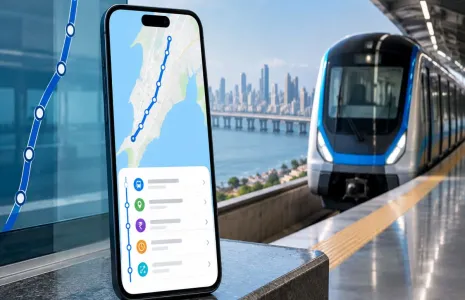
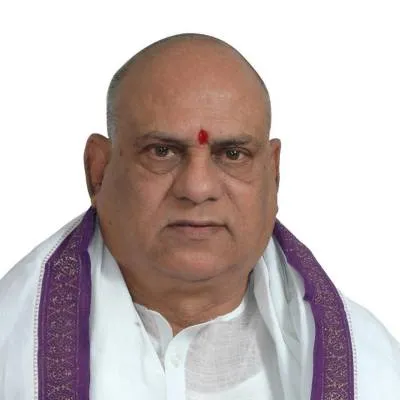
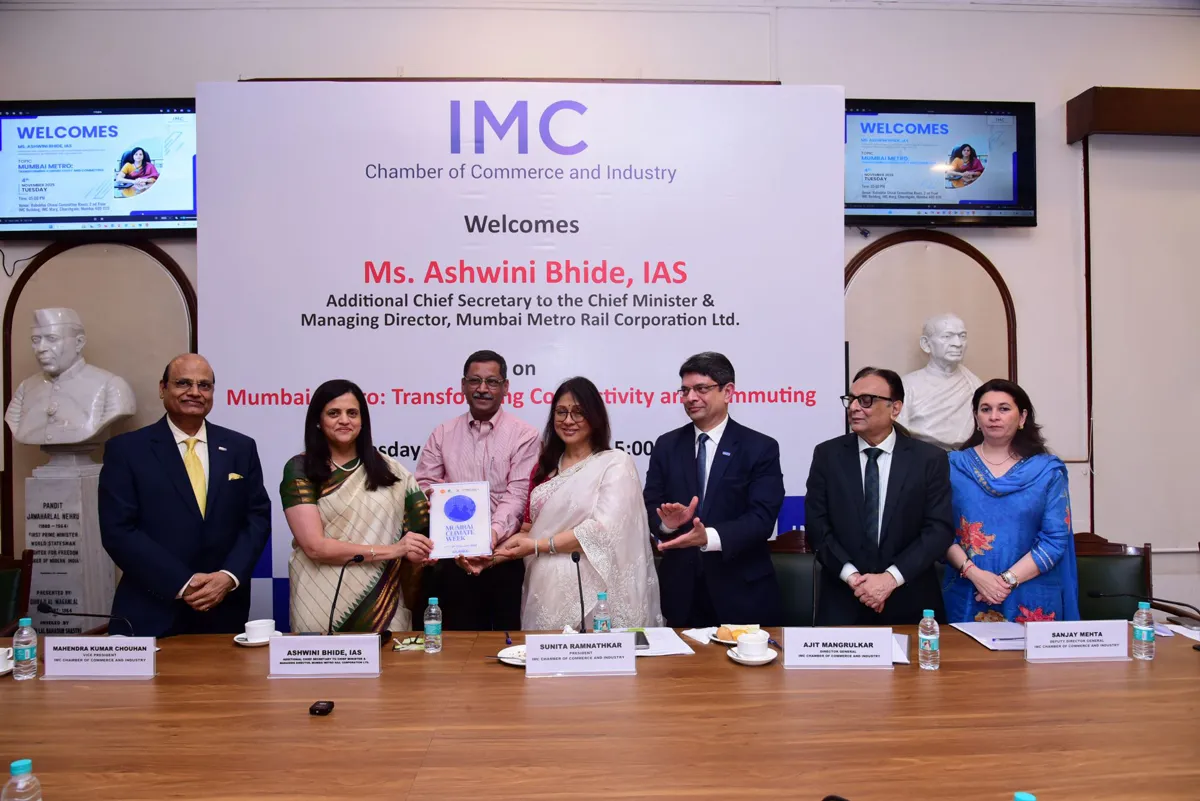
The IMC Chamber of Commerce and Industry (IMC) hosted a session on ‘Mumbai Metro: Transforming Connectivity and Commuting,’ featuring Ms. Ashwini Bhide, Managing Director, Mumbai Metro Rail Corporation Ltd (MMRCL). Addressing IMC’s managing committee, Ms. Bhide emphasised the critical role of last-mile connectivity in Mumbai’s expanding transport infrastructure. 

“Mumbai is the economic powerhouse of Maharashtra, and over 95 per cent of the population in this region is urbanised. With nearly one trillion dollars expected to come from the Mumbai MMR alone, continued investment in large-scale infrastructure like the Mumbai Metro Rail is essential,” she said. 

During the session, IMC announced its association with Project Mumbai’s flagship initiative, Mumbai Climate Week (MCW), to be held from 17–19 February 2026. Hosted by Maharashtra’s Chief Minister, Shri Devendra Fadnavis, the event will position India as a climate action leader of the Global South. 

Shishir Joshi, Founder & CEO of Project Mumbai, said: “Mumbai Climate Week marks a historic step for Maharashtra and India as we unite and amplify the voices of the Global South.” 

IMC President Sunita Ramnathkar added: “The Mumbai Metro is not just transforming how we commute—it is shaping the city’s economic and environmental future. Our association with Mumbai Climate Week underscores our commitment to advancing climate action and sustainable growth.” 

The IMC Chamber of Commerce and Industry (IMC) hosted a session on ‘Mumbai Metro: Transforming Connectivity and Commuting,’ featuring Ms. Ashwini Bhide, Managing Director, Mumbai Metro Rail Corporation Ltd (MMRCL). Addressing IMC’s managing committee, Ms. Bhide emphasised the critical role of last-mile connectivity in Mumbai’s expanding transport infrastructure. “Mumbai is the economic powerhouse of Maharashtra, and over 95 per cent of the population in this region is urbanised. With nearly one trillion dollars expected to come from the Mumbai MMR alone, continued investment in large-scale infrastructure like the Mumbai Metro Rail is essential,” she said. During the session, IMC announced its association with Project Mumbai’s flagship initiative, Mumbai Climate Week (MCW), to be held from 17–19 February 2026. Hosted by Maharashtra’s Chief Minister, Shri Devendra Fadnavis, the event will position India as a climate action leader of the Global South. Shishir Joshi, Founder & CEO of Project Mumbai, said: “Mumbai Climate Week marks a historic step for Maharashtra and India as we unite and amplify the voices of the Global South.” IMC President Sunita Ramnathkar added: “The Mumbai Metro is not just transforming how we commute—it is shaping the city’s economic and environmental future. Our association with Mumbai Climate Week underscores our commitment to advancing climate action and sustainable growth.” 

Next Story
Infrastructure Transport

METRO MOVES!

There is no clearer sign that India’s metro-rail revolution is no longer a big-city story than having a metro in 23 cities. From being one-off projects in Kolkata and Delhi, metro rails have evolved into a national urban transformation project aiming at reshaping mobility, land use and sustainability in every city with an operational metro.However, this project has neither seen uniform success across cities, nor success in every city.Experts in unison agree with the observation of Vipul Surana, Senior Vice President and Head of Transit and Rail, India, AECOM: “The Delhi Metro Rail Cor..

Next Story
Infrastructure Urban

Multimodal Corridors Reshape India’s Freight Logistics

India’s freight and logistics landscape is undergoing a structural transformation, driven by Dedicated Freight Corridors (DFCs) and an expanding network of multimodal logistics infrastructure. Purpose-built freight rail corridors, combined with integrated logistics parks, are enabling faster, more predictable and cost-efficient cargo movement across the country. The Eastern and Western DFCs together span more than 2,800 km, with most sections now operational. Designed exclusively for freight, these corridors allow longer, heavier and faster trains, significantly improving throughput. Freigh..

Next Story
Infrastructure Urban

Jyoti Structures Secures TÜV ISO Certifications

Jyoti Structures (JSL), a listed global Engineering, Procurement and Construction (EPC) company, has secured ISO 9001:2015, ISO 14001:2015 and ISO 45001:2018 certifications following an independent audit by TÜV, one of the world’s most stringent and internationally recognised certification bodies. The certifications were awarded after an extensive, organisation-wide evaluation process spanning more than a year. They apply across JSL’s EPC operations, including design, engineering, manufacturing, procurement, erection and commissioning of transmission, substation and distribution projects..

Advertisement

Subscribe to Our Newsletter

Get daily newsletters around different themes from Construction world.

STAY CONNECTED

Advertisement

Advertisement

Advertisement

Advertisement

Open In App