Chief Minister Flags Off Electric And Hydrogen Buses In Noida
AVIATION & AIRPORTS

Chief Minister Flags Off Electric And Hydrogen Buses In Noida

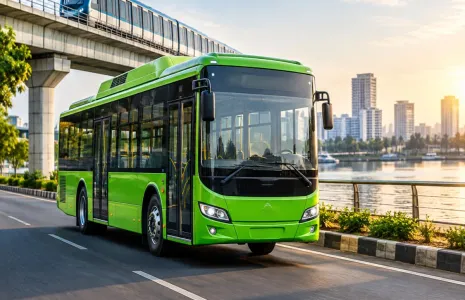
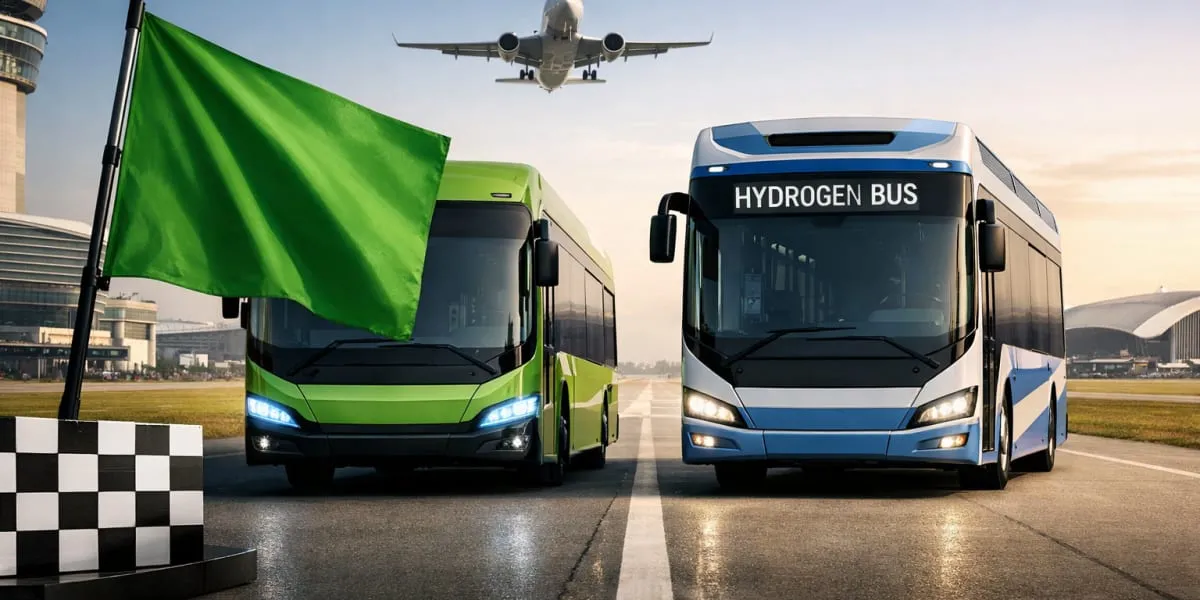
The Chief Minister flagged off electric buses and hydrogen buses in Noida and highlighted improvements in the state’s air connectivity. He said Prayagraj Airport was completed within 11 months and referred to the country’s largest airport at Jewar. He added that Ayodhya, long without air services, now has an airport dedicated to Maharishi Valmiki.

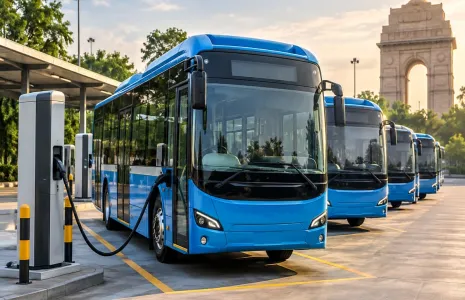
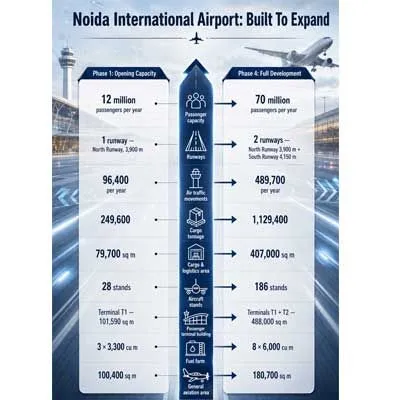
He noted that Uttar Pradesh now has five international airports including Lucknow, Ayodhya, Kashi, Kushinagar and Noida, and that Noida Airport was poised to develop as a passenger, cargo and MRO hub. He said metro services were operating in seven cities, out of 20 across the country, and that more than 700 electric buses were running in 17 municipal corporations with the service now being extended to Noida.

He recalled that electric buses had previously been sourced from outside the state but that Tata Motors and Ashok Leyland of the Hinduja Group had each set up two electric bus plants in Lucknow to enable local production. He said NTPC had provided three hydrogen buses to the Yamuna Authority which were being introduced, and that the hydrogen would be produced from treated sewer water rather than from groundwater or surface water.

He said the hydrogen buses would operate near Jewar Airport and would contribute to reducing air pollution, thereby protecting children, senior citizens and patients. He described green hydrogen mobility as an innovative concept and said the buses would play a major role in local clean mobility initiatives. He also emphasised that unemployed youth would be given priority in the operation of rural transport services.

He outlined the Uttar Pradesh Clean Air Management Project (UP CAMP) with World Bank assistance of Rs 27.41 billion (Rs 27.41 bn) to support net-zero targets and recalled that nine years earlier urban areas used halogen streetlights that consumed large amounts of energy. He said that in 2017 the government had installed more than 1.5 million (1.5 mn) LED streetlights, reducing energy use and carbon emissions, and ministers Suresh Khanna, Nand Gopal Gupta Nandi, Dayashankar Singh and Jaswant Singh Saini attended.

The Chief Minister flagged off electric buses and hydrogen buses in Noida and highlighted improvements in the state’s air connectivity. He said Prayagraj Airport was completed within 11 months and referred to the country’s largest airport at Jewar. He added that Ayodhya, long without air services, now has an airport dedicated to Maharishi Valmiki. He noted that Uttar Pradesh now has five international airports including Lucknow, Ayodhya, Kashi, Kushinagar and Noida, and that Noida Airport was poised to develop as a passenger, cargo and MRO hub. He said metro services were operating in seven cities, out of 20 across the country, and that more than 700 electric buses were running in 17 municipal corporations with the service now being extended to Noida. He recalled that electric buses had previously been sourced from outside the state but that Tata Motors and Ashok Leyland of the Hinduja Group had each set up two electric bus plants in Lucknow to enable local production. He said NTPC had provided three hydrogen buses to the Yamuna Authority which were being introduced, and that the hydrogen would be produced from treated sewer water rather than from groundwater or surface water. He said the hydrogen buses would operate near Jewar Airport and would contribute to reducing air pollution, thereby protecting children, senior citizens and patients. He described green hydrogen mobility as an innovative concept and said the buses would play a major role in local clean mobility initiatives. He also emphasised that unemployed youth would be given priority in the operation of rural transport services. He outlined the Uttar Pradesh Clean Air Management Project (UP CAMP) with World Bank assistance of Rs 27.41 billion (Rs 27.41 bn) to support net-zero targets and recalled that nine years earlier urban areas used halogen streetlights that consumed large amounts of energy. He said that in 2017 the government had installed more than 1.5 million (1.5 mn) LED streetlights, reducing energy use and carbon emissions, and ministers Suresh Khanna, Nand Gopal Gupta Nandi, Dayashankar Singh and Jaswant Singh Saini attended.

Related Stories

Gold Stories

Next Story
Infrastructure Urban

KONE Opens India's First Digital Experience Centre in Pune

KONE, a global elevator and escalator manufacturer, has inaugurated its first Digital Experience Centre (DEC) in India, located in Pune. The facility aims to showcase how artificial intelligence (AI), connectivity and data-driven technologies can enhance customer experiences and improve building operations.The centre was inaugurated by Jussi Herlin, Executive Vice Chair, KONE Corporation; Philippe Delorme, President and CEO, KONE; and Nandan Nilekani, Co-founder and Chairman of the Board, Infosys.Designed as an interactive customer environment, the facility demonstrates digital solutions cover..

Next Story
Infrastructure Urban

CII GreenCo Launches Circularity Guidelines for Indian Industry

The Confederation of Indian Industry (CII) GreenCo Council has launched the CII GreenCo Circularity Guidelines – Pilot Version at the 17th CII GreenCo Waste & Resource Management Summit 2026 in Chennai. The initiative aims to strengthen resource efficiency, waste reduction and circular economy practices across Indian manufacturing and process industries.The guidelines introduce a structured framework with circularity indices covering raw materials, consumables, packaging and other resource inputs. These indicators will help industries assess existing practices, identify opportunities to ..

Next Story
Infrastructure Energy

Global Electronics Association Launches IPC-1783-CO2E Standard

The Global Electronics Association has introduced IPC-1783-CO2E, a new international standard aimed at improving consistency, transparency and comparability in product carbon footprint reporting across the electronics manufacturing industry.The standard, titled International Standard for Data Collection and Reporting of CO2 Equivalent (CO2e) Emissions for the Electronics Manufacturing Supply Chain, provides industry-specific guidance for collecting, estimating and reporting carbon emissions data.With increasing regulatory requirements and customer expectations, electronics manufacturers face c..

Advertisement

Subscribe to Our Newsletter

Get daily newsletters around different themes from Construction world.

STAY CONNECTED

Advertisement

SPECIAL OFFER
QR Code