
+
Assam CM Meets Gadkari on Flood Resilient Highways
ROADS & HIGHWAYS

Assam CM Meets Gadkari on Flood Resilient Highways

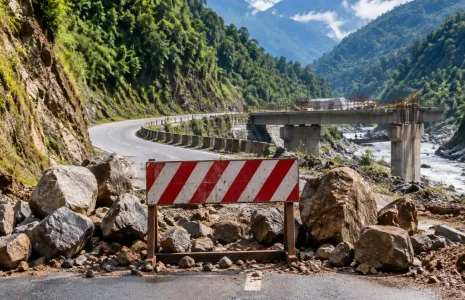
Assam Chief Minister Himanta Biswa Sarma held a detailed meeting with Union Road Transport and Highways Minister Nitin Gadkari in New Delhi to review progress on National Highway projects and to seek urgent repair of flood-damaged roads. The discussion prioritised faster restoration of highways and the development of a flood-resilient network after the current southwest monsoon season caused substantial damage. The meeting identified evidence-based planning for the design and placement of culverts and bridges as essential to minimise disruption during extreme weather.

A recurrent flash flooding problem at Jorabat was highlighted and a comprehensive redesign of highway infrastructure in the area was discussed to address the issue. Sarma thanked the minister and said the matter would receive high-level consideration by the Centre. The delegation also considered technical measures and design standards intended to reduce the vulnerability of key stretches to erosion and landslides.

Officials reviewed the pace of flagship road projects including the Kaziranga Elevated Corridor and the Guwahati Ring Road and discussed proposed upgradation of several important highway stretches across the state. The meeting reiterated that continued support from the Union government is crucial for strengthening connectivity and developing a safer and more resilient highway network capable of withstanding recurring floods. Both sides examined timelines and resource allocation needed to accelerate work where damage is severe.

Government information indicates that 8,325 metres of National Highways in Assam have been damaged by heavy rain, landslides, flooding or erosion during the current monsoon season. The floods have claimed nearly 100 lives and affected around 0.15 million (mn) people across seven districts, with 73 villages across six districts currently affected. Moreover, 6,299 hectares of crop area have been damaged and floodwaters have impaired embankments, roads, bridges and other critical infrastructure, prompting urgent repair and resilience measures.

Assam Chief Minister Himanta Biswa Sarma held a detailed meeting with Union Road Transport and Highways Minister Nitin Gadkari in New Delhi to review progress on National Highway projects and to seek urgent repair of flood-damaged roads. The discussion prioritised faster restoration of highways and the development of a flood-resilient network after the current southwest monsoon season caused substantial damage. The meeting identified evidence-based planning for the design and placement of culverts and bridges as essential to minimise disruption during extreme weather. A recurrent flash flooding problem at Jorabat was highlighted and a comprehensive redesign of highway infrastructure in the area was discussed to address the issue. Sarma thanked the minister and said the matter would receive high-level consideration by the Centre. The delegation also considered technical measures and design standards intended to reduce the vulnerability of key stretches to erosion and landslides. Officials reviewed the pace of flagship road projects including the Kaziranga Elevated Corridor and the Guwahati Ring Road and discussed proposed upgradation of several important highway stretches across the state. The meeting reiterated that continued support from the Union government is crucial for strengthening connectivity and developing a safer and more resilient highway network capable of withstanding recurring floods. Both sides examined timelines and resource allocation needed to accelerate work where damage is severe. Government information indicates that 8,325 metres of National Highways in Assam have been damaged by heavy rain, landslides, flooding or erosion during the current monsoon season. The floods have claimed nearly 100 lives and affected around 0.15 million (mn) people across seven districts, with 73 villages across six districts currently affected. Moreover, 6,299 hectares of crop area have been damaged and floodwaters have impaired embankments, roads, bridges and other critical infrastructure, prompting urgent repair and resilience measures.

Related Stories

Gold Stories
Next Story
Real Estate

BMC OC Amnesty Scheme Requires Key Approvals from Mumbai Societies

The Brihanmumbai Municipal Corporation (BMC) has clarified that housing societies applying under its Occupation Certificate (OC) amnesty scheme must possess key approvals linked to the original construction. The requirements include a valid Intimation of Disapproval (IOD), an approved building plan and a Commencement Certificate (CC), along with a No Objection Certificate (NOC) from the developer or original construction applicant. The Standard Operating Procedure (SOP) makes clear that the absence of an OC alone will not qualify a building for relief. Societies must establish that their build..

Next Story
Real Estate

Gurugram Emerges as Luxury Senior Living Hub

Gurugram is emerging as a potential hub for luxury senior living, supported by available land, healthcare infrastructure, connectivity and a concentration of affluent professionals, high-net-worth individuals and non-resident Indians. These factors could give the city an advantage over land-constrained metros such as Mumbai. A report by the Association of Senior Living India (ASLI) and JLL estimates that India’s organised senior living market could represent a $10.1 bn opportunity by 2030. The sector had about 25,050 organised units as of June 2026, while penetration stood at only 1.5 per ce..

Next Story
Real Estate

Corrosion Costs India’s Infrastructure Rs. 142 bn Annually

Corrosion costs India an estimated Rs. 1.42 tn annually, equivalent to 4.3 per cent of gross domestic product, according to a report by the Confederation of Indian Industry and the National Research Institute. Infrastructure accounts for Rs. 142 bn of the annual burden, making it the sector with the largest absolute cost among those examined. The report, presented at the CII Annual Infrastructure Summit 2026, said the infrastructure-sector cost equals about 2.9 per cent of the sector’s gross domestic product. It estimated that effective measures could generate maximum savings of Rs. 495.8 bn..

Advertisement

Subscribe to Our Newsletter

Get daily newsletters around different themes from Construction world.

STAY CONNECTED

Advertisement

SPECIAL OFFER
QR Code