Bengaluru to Add Tunnel Roads and Double Decker Roadways
ROADS & HIGHWAYS

Bengaluru to Add Tunnel Roads and Double Decker Roadways

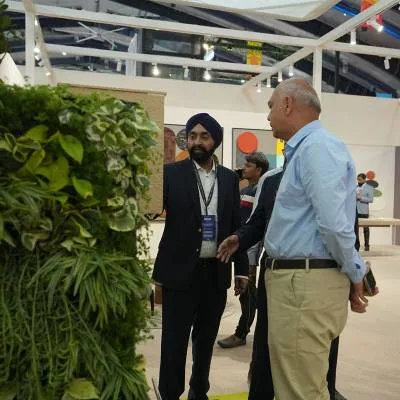
The Karnataka chief minister, DK Shivakumar, said the state government is investing over Rs 1.5 trillion (Rs 1.5 tn) solely to improve mobility infrastructure in Bengaluru. He announced plans to establish 40 km more of tunnel roadway and over 44 km of double-decker roadway as part of a broader urban mobility push. The remarks were delivered at the Katalyst Connect event hosted by the IT-BT Department and the Karnataka Digital Economy Mission. The chief minister met more than 150 representatives from global capability centres based in the state and sought to assuage concerns about last-mile connectivity.

In addition, the government has planned a 133 km flyover project and is constructing a 123 km Bangalore Business Corridor, with expenditure of Rs 260 billion (Rs 260 bn) earmarked for the first phase. Officials indicated the business corridor is intended to streamline freight and commuter flows across key industrial and commercial zones. The administration also outlined an ambitious target to expand the metro network to 500 km by next year to complement road projects.

The chief minister said the Hebbal Tunnel Road was prioritised after he assumed office and that planning proceeded despite political criticism. He framed the tunnel and double-decker schemes as responses to persistent congestion and as elements of a multimodal mobility strategy. Project timelines and procurement details were described as being advanced to accelerate implementation.

Engagement with global capability centres formed part of a dialogue on urban connectivity and talent retention, with officials presenting road and transit interventions designed to reduce commute times. The government stressed that investment in infrastructure aimed to support the technology and services ecosystem and enhance last-mile access for employees. Stakeholders were told that coordinated delivery across projects would be essential to achieve intended benefits.

Officials said the scale of planned investment and mix of tunnels, elevated carriageways and metro expansion reflect a strategic push to transform Bengaluru’s transport framework. The administration indicated that phased execution would be prioritised to align funding and construction capacity, and that further announcements on schedules and contractors will follow.

The Karnataka chief minister, DK Shivakumar, said the state government is investing over Rs 1.5 trillion (Rs 1.5 tn) solely to improve mobility infrastructure in Bengaluru. He announced plans to establish 40 km more of tunnel roadway and over 44 km of double-decker roadway as part of a broader urban mobility push. The remarks were delivered at the Katalyst Connect event hosted by the IT-BT Department and the Karnataka Digital Economy Mission. The chief minister met more than 150 representatives from global capability centres based in the state and sought to assuage concerns about last-mile connectivity. In addition, the government has planned a 133 km flyover project and is constructing a 123 km Bangalore Business Corridor, with expenditure of Rs 260 billion (Rs 260 bn) earmarked for the first phase. Officials indicated the business corridor is intended to streamline freight and commuter flows across key industrial and commercial zones. The administration also outlined an ambitious target to expand the metro network to 500 km by next year to complement road projects. The chief minister said the Hebbal Tunnel Road was prioritised after he assumed office and that planning proceeded despite political criticism. He framed the tunnel and double-decker schemes as responses to persistent congestion and as elements of a multimodal mobility strategy. Project timelines and procurement details were described as being advanced to accelerate implementation. Engagement with global capability centres formed part of a dialogue on urban connectivity and talent retention, with officials presenting road and transit interventions designed to reduce commute times. The government stressed that investment in infrastructure aimed to support the technology and services ecosystem and enhance last-mile access for employees. Stakeholders were told that coordinated delivery across projects would be essential to achieve intended benefits. Officials said the scale of planned investment and mix of tunnels, elevated carriageways and metro expansion reflect a strategic push to transform Bengaluru’s transport framework. The administration indicated that phased execution would be prioritised to align funding and construction capacity, and that further announcements on schedules and contractors will follow.

Next Story
Infrastructure Transport

Surya Roshni delivers customised lighting for NCRTC RRTS stations

Surya Roshni has supplied customised indoor lighting solutions for 18 elevated stations on the National Capital Region Transport Corporation's (NCRTC) Rapid Rail Transit System (RRTS), strengthening its presence in India's infrastructure lighting segment.The project involved the design and deployment of lighting systems for platforms, concourses, foot overbridges (FOBs) and back-of-house (BOH) areas. According to the company, the luminaires were developed specifically to meet NCRTC's design, operational and performance requirements rather than using standard products.Surya introduced two custo..

Next Story
Real Estate

Hilton debuts Tapestry Collection brand in Vietnam

Hilton has opened NHAAN Resort & Spa Hoi An, Tapestry Collection by Hilton, marking the debut of the Tapestry Collection brand in Vietnam and expanding its lifestyle hospitality portfolio in Southeast Asia.Located along the Co Co River in Cam Thanh village, the 174-key resort provides access to Hoi An Ancient Town, Cua Dai Beach and the Cam Thanh Nipa Forest. The property has been designed by Vietnamese architect Vo Trong Nghia, incorporating biophilic architecture, locally sourced materials and riverfront landscapes.The resort offers a mix of guest rooms and suites, including family-frien..

Next Story
Building Material

Electrent expands lithium energy storage system portfolio

Electrent Energy has expanded its lithium-based energy storage portfolio with the launch of the ESS 850 and ESS 1050, targeting compact and maintenance-free power backup solutions for Indian homes.The new systems integrate a Home UPS and a LiFePO4 lithium battery into a single unit, extending the company's product range following the launch of its ESS 1350 and ESS 2500 models.Designed for apartments and smaller homes, the ESS 850 provides up to 1 hour 15 minutes of backup, while the ESS 1050 offers up to 1 hour 45 minutes on a typical 400 W household load. The systems can power essential appli..

Advertisement

Subscribe to Our Newsletter

Get daily newsletters around different themes from Construction world.

STAY CONNECTED

Advertisement

Advertisement

Advertisement