Gadkari Reviews National Highways In Mizoram Manipur Nagaland
ROADS & HIGHWAYS

Gadkari Reviews National Highways In Mizoram Manipur Nagaland

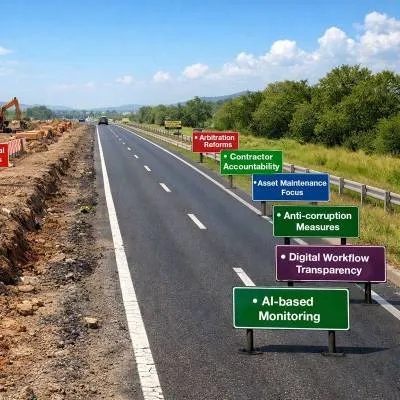
Union minister Nitin Gadkari reviewed the quality and maintenance progress of 1,489 km of National Highway projects in Mizoram, 1,759 km of National Highways in Manipur and 1,578 km of National Highways in Nagaland, based on media inputs. The review held in New Delhi included officials from the National Highways Authority of India (NHAI), the National Highways and Infrastructure Development Corporation Limited (NHIDCL), the Ministry of Road Transport and Highways (MoRTH) and contractors. He emphasised timely execution, strict adherence to quality standards and the adoption of advanced technologies to ensure sustainable and efficient highway infrastructure.

He said improved road connectivity plays a vital role in enhancing connectivity, driving economic growth and improving commuter convenience. He directed officials to ensure comprehensive monsoon preparedness through preventive measures and robust response systems to uphold road safety and durability. He stressed the need to accelerate on-ground execution, strengthen quality monitoring and adopt modern construction practices to enhance asset life and improve riding quality.

Officials were instructed to undertake advance monsoon preparedness, including effective drainage management, slope protection and quick-response mechanisms to minimise disruptions and ensure commuter safety. The review examined project timelines, maintenance protocols and technology adoption across key corridors to promote seamless connectivity. Emphasis was placed on lifecycle maintenance approaches and material quality checks to extend pavement life and reduce long-term costs.

The minister called for closer coordination among central agencies, state authorities and contractors to expedite delivery while maintaining environmental and social safeguards. He urged the use of technologies such as improved materials, mechanised construction methods and digital monitoring for timely detection of defects. The meeting sought to align resource allocation and contractor performance metrics with stringent quality indicators to achieve durable outcomes.

Follow-up actions were directed to include periodic audits, enhanced site supervision and contingency planning for extreme weather events to protect investments and ensure commuter confidence. Officials were asked to report progress regularly to the ministry to enable course corrections and maintain transparency. The review is expected to inform implementation plans and operational priorities for the coming months.

Union minister Nitin Gadkari reviewed the quality and maintenance progress of 1,489 km of National Highway projects in Mizoram, 1,759 km of National Highways in Manipur and 1,578 km of National Highways in Nagaland, based on media inputs. The review held in New Delhi included officials from the National Highways Authority of India (NHAI), the National Highways and Infrastructure Development Corporation Limited (NHIDCL), the Ministry of Road Transport and Highways (MoRTH) and contractors. He emphasised timely execution, strict adherence to quality standards and the adoption of advanced technologies to ensure sustainable and efficient highway infrastructure. He said improved road connectivity plays a vital role in enhancing connectivity, driving economic growth and improving commuter convenience. He directed officials to ensure comprehensive monsoon preparedness through preventive measures and robust response systems to uphold road safety and durability. He stressed the need to accelerate on-ground execution, strengthen quality monitoring and adopt modern construction practices to enhance asset life and improve riding quality. Officials were instructed to undertake advance monsoon preparedness, including effective drainage management, slope protection and quick-response mechanisms to minimise disruptions and ensure commuter safety. The review examined project timelines, maintenance protocols and technology adoption across key corridors to promote seamless connectivity. Emphasis was placed on lifecycle maintenance approaches and material quality checks to extend pavement life and reduce long-term costs. The minister called for closer coordination among central agencies, state authorities and contractors to expedite delivery while maintaining environmental and social safeguards. He urged the use of technologies such as improved materials, mechanised construction methods and digital monitoring for timely detection of defects. The meeting sought to align resource allocation and contractor performance metrics with stringent quality indicators to achieve durable outcomes. Follow-up actions were directed to include periodic audits, enhanced site supervision and contingency planning for extreme weather events to protect investments and ensure commuter confidence. Officials were asked to report progress regularly to the ministry to enable course corrections and maintain transparency. The review is expected to inform implementation plans and operational priorities for the coming months.

Next Story
Infrastructure Urban

Cabinet Approves Two Year Scheme To Replace Old Trucks And Buses

The Union Cabinet, chaired by the Prime Minister, approved a two-year scheme to reduce air pollution in the Delhi–NCR region and promote cleaner mobility. The programme will be funded through the National Capital Region Planning Board under the Ministry of Housing and Urban Affairs and implemented by the Ministry of Road Transport and Highways and the Ministry of Petroleum and Natural Gas, with participating States and Union Territories of Delhi, Haryana, Rajasthan and Uttar Pradesh. The total financial outlay has been set at Rs 95.85 billion (bn), with the Central Government contributing Rs..

Next Story
Infrastructure Transport

Bengaluru Suburban Rail And Metro To Share 500-Metre Corridor

Bengaluru suburban rail and the Metro will share a 500-metre corridor at Benniganahalli, a decision that planners say will reduce capital expenditure and urban disruption. The consolidation of alignments across the short stretch is intended to avoid duplication of elevated structures and station facilities while cutting land acquisition needs. Authorities put the maximum savings at Rs 1.69 bn (1,690 mn). The arrangement also aims to streamline construction interfaces between the two systems. The shared corridor will require coordinated design of track beds, piers and passenger access so that s..

Next Story
Infrastructure Urban

DRDO And IAF Complete Successful RudraM-II Flight Tests

The Defence Research and Development Organisation (DRDO) and the Indian Air Force (IAF) have conducted successful flight tests of the RudraM-II air-to-surface missile from an airborne platform. The trials were carried out under extreme release conditions with a critical trajectory that established the capability of all subsystems. The series of releases tested the missile's guidance, seeker and propulsion elements in an operationally representative environment. The missiles, released from the aircraft, were guided to a predefined target with pinpoint accuracy and all test objectives were fully..

Advertisement

Subscribe to Our Newsletter

Get daily newsletters around different themes from Construction world.

STAY CONNECTED

Advertisement

Advertisement

Advertisement