+
India, World Bank sign a $500 mn deal for Green National Highway Corridor
ROADS & HIGHWAYS

India, World Bank sign a $500 mn deal for Green National Highway Corridor

The World Bank and the Indian government inked a deal for Himachal Pradesh, Rajasthan, Uttar Pradesh and Andhra Pradesh to receive USD $500 million for building of the Green National Highway Corridor Project (GNHCP). It is estimated that the project will cost around Rs.76.62 billion in total.

The GNHCP will be finished by May 2026 and it will use a number of cutting-edge strategies to lower carbon emissions and preserve natural resources over the course of its lifetime.

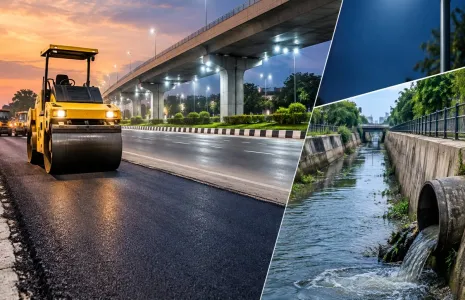
This project uses reclaimed asphalt pavement to conserve natural resources; it encourages the use of local materials like lime, fly ash and waste plastic and uses bio-engineering techniques to protect the slope such as hydro-seeding, interlink chain mesh with grass strips and Geocell with hydro-seeding.

During the project life cycle, it is anticipated that usage of green technology and bioengineering solutions, specifically in hilly areas, will lower carbon emissions and guarantee the preservation of natural resources.

The World Bank and the Indian government inked a deal for Himachal Pradesh, Rajasthan, Uttar Pradesh and Andhra Pradesh to receive USD $500 million for building of the Green National Highway Corridor Project (GNHCP). It is estimated that the project will cost around Rs.76.62 billion in total. The GNHCP will be finished by May 2026 and it will use a number of cutting-edge strategies to lower carbon emissions and preserve natural resources over the course of its lifetime. This project uses reclaimed asphalt pavement to conserve natural resources; it encourages the use of local materials like lime, fly ash and waste plastic and uses bio-engineering techniques to protect the slope such as hydro-seeding, interlink chain mesh with grass strips and Geocell with hydro-seeding. During the project life cycle, it is anticipated that usage of green technology and bioengineering solutions, specifically in hilly areas, will lower carbon emissions and guarantee the preservation of natural resources.

Related Stories

Gold Stories

Next Story
Infrastructure Urban

Infrastructure Opportunity Outlook by IMPACCT.Info

India’s infrastructure pipeline is witnessing dynamic activity across stages — from immediate bidding to future planning. IMPACCT segments these into three categories: Immediate, 3–6 Month, and Future Opportunities, enabling businesses to identify, prepare, and participate in high-value tenders and projects across sectors.To read full article Click Here ..

Next Story
Real Estate

Glass, Reframed!

Glass façades, quintessential aesthetic building envelopes globally, have been widely adopted in India as well. But when the focus is high-performance building systems that deliver energy efficiency, comfort and architectural identity, glass isn’t the only preference. Combination solutions, involving glass and some other material, improve façade outcomes. Some combinations come at comparable prices, some at a higher price. Here is a selection of performance-oriented solutions...To read the full story Click Here ..

Next Story
Infrastructure Urban

Beyond Building Faster

India’s cities are expanding at an unprecedented pace, bringing new infrastructure and development opportunities while also intensifying challenges around mobility, public spaces, liveability and supporting infrastructure. The question, therefore, is not simply whether India can build faster, but whether it can build cities that work better.At a CW webinar, Are We Designing Better Cities – or Just Building Faster?, moderator Ar. Samir Shaikh, Founding Principal, AR&UD Studio, brought together perspectives from design, development, master planning and technology...To read the full artic..

Advertisement

Subscribe to Our Newsletter

Get daily newsletters around different themes from Construction world.

STAY CONNECTED

Advertisement

SPECIAL OFFER
QR Code