


+
Road to Sustainability
ROADS & HIGHWAYS

Road to Sustainability

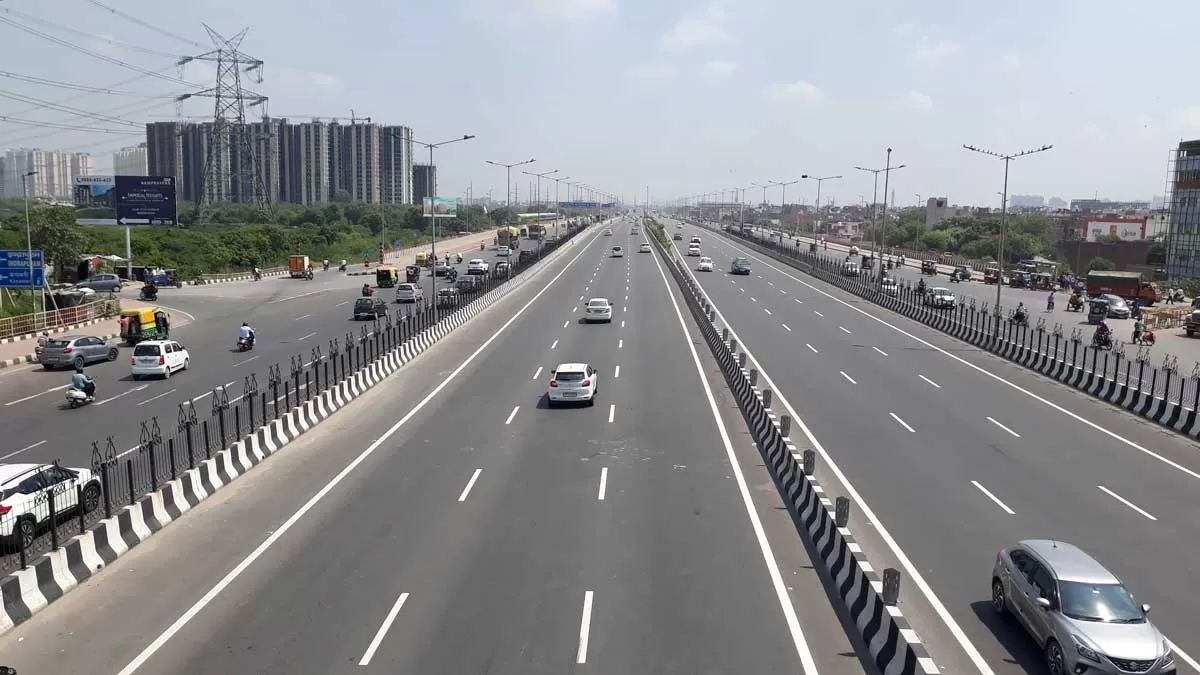
To resolve the twin problems of urban solid waste disposal and urgent requirement of soil for construction of embankments, the Ministry of Road Transport and Highways (MoRTH), through the National Highways Authority of India (NHAI), recently undertook two pilot projects for utilisation of inert (sand, concrete and demolition waste) municipal solid waste material. The first pilot project has been carried out in Delhi-NCR on the urban extension road and DND Sohna spur of the Delhi-Mumbai Expressway, the second on the Ahmedabad-Dholera Expressway. At a point of time when road and highway construction activity is peaking, the Indian Government is drafting a policy to integrate this initiative with the Swachh Bharat Mission 2.0, which will involve incorporation of inert material from solid waste for construction of embankments along National Highways (NHs) and state roads.

Carbon footprint reduction

“The maximum carbon emissions are from asphalt production, energy consumption, steel and cement production, transportation, mining, etc, while the execution contributes only 3-6 per cent,” says Subodh Dixit, Former Executive Director, Shapoorji Pallonji. “Apart from this, India is the world’s second-largest steel-producing country, generating around 20 million tonnes of steel slag as solid waste per year, which is projected to increase to a staggering 60 million tonne by 2030, with each tonne of steel production resulting in about 200 kg of steel slag waste...

To read the full story, CLICK HERE..

.

To resolve the twin problems of urban solid waste disposal and urgent requirement of soil for construction of embankments, the Ministry of Road Transport and Highways (MoRTH), through the National Highways Authority of India (NHAI), recently undertook two pilot projects for utilisation of inert (sand, concrete and demolition waste) municipal solid waste material. The first pilot project has been carried out in Delhi-NCR on the urban extension road and DND Sohna spur of the Delhi-Mumbai Expressway, the second on the Ahmedabad-Dholera Expressway. At a point of time when road and highway construction activity is peaking, the Indian Government is drafting a policy to integrate this initiative with the Swachh Bharat Mission 2.0, which will involve incorporation of inert material from solid waste for construction of embankments along National Highways (NHs) and state roads.Carbon footprint reduction“The maximum carbon emissions are from asphalt production, energy consumption, steel and cement production, transportation, mining, etc, while the execution contributes only 3-6 per cent,” says Subodh Dixit, Former Executive Director, Shapoorji Pallonji. “Apart from this, India is the world’s second-largest steel-producing country, generating around 20 million tonnes of steel slag as solid waste per year, which is projected to increase to a staggering 60 million tonne by 2030, with each tonne of steel production resulting in about 200 kg of steel slag waste...To read the full story, CLICK HERE...

Next Story
Infrastructure Urban

India Expands Semiconductor Training To 500 Institutions

Under the Chips to Startups programme of the India Semiconductor Mission, the Union minister responsible for Railways, Information and Broadcasting, and Electronics and IT reported notable progress in talent development. He indicated that over the past four years substantial steps have been taken towards a 10-year target of training 85,000 engineers in semiconductor design. World-class EDA tools have been deployed in 315 academic institutions across the country to provide students with practical exposure to chip design. These EDA tools are supported by leading global firms and are accessible t..

Next Story
Infrastructure Urban

Delhi Institutions Support India Semiconductor Mission

The Government of India has prioritised talent development through training, upskilling and workforce development under the Chips to Startups initiative of the India Semiconductor Mission, with officials noting progress in four years towards a 10-year target of training 85,000 engineers in semiconductor design. Electronic design automation tools provided by Synopsys, Cadence, Siemens, Renesas, Ansys and AMD have been deployed in 315 academic institutions, enabling students to gain practical chip design experience. Chips have been fabricated and tested at the Semiconductor Laboratory, Mohali, a..

Next Story
Infrastructure Urban

NHA Announces Winners Of NHCX Hackathon At IIT Hyderabad

The National Health Authority (NHA) has concluded the NHCX Hackathon under the Ayushman Bharat Digital Mission (ABDM) to stimulate innovation around the National Health Claims Exchange (NHCX). The winning teams presented their solutions at the NHCX Innovation Meet held at IIT Hyderabad during a two-day event in March 2026 that also served as the hackathon grand finale. The hackathon itself ran from 22 to 28 February 2026 and aimed to accelerate paperless, transparent claims processing across India. The event was organised with a range of ecosystem partners, including the Insurance Regulatory a..

Advertisement

Subscribe to Our Newsletter

Get daily newsletters around different themes from Construction world.

STAY CONNECTED

Advertisement

Advertisement

Advertisement