Bullet Train Project To Be Operational In 2027
RAILWAYS & METRO RAIL

Bullet Train Project To Be Operational In 2027

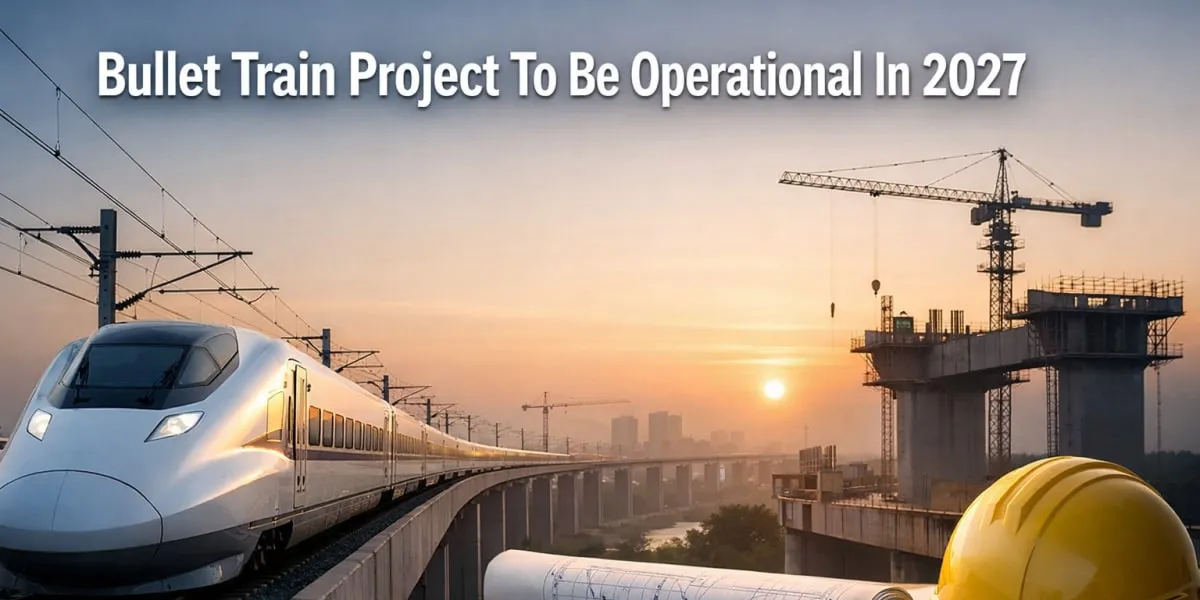
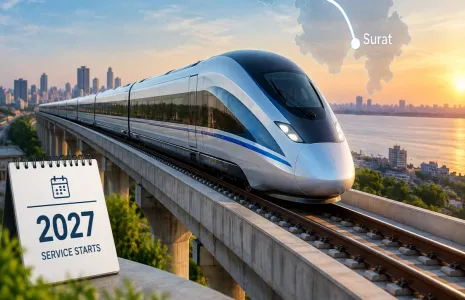
Union Railway Minister Ashwini Vaishnaw said on the sidelines of the 12th annual International Day of Yoga in Bikaner that India's dream bullet train project will be operational in 2027 and will open section by section. The minister described the timeline as the result of sustained construction progress and inter-agency coordination across affected states. He presented the phased commissioning as the fulfilment of a long-standing infrastructure vision that will begin delivering services from 2027.

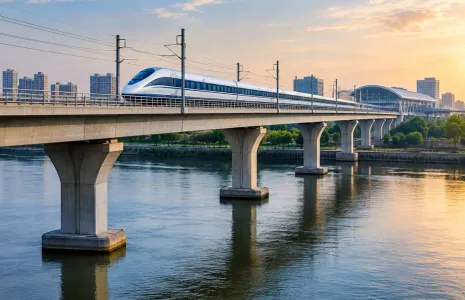
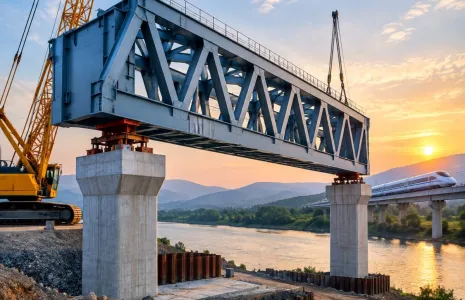
The Mumbai-Ahmedabad High-Speed Rail Corridor (MAHSR), India's first bullet train project, remains under construction with works advancing in planned phases. Authorities have reiterated their commitment to complete and operationalise the corridor by 2027, while testing and commissioning activities are being scheduled for stretches as they are made serviceable. Civil works, including elevated viaducts, track laying and station construction, are reported to be at various stages along the alignment. Coordination with state governments and contractors is being maintained to manage land acquisition, utilities and safety clearances.

As part of a long-term plan to develop a nationwide high-speed rail system, the government has identified seven additional corridors for study and development. The proposed routes include Mumbai-Pune, Pune-Hyderabad, Hyderabad-Bengaluru, Hyderabad-Chennai, Chennai-Bengaluru, Delhi-Varanasi and Varanasi-Siliguri. Planning for these corridors is at various stages, with route surveys, feasibility assessments and alignment finalisation ongoing. Officials are working to sequence project delivery so that lessons from the MAHSR can be incorporated into subsequent schemes.

The expansion plans underline a broader strategy to modernise rail infrastructure and improve intercity connectivity across regions. The phased opening of the MAHSR is intended to provide practical experience in operations, safety protocols and maintenance regimes that will inform follow-up projects. The initiative is presented as a long-term investment in transport capacity and regional development, with policymakers citing faster journeys and enhanced economic linkages as central objectives.

"Join industry leaders at RAHSTA Expo, India's premier platform for roads, highways and traffic infrastructure. Register now to explore innovations, network with experts and shape the future of mobility."

Union Railway Minister Ashwini Vaishnaw said on the sidelines of the 12th annual International Day of Yoga in Bikaner that India's dream bullet train project will be operational in 2027 and will open section by section. The minister described the timeline as the result of sustained construction progress and inter-agency coordination across affected states. He presented the phased commissioning as the fulfilment of a long-standing infrastructure vision that will begin delivering services from 2027. The Mumbai-Ahmedabad High-Speed Rail Corridor (MAHSR), India's first bullet train project, remains under construction with works advancing in planned phases. Authorities have reiterated their commitment to complete and operationalise the corridor by 2027, while testing and commissioning activities are being scheduled for stretches as they are made serviceable. Civil works, including elevated viaducts, track laying and station construction, are reported to be at various stages along the alignment. Coordination with state governments and contractors is being maintained to manage land acquisition, utilities and safety clearances. As part of a long-term plan to develop a nationwide high-speed rail system, the government has identified seven additional corridors for study and development. The proposed routes include Mumbai-Pune, Pune-Hyderabad, Hyderabad-Bengaluru, Hyderabad-Chennai, Chennai-Bengaluru, Delhi-Varanasi and Varanasi-Siliguri. Planning for these corridors is at various stages, with route surveys, feasibility assessments and alignment finalisation ongoing. Officials are working to sequence project delivery so that lessons from the MAHSR can be incorporated into subsequent schemes. The expansion plans underline a broader strategy to modernise rail infrastructure and improve intercity connectivity across regions. The phased opening of the MAHSR is intended to provide practical experience in operations, safety protocols and maintenance regimes that will inform follow-up projects. The initiative is presented as a long-term investment in transport capacity and regional development, with policymakers citing faster journeys and enhanced economic linkages as central objectives.

Next Story
Real Estate

VeARC leases 27,000 sq ft office space in Bengaluru

VeARC India has leased approximately 27,000 sq ft of office space at The Executive Centre's (TEC) Helios Business Park on Outer Ring Road (ORR), Bengaluru, to support the expansion of its Global Capability Centre (GCC) operations.The new workspace accommodates more than 450 workstations and is intended to support the company's growing workforce in India. VeARC India serves as the Global Capability Centre for Long Arc Capital.Located on Bengaluru's Outer Ring Road, the office provides access to one of the city's key technology and business corridors. The expansion comes amid continued growth in..

Next Story
Real Estate

Bharat Shah Family Buys Four Luxury Apartments In Worli For Rs1.8 bn

The family of veteran investor Bharat Shah has acquired four ultra-luxury apartments on the higher floors of Kalpataru One in Worli, South Mumbai, for Rs1.8 billion (bn). The purchases were registered on 6 July 2026 and were executed through Preeti Bharat Shah and Kinnari Bharat Shah, who bought the flats from Kalpataru Properties Limited. Property registration documents reviewed by Zapkey show the total consideration at Rs1.7941 billion. The transactions recorded a per square foot RERA carpet price of Rs0.101 million (mn), with each apartment valued at about Rs448.5 million. The four residenc..

Next Story
Infrastructure Urban

NITI Aayog Consultation On Critical Mineral Supply Chains

NITI Aayog convened a stakeholder consultation in New Delhi on Wednesday to assess requirements for critical minerals across strategic sectors, bringing together experts from government, research institutions, academia and industry. The meeting aimed to estimate current and future demand, identify supply chain vulnerabilities and discuss measures to strengthen domestic capabilities in exploration, processing and recycling. The exercise formed part of broader efforts to secure mineral value chains essential for economic growth, technological advancement and national security.\n\nDiscussions con..

Advertisement

Subscribe to Our Newsletter

Get daily newsletters around different themes from Construction world.

STAY CONNECTED

Advertisement

Advertisement

Advertisement