Conflicting Versions Over Telangana Takeover Of Hyderabad Metro
RAILWAYS & METRO RAIL

Conflicting Versions Over Telangana Takeover Of Hyderabad Metro

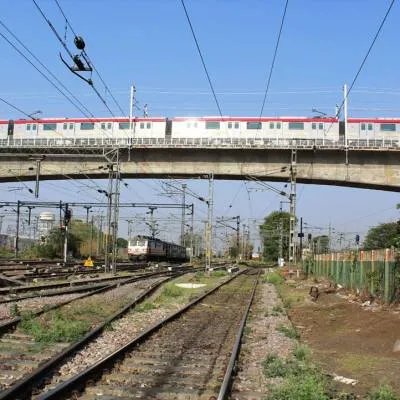
Conflicting versions continue to emerge over the Telangana government’s plan to take over Hyderabad Metro Rail Limited (HMRL) from Larsen & Toubro, months after the announcement in April. Following the chief minister's two-day visit to New Delhi the government appointed SBICAPS as a consultant to study financial, operational and legal aspects of the proposal.

Reports have emerged that the Central government has advised the State to fund the project independently rather than involve HMRL, and that the suggestion is linked to the Centre's terms for taking up Metro Phase II as a joint venture with HMRL. Under the proposed 50:50 joint venture model about 48 per cent of the project cost would be met through loans, 30 per cent by the State government and 18 per cent by the Central government.

Although a State-funded model has been adopted elsewhere concerns persist about whether it can work in Telangana given the scale of Phase II, which spans 122 km. Metro Phase I, which covers 69 km, already carries a debt burden of more than Rs 135 bn and equity of nearly Rs 14.61 bn, totalling about Rs 150 bn.

Questions are being raised about the State government's ability to raise funds for taking over Metro Phase I on its own after it raised loans worth Rs 4.14 tn in just 30 months. Financial institutions such as the Indian Railway Finance Corporation (IRFC) may offer loans at relatively lower interest rates, but securing similar terms for a State-led takeover could prove difficult, according to a leading financial adviser, who warned that higher rates would add a further burden and might force asset sales to service debt.

Amid the conflicting versions a senior HMRL official indicated that, to the best of his knowledge, the Central government had not asked the State to raise funds directly for the Phase I takeover. The government is awaiting the SBICAPS study before deciding on the next steps.

"Join industry leaders at RAHSTA Expo, India's premier platform for roads, highways and traffic infrastructure. Register now to explore innovations, network with experts and shape the future of mobility."

Conflicting versions continue to emerge over the Telangana government’s plan to take over Hyderabad Metro Rail Limited (HMRL) from Larsen & Toubro, months after the announcement in April. Following the chief minister's two-day visit to New Delhi the government appointed SBICAPS as a consultant to study financial, operational and legal aspects of the proposal. Reports have emerged that the Central government has advised the State to fund the project independently rather than involve HMRL, and that the suggestion is linked to the Centre's terms for taking up Metro Phase II as a joint venture with HMRL. Under the proposed 50:50 joint venture model about 48 per cent of the project cost would be met through loans, 30 per cent by the State government and 18 per cent by the Central government. Although a State-funded model has been adopted elsewhere concerns persist about whether it can work in Telangana given the scale of Phase II, which spans 122 km. Metro Phase I, which covers 69 km, already carries a debt burden of more than Rs 135 bn and equity of nearly Rs 14.61 bn, totalling about Rs 150 bn. Questions are being raised about the State government's ability to raise funds for taking over Metro Phase I on its own after it raised loans worth Rs 4.14 tn in just 30 months. Financial institutions such as the Indian Railway Finance Corporation (IRFC) may offer loans at relatively lower interest rates, but securing similar terms for a State-led takeover could prove difficult, according to a leading financial adviser, who warned that higher rates would add a further burden and might force asset sales to service debt. Amid the conflicting versions a senior HMRL official indicated that, to the best of his knowledge, the Central government had not asked the State to raise funds directly for the Phase I takeover. The government is awaiting the SBICAPS study before deciding on the next steps.

Next Story
Infrastructure Transport

RITES Expands NUPPL Railway Siding Contract To Rs1,489.3 mn

RITES Limited has expanded the scope of its railway siding contract with Neyveli Uttar Pradesh Power Limited (NUPPL), increasing the contract value to Rs1,489.3 million (mn) from Rs1,201.3 million (mn). The revision covers comprehensive operation and maintenance of the NUPPL/GTPP railway siding and includes hiring of locomotives on a wet-lease basis. The locomotive hire is for a period of 48 months and forms part of the extended operational scope under the agreement. The overall execution period remains five years from the original Memorandum of Understanding dated 13 February 2025, with the e..

Next Story
Infrastructure Urban

India Office Leasing Rises Six Per Cent In H1 2026

A Colliers India report said India's Grade A office market recorded gross leasing of 35.7 million (mn) square feet in the first half of 2026, up six per cent year-on-year despite a softer second quarter amid global trade disruptions. Leasing in April–June totalled 17.4 mn square feet, down two per cent from a year earlier, while Grade A absorption exceeded 15 mn square feet for the ninth consecutive quarter across seven markets. Demand was supported by Global Capability Centres (GCCs), technology firms and flexible workspace operators. Bengaluru led leasing with 10.5 mn square feet in H1 and..

Next Story
Real Estate

PE Investments Fall 23 per cent To Rs 1.13 bn In H1 2026

Private equity investments in the Indian real estate sector fell 23 per cent year-on-year to Rs 1.13 billion (bn) in the first half of 2026, down from Rs 1.47 bn in H1 of 2025, as investors adopted a more selective approach amid elevated global interest rates, tighter financial conditions and heightened geopolitical uncertainty. The finding appears in Knight Frank's Trends in Private Equity Investment in India: H1 2026 report. Despite the overall decline, the office segment remained the preferred asset class, accounting for 89 per cent of private equity allocations in H1 2026, with the residen..

Advertisement

Subscribe to Our Newsletter

Get daily newsletters around different themes from Construction world.

STAY CONNECTED

Advertisement

Advertisement

Advertisement