+
DMRC Opens Tender For Twin Tunnels And Two Subterranean Stations
RAILWAYS & METRO RAIL

DMRC Opens Tender For Twin Tunnels And Two Subterranean Stations

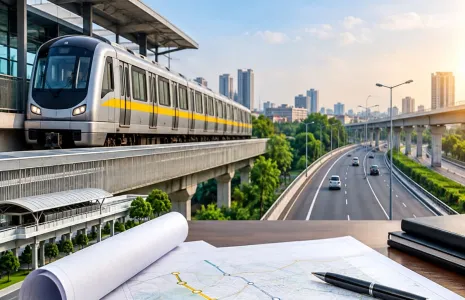
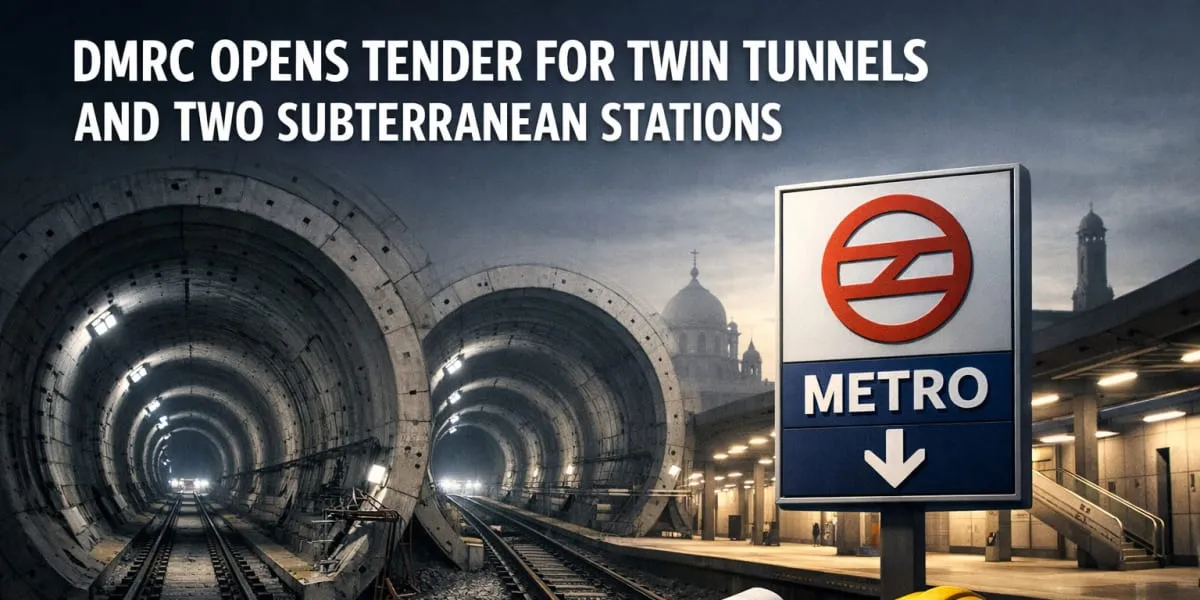
The Delhi Metro Rail Corporation has invited bids for the design and construction of twin underground tunnels and two new subterranean stations under Phase V(A) of the Delhi Metro project along the Central Vista corridor. The scope covers a critical urban stretch and specifies integration with existing metro infrastructure to enhance access in a sensitive administrative area.\n\nDMRC indicated the tunnel alignment will include twin bores between Shivaji Stadium and Central Secretariat to be constructed using tunnel boring machines, and a cut-and-cover tunnel stretch extending to Kartavya Bhawan. The contract encompasses construction of Central Secretariat and Kartavya Bhawan stations together with entry and exit structures, pedestrian subways and related civil works. The successful contractor will be responsible for design and execution, structural works, tunnelling, station fit-outs, utility integration and associated infrastructure.\n\nDetailed geotechnical surveys and continuous ground monitoring will be required, with real-time instrumentation systems deployed to control ground settlement and protect nearby buildings and utilities. The tunnels will run close to operational metro corridors, requiring careful coordination to maintain uninterrupted services and to minimise risk to existing structures. Advanced construction technology and monitoring protocols are expected to be employed to ensure safety in the high-security administrative zone.\n\nThe announcement follows cabinet approval of three new corridors under Phase V(A) at an estimated cost of Rs. 120.14 bn, which will add over 16 km to the network. Approved corridors comprise RK Ashram Marg to Indraprastha via Central Vista, Tughlakabad to Kalindi Kunj, and Aerocity to Indira Gandhi Domestic Terminal-one. The RK Ashram Marg–Indraprastha corridor is expected to provide direct metro access to Kartavya Bhawan and surrounding offices, benefiting nearly 60,000 office-goers and around zero point two mn visitors daily. Officials expect the expansion to reduce traffic congestion, curb pollution and ease daily commutes for thousands of people, with final timelines to be determined after the bidding process concludes.

The Delhi Metro Rail Corporation has invited bids for the design and construction of twin underground tunnels and two new subterranean stations under Phase V(A) of the Delhi Metro project along the Central Vista corridor. The scope covers a critical urban stretch and specifies integration with existing metro infrastructure to enhance access in a sensitive administrative area.\n\nDMRC indicated the tunnel alignment will include twin bores between Shivaji Stadium and Central Secretariat to be constructed using tunnel boring machines, and a cut-and-cover tunnel stretch extending to Kartavya Bhawan. The contract encompasses construction of Central Secretariat and Kartavya Bhawan stations together with entry and exit structures, pedestrian subways and related civil works. The successful contractor will be responsible for design and execution, structural works, tunnelling, station fit-outs, utility integration and associated infrastructure.\n\nDetailed geotechnical surveys and continuous ground monitoring will be required, with real-time instrumentation systems deployed to control ground settlement and protect nearby buildings and utilities. The tunnels will run close to operational metro corridors, requiring careful coordination to maintain uninterrupted services and to minimise risk to existing structures. Advanced construction technology and monitoring protocols are expected to be employed to ensure safety in the high-security administrative zone.\n\nThe announcement follows cabinet approval of three new corridors under Phase V(A) at an estimated cost of Rs. 120.14 bn, which will add over 16 km to the network. Approved corridors comprise RK Ashram Marg to Indraprastha via Central Vista, Tughlakabad to Kalindi Kunj, and Aerocity to Indira Gandhi Domestic Terminal-one. The RK Ashram Marg–Indraprastha corridor is expected to provide direct metro access to Kartavya Bhawan and surrounding offices, benefiting nearly 60,000 office-goers and around zero point two mn visitors daily. Officials expect the expansion to reduce traffic congestion, curb pollution and ease daily commutes for thousands of people, with final timelines to be determined after the bidding process concludes.

Next Story
Infrastructure Urban

Implementation Status of Jal Jeevan Mission

Since August 2019 the Government has implemented Jal Jeevan Mission to provide assured potable water through household tap connections in rural India. At the start of the mission only 32.3 million (mn) rural households, representing 16.7 per cent, were reported to have tap water connections. States and union territories have reported that 125.8 mn additional rural households have since been provided with tap connections. As a result, of about 193.6 mn rural households roughly 158.2 mn, or 81.71 per cent, are reported to have tap water supply at home.\n\nThe State, district and village level st..

Next Story
Infrastructure Urban

Jal Jeevan Mission Reaches Eighty One Per Cent Rural Coverage

The Government reported substantial progress under the Jal Jeevan Mission, launched in August 2019 to provide tap water to every rural household. At launch only 32.3 million (mn) rural households had tap connections and states and Union territories reported provision of 125.8 mn additional households by March 2026. Consequently, out of about 193.6 mn rural households around 158.2 mn, or 81.71 per cent, are reported to have tap water at home. The Finance Minister announced extension of the mission until 2028 in the 2025-26 budget speech. The Swachh Bharat Mission Grameen, launched in October 20..

Next Story
Infrastructure Urban

Empowering Local Governance for Sustainable Rural Water Supply

The Ministry of Jal Shakti has aligned the Jal Jeevan Mission (JJM) with the 73rd Amendment to strengthen village level planning and community ownership of water supply. Gram Panchayats, village water and sanitation committees and Pani Samitis are to plan, implement, manage and maintain piped water systems, with gram sabha processes formalising handover and oversight. Implementation support agencies including non government organisations, community based organisations and self help groups have been empanelled to train local committees and promote women participation. Under JJM, the department ..

Advertisement

Subscribe to Our Newsletter

Get daily newsletters around different themes from Construction world.

STAY CONNECTED

Advertisement

Advertisement

Advertisement