+
Fadnavis Opens Final SCLR Link And Launches TBM
RAILWAYS & METRO RAIL

Fadnavis Opens Final SCLR Link And Launches TBM

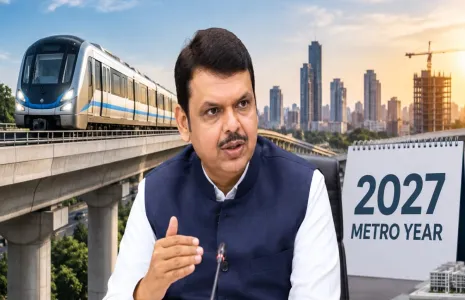
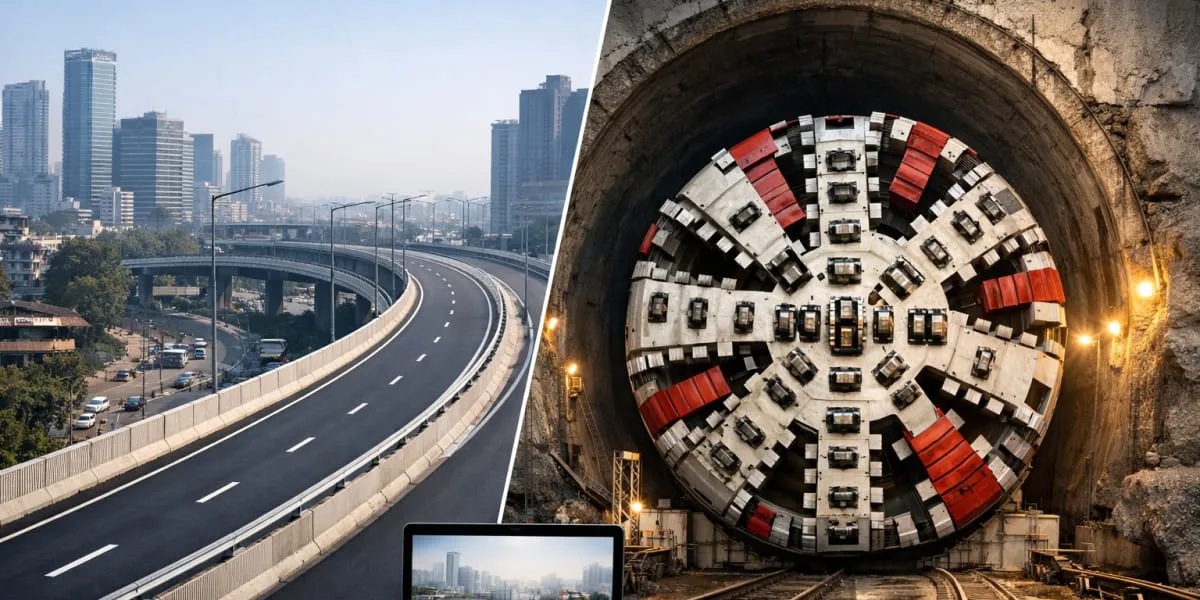
Mumbai chief minister Devendra Fadnavis inaugurated two key infrastructure projects via a video link from the Sahyadri Guest House, with deputy chief minister Sunetra Pawar present. He opened the final Bandra-Kurla Complex (BKC)–Vakola arm of the Santacruz-Chembur Link Road (SCLR) Phase two and commissioned the Chembur Metro station on Metro Line 2B. He launched Arjuna, the second tunnel boring machine (TBM) for the Thane–Borivali twin-tunnel road project.

The SCLR link on Bharat Nagar Road will improve connectivity out of the Bandra-Kurla Complex and help regulate traffic. Six links had been planned in 2017–18 to decongest the Bandra-Kurla Complex, but eight were ultimately created, with the last inaugurated on the day. The chief minister said further measures were needed to ensure smooth traffic on the Western Express Highway.

The twin tunnels are being built to provide a direct east–west road connection between Thane and Borivali, and are expected to reduce travel time from about 60 to 90 minutes to around 12 to 15 minutes. The first TBM, Nayak, was launched in April and Arjuna will now work alongside it from respective ends to accelerate tunnelling. The use of two tunnel boring machines is intended to fast-track completion after several obstacles were overcome.

An elevated connector in the G-Block area of the Bandra-Kurla Complex was also inaugurated and is expected to provide faster connectivity and reduce travel time for motorists. The Chembur Metro station on Metro Line 2B will integrate with existing links to ease commuter movement across the eastern suburbs.

The Union government has approved procurement of 238 new air-conditioned suburban local trains under the Mumbai Urban Transport Project (MUTP), with the first batch expected by 2027 and all new trains to be introduced by 2029–30. The Mumbai Metropolitan Region Development Authority (MMRDA) and other agencies are implementing the projects to ease congestion and upgrade urban transport. An infrastructure facility was named after former Maharashtra chief minister Babasaheb Bhosale and the chief minister said contributors to the state's development should be remembered.

Mumbai chief minister Devendra Fadnavis inaugurated two key infrastructure projects via a video link from the Sahyadri Guest House, with deputy chief minister Sunetra Pawar present. He opened the final Bandra-Kurla Complex (BKC)–Vakola arm of the Santacruz-Chembur Link Road (SCLR) Phase two and commissioned the Chembur Metro station on Metro Line 2B. He launched Arjuna, the second tunnel boring machine (TBM) for the Thane–Borivali twin-tunnel road project. The SCLR link on Bharat Nagar Road will improve connectivity out of the Bandra-Kurla Complex and help regulate traffic. Six links had been planned in 2017–18 to decongest the Bandra-Kurla Complex, but eight were ultimately created, with the last inaugurated on the day. The chief minister said further measures were needed to ensure smooth traffic on the Western Express Highway. The twin tunnels are being built to provide a direct east–west road connection between Thane and Borivali, and are expected to reduce travel time from about 60 to 90 minutes to around 12 to 15 minutes. The first TBM, Nayak, was launched in April and Arjuna will now work alongside it from respective ends to accelerate tunnelling. The use of two tunnel boring machines is intended to fast-track completion after several obstacles were overcome. An elevated connector in the G-Block area of the Bandra-Kurla Complex was also inaugurated and is expected to provide faster connectivity and reduce travel time for motorists. The Chembur Metro station on Metro Line 2B will integrate with existing links to ease commuter movement across the eastern suburbs. The Union government has approved procurement of 238 new air-conditioned suburban local trains under the Mumbai Urban Transport Project (MUTP), with the first batch expected by 2027 and all new trains to be introduced by 2029–30. The Mumbai Metropolitan Region Development Authority (MMRDA) and other agencies are implementing the projects to ease congestion and upgrade urban transport. An infrastructure facility was named after former Maharashtra chief minister Babasaheb Bhosale and the chief minister said contributors to the state's development should be remembered.

Related Stories

Gold Stories

Next Story
Infrastructure Transport

MMRDA Targets Completion of Projects by December 2028

The Mumbai Metropolitan Region Development Authority (MMRDA) is targeting the completion of all its ongoing infrastructure projects by December 2028, a year ahead of its December 2029 deadline, Metropolitan Commissioner Dr Sanjay Mukherjee has said.Speaking at the sixth edition of the Real Estate & Infrastructure Investors' Summit (REIIS) 2026 in Mumbai, Mukherjee said the authority was developing an integrated network of roads, tunnels, sea links and Metro corridors under its broader vision of “Mumbai in 59 Minutes”.The objective is to improve east-west and north-south connectivity an..

Next Story
Building Material

High-Performance Façades Gain Ground in Indian Buildings

High-performance façades are gaining greater importance in Indian architecture as developers and architects increasingly focus on energy efficiency, thermal comfort and building performance, according to Shankar Fenestrations & Glasses.The company said modern façade systems are increasingly being considered as part of a building's overall performance strategy rather than being used primarily as aesthetic elements.High-performance glass, curtain wall systems and structural glazing can contribute to thermal regulation, solar control, daylight management and indoor comfort. Their growing ad..

Next Story
Technology

SPML Infra's 104.4 kWh BESS Battery Pack Clears Global Tests

SPML Infra has announced that its proprietary 104.4 kWh Battery Energy Storage System (BESS) battery pack has completed key international safety, performance and transportation testing and certification requirements, marking a step towards its commercial deployment.Developed under the company's own intellectual property, the battery pack has completed requirements under UL9540A, IEC 62619, IEC 63056, IEC 60730, IEC 61000-6-2, IEC 61000-6-4 and UN38.3 standards.The testing covers areas including thermal runaway safety, battery performance, system functional safety, electromagnetic compatibility..

Advertisement

Subscribe to Our Newsletter

Get daily newsletters around different themes from Construction world.

STAY CONNECTED

Advertisement

SPECIAL OFFER
QR Code