Indian Railways to Renew 7,900 km of Tracks by FY27
RAILWAYS & METRO RAIL

Indian Railways to Renew 7,900 km of Tracks by FY27

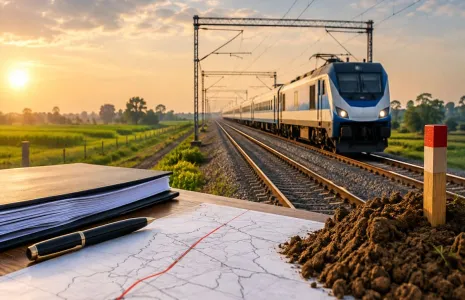
Indian Railways has announced plans to renew more than 7,900 kilometres of railway tracks over the next two years, marking a major push to enhance safety, speed and overall network reliability.

According to the Ministry of Railways, track renewal work covering over 7,500 kilometres is currently underway in the ongoing financial year (FY26). This follows the completion of around 6,800 kilometres of track renewal during the previous financial year (FY25).

The ministry said sustained investment over the past decade has significantly strengthened rail track infrastructure, with a particular focus on expanding the high-speed capable network. The length of tracks designed to support train speeds of 110 kmph or higher has nearly doubled since 2014.

As a result, higher-speed train operations are now possible across nearly 80 per cent of Indian Railways’ broad gauge network. Officials said this expanded capability is critical for the rollout and smooth operation of newer semi-high-speed and long-distance services such as the Vande Bharat and Amrit Bharat trains.

The large-scale renewal and upgrade programme is also expected to improve safety standards, reduce maintenance-related disruptions and enhance passenger comfort, while supporting the long-term capacity and performance needs of the national rail network.

Indian Railways has announced plans to renew more than 7,900 kilometres of railway tracks over the next two years, marking a major push to enhance safety, speed and overall network reliability. According to the Ministry of Railways, track renewal work covering over 7,500 kilometres is currently underway in the ongoing financial year (FY26). This follows the completion of around 6,800 kilometres of track renewal during the previous financial year (FY25). The ministry said sustained investment over the past decade has significantly strengthened rail track infrastructure, with a particular focus on expanding the high-speed capable network. The length of tracks designed to support train speeds of 110 kmph or higher has nearly doubled since 2014. As a result, higher-speed train operations are now possible across nearly 80 per cent of Indian Railways’ broad gauge network. Officials said this expanded capability is critical for the rollout and smooth operation of newer semi-high-speed and long-distance services such as the Vande Bharat and Amrit Bharat trains. The large-scale renewal and upgrade programme is also expected to improve safety standards, reduce maintenance-related disruptions and enhance passenger comfort, while supporting the long-term capacity and performance needs of the national rail network.

Related Stories

Gold Stories

Next Story
Infrastructure Urban

KONE Opens India's First Digital Experience Centre in Pune

KONE, a global elevator and escalator manufacturer, has inaugurated its first Digital Experience Centre (DEC) in India, located in Pune. The facility aims to showcase how artificial intelligence (AI), connectivity and data-driven technologies can enhance customer experiences and improve building operations.The centre was inaugurated by Jussi Herlin, Executive Vice Chair, KONE Corporation; Philippe Delorme, President and CEO, KONE; and Nandan Nilekani, Co-founder and Chairman of the Board, Infosys.Designed as an interactive customer environment, the facility demonstrates digital solutions cover..

Next Story
Infrastructure Urban

CII GreenCo Launches Circularity Guidelines for Indian Industry

The Confederation of Indian Industry (CII) GreenCo Council has launched the CII GreenCo Circularity Guidelines – Pilot Version at the 17th CII GreenCo Waste & Resource Management Summit 2026 in Chennai. The initiative aims to strengthen resource efficiency, waste reduction and circular economy practices across Indian manufacturing and process industries.The guidelines introduce a structured framework with circularity indices covering raw materials, consumables, packaging and other resource inputs. These indicators will help industries assess existing practices, identify opportunities to ..

Next Story
Infrastructure Energy

Global Electronics Association Launches IPC-1783-CO2E Standard

The Global Electronics Association has introduced IPC-1783-CO2E, a new international standard aimed at improving consistency, transparency and comparability in product carbon footprint reporting across the electronics manufacturing industry.The standard, titled International Standard for Data Collection and Reporting of CO2 Equivalent (CO2e) Emissions for the Electronics Manufacturing Supply Chain, provides industry-specific guidance for collecting, estimating and reporting carbon emissions data.With increasing regulatory requirements and customer expectations, electronics manufacturers face c..

Advertisement

Subscribe to Our Newsletter

Get daily newsletters around different themes from Construction world.

STAY CONNECTED

Advertisement

SPECIAL OFFER
QR Code