Matrix Geo Wins Rail Monitoring Project Using Drones
RAILWAYS & METRO RAIL

Matrix Geo Wins Rail Monitoring Project Using Drones

Matrix Geo Solutions Ltd has secured a Letter of Acceptance from North Western Railway to monitor the Luni–Samdari–Bhildi double line project. The Jaipur-based contract covers aerial videography monitoring across a 271.97 km rail corridor and is valued at Rs 30.76 million (mn), to be executed over 30 months. The assignment reflects growing complexity in railway infrastructure and the consequent need for accurate, timely monitoring to maintain schedules and manage risks during construction.

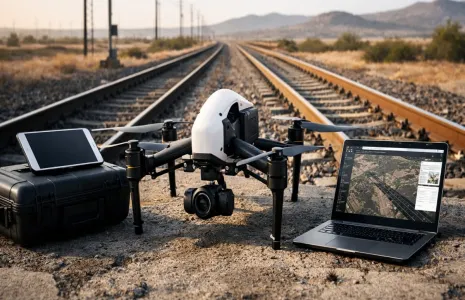
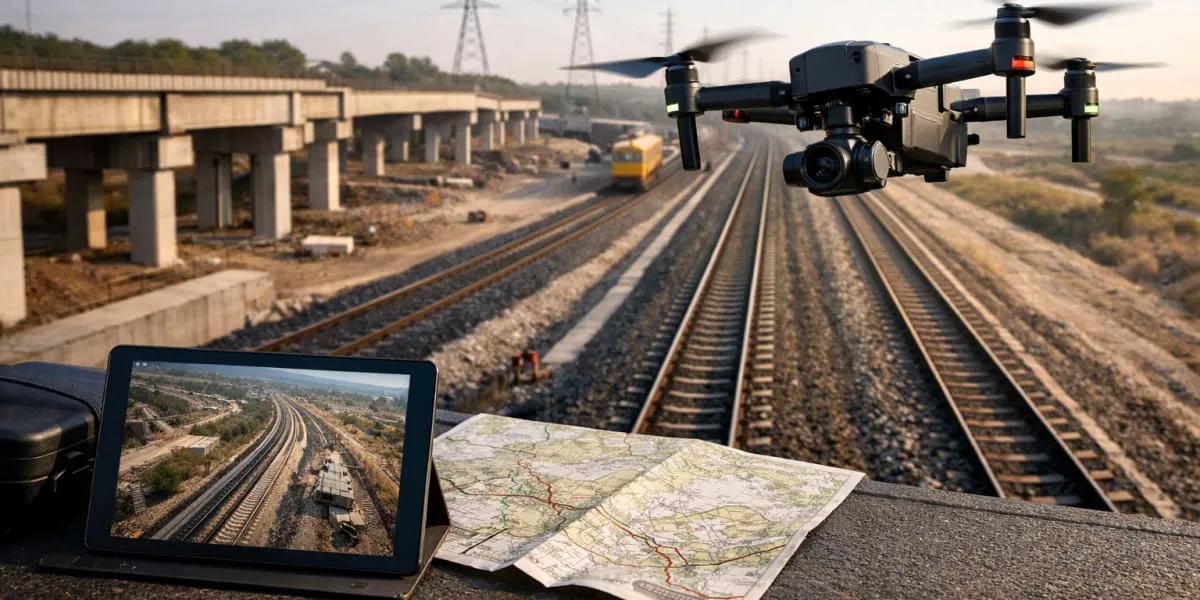
Monthly deployments of advanced unmanned aerial vehicles will capture four K geo-tagged video with GPS metadata to enable precise change detection at successive construction stages, including earthwork, ballast laying, rail installation and bridge construction. The data will be integrated into geospatial workflows to support progress assessment, defect identification and resource planning. The approach is intended to improve timelines, enhance safety protocols and increase transparency in project execution for all stakeholders.

Matrix Geo Solutions indicated that drone-led monitoring is expected to reduce the need for senior officials to travel to sites by 50 per cent and to accelerate reporting time by 25 per cent while providing real-time updates on project locations. The company highlighted its more than 25 years of global experience in delivering high-precision geospatial intelligence for infrastructure programmes. Its expertise encompasses satellite imagery, drone data capture, aerial mapping and geographic information systems to facilitate precise planning and monitoring. Such capabilities are presented as particularly valuable for large scale railway corridors.

The monitoring assignment is scheduled over a 30 month period and will support contractors and railway administrators in maintaining control over timelines and deliverables. Project managers will be able to use periodic aerial evidence to inform faster decision making and to co-ordinate remedial actions. The deployment of such technology is likely to become a standard feature of complex infrastructure monitoring as stakeholders seek higher assurance and measurable efficiency gains.

Matrix Geo Solutions Ltd has secured a Letter of Acceptance from North Western Railway to monitor the Luni–Samdari–Bhildi double line project. The Jaipur-based contract covers aerial videography monitoring across a 271.97 km rail corridor and is valued at Rs 30.76 million (mn), to be executed over 30 months. The assignment reflects growing complexity in railway infrastructure and the consequent need for accurate, timely monitoring to maintain schedules and manage risks during construction. Monthly deployments of advanced unmanned aerial vehicles will capture four K geo-tagged video with GPS metadata to enable precise change detection at successive construction stages, including earthwork, ballast laying, rail installation and bridge construction. The data will be integrated into geospatial workflows to support progress assessment, defect identification and resource planning. The approach is intended to improve timelines, enhance safety protocols and increase transparency in project execution for all stakeholders. Matrix Geo Solutions indicated that drone-led monitoring is expected to reduce the need for senior officials to travel to sites by 50 per cent and to accelerate reporting time by 25 per cent while providing real-time updates on project locations. The company highlighted its more than 25 years of global experience in delivering high-precision geospatial intelligence for infrastructure programmes. Its expertise encompasses satellite imagery, drone data capture, aerial mapping and geographic information systems to facilitate precise planning and monitoring. Such capabilities are presented as particularly valuable for large scale railway corridors. The monitoring assignment is scheduled over a 30 month period and will support contractors and railway administrators in maintaining control over timelines and deliverables. Project managers will be able to use periodic aerial evidence to inform faster decision making and to co-ordinate remedial actions. The deployment of such technology is likely to become a standard feature of complex infrastructure monitoring as stakeholders seek higher assurance and measurable efficiency gains.

Related Stories

Gold Stories

Next Story
Real Estate

LML Realty Sells Out Jhirka Valley Industrial Park in Haryana

LML Realty, the real estate arm of LML Group, recently announced the complete sell-out of its Jhirka Valley Industrial Park in Haryana, with over 1.17 million sq ft of industrial space acquired by more than 50 companies. With utilities and internal infrastructure in place, the company has commenced plot handovers, enabling buyers to begin construction and establish their operations.The industrial park has attracted companies across diverse sectors, including chemicals, metals and alloys, textiles, electrical equipment, energy, logistics, construction, polymers and engineering. Key buyers inclu..

Next Story
Real Estate

WSB Real Estate Partners Exits Six Housing Investments

WSB Real Estate Partners recently announced the successful exit of six residential investments across Bengaluru, Mumbai Metropolitan Region (MMR) and National Capital Region (NCR), delivering an average internal rate of return (IRR) of 19–21 per cent and an overall investment return of 1.4 times.The real estate-focused investment firm invested approximately Rs 7 billion across six mid-affordable housing projects over the past four years. All six investments were fully repaid between April and November 2026, several months ahead of their original investment tenures.WSB collaborated with sever..

Next Story
Infrastructure Transport

Aluminium Industry Seeks Policy Support for Rs 4 Trillion Investment

The Aluminium Association of India (AAI) has recently urged the government to introduce supportive policy measures to safeguard the sector’s proposed Rs 4 trillion investment pipeline. The association highlighted the need for a predictable policy framework to strengthen domestic manufacturing, expand production capacity and reduce import dependence.AAI submitted its recommendations for the Union Budget 2027-28 to the Ministries of Finance, Commerce and Industry, and Mines, along with the Department for Promotion of Industry and Internal Trade (DPIIT).India’s aluminium demand is projected t..

Subscribe to Our Newsletter

Get daily newsletters around different themes from Construction world.

STAY CONNECTED

Advertisement

SPECIAL OFFER
QR Code