Mysuru Station Revamp to Boost Capacity and Train Traffic Flow
RAILWAYS & METRO RAIL

Mysuru Station Revamp to Boost Capacity and Train Traffic Flow

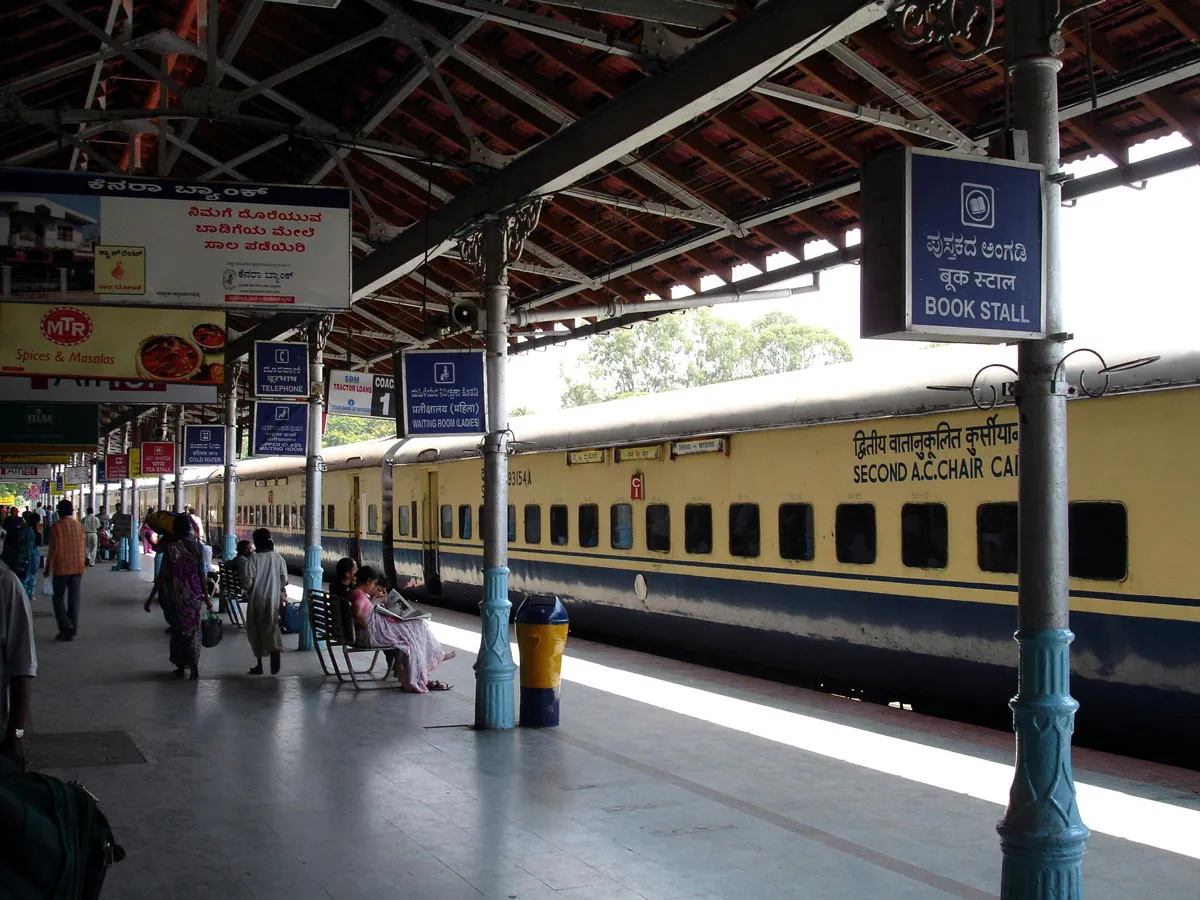
Railway authorities have said that the ongoing redevelopment of Mysuru Junction, taken up at an investment of Rs 3.95 billion, is set to significantly strengthen the station’s capacity and enhance its ability to manage rising train and passenger volumes. The updates were shared during the ‘Station Mahotsav’ organised by the Mysuru Divisional Railway.
The project, which aims to transform Mysuru Junction into a world-class station, was launched in June 2022 when Prime Minister Narendra Modi laid the foundation stone. Officials noted that the redevelopment is designed to accommodate future demand by allowing the introduction of new services, increasing the frequency of existing routes, and improving connectivity to additional destinations.
According to the authorities, the approved works include “the addition of three new platform lines along with four pit lines and associated stabling lines.” Classified as an NSG-2 category station, Mysuru Junction currently operates six platforms and handles 106 trains across bi-weekly, tri-weekly and weekly schedules. These trains connect the city to major hubs such as New Delhi, Howrah, Patna, Mumbai, Kacheguda, Chennai, Thiruvananthapuram and several locations within Karnataka.
With an average daily footfall of nearly 60,000 passengers and revenue generation of ₹21–25 lakh per day, the station’s expansion is expected to support future requests for higher frequency services between Mysuru and Bengaluru as well as additional long-distance trains. Officials said the project is aligned with Mysuru’s projected urban growth and the region’s need for stronger economic and industrial linkages.
Mudit Mittal, Divisional Railway Manager, Mysuru, highlighted the historic role of the Mysore rulers in shaping early railway development, noting that “The Mysore State Railway… became part of Southern Railway on April 14, 1951, after the nationalisation of Indian Railways.”
Divisional Commercial Manager Girish Dharmaraja Kalakunda said the project has a three-year timeline, with six months already completed. Alongside infrastructure upgrades, Type-2 railway quarters are being built, following which older structures will be removed to free space for expansion. The celebrations also included a guided tour of the Heritage Gallery, a heritage walk, cultural performances and the felicitation of local dignitaries.
News source: The Hindu

Railway authorities have said that the ongoing redevelopment of Mysuru Junction, taken up at an investment of Rs 3.95 billion, is set to significantly strengthen the station’s capacity and enhance its ability to manage rising train and passenger volumes. The updates were shared during the ‘Station Mahotsav’ organised by the Mysuru Divisional Railway.The project, which aims to transform Mysuru Junction into a world-class station, was launched in June 2022 when Prime Minister Narendra Modi laid the foundation stone. Officials noted that the redevelopment is designed to accommodate future demand by allowing the introduction of new services, increasing the frequency of existing routes, and improving connectivity to additional destinations.According to the authorities, the approved works include “the addition of three new platform lines along with four pit lines and associated stabling lines.” Classified as an NSG-2 category station, Mysuru Junction currently operates six platforms and handles 106 trains across bi-weekly, tri-weekly and weekly schedules. These trains connect the city to major hubs such as New Delhi, Howrah, Patna, Mumbai, Kacheguda, Chennai, Thiruvananthapuram and several locations within Karnataka.With an average daily footfall of nearly 60,000 passengers and revenue generation of ₹21–25 lakh per day, the station’s expansion is expected to support future requests for higher frequency services between Mysuru and Bengaluru as well as additional long-distance trains. Officials said the project is aligned with Mysuru’s projected urban growth and the region’s need for stronger economic and industrial linkages.Mudit Mittal, Divisional Railway Manager, Mysuru, highlighted the historic role of the Mysore rulers in shaping early railway development, noting that “The Mysore State Railway… became part of Southern Railway on April 14, 1951, after the nationalisation of Indian Railways.”Divisional Commercial Manager Girish Dharmaraja Kalakunda said the project has a three-year timeline, with six months already completed. Alongside infrastructure upgrades, Type-2 railway quarters are being built, following which older structures will be removed to free space for expansion. The celebrations also included a guided tour of the Heritage Gallery, a heritage walk, cultural performances and the felicitation of local dignitaries.News source: The Hindu

Next Story
Real Estate

Baashyaam Completes Rs 12.12-Bn Purchase of Prime Nungambakkam Land

Baashyaam Group has completed the registration of a landmark 5.8-acre property on Haddows Road in Nungambakkam, marking one of Chennai’s largest real-estate transactions in recent years. The land parcel, acquired from Standard Chartered Bank, carries a combined value of about Rs 12.12 billion including registration charges.The company is currently evaluating its development strategy for the plot, which sits in one of the most sought-after neighbourhoods in the city. With large contiguous land parcels becoming increasingly rare in central Chennai, the acquisition is expected to play a signifi..

Next Story
Infrastructure Transport

IRFC Raises $300 Mn via SMBC Loan to Drive IRFC 2.0 Expansion

Indian Railway Finance Corporation (IRFC) has secured a $300 million loan from Japan’s Sumitomo Mitsui Banking Corporation (SMBC), marking its first commercial market borrowing since 2021. The finance pact, disclosed through an exchange filing, represents a renewed push by the company to tap global funding avenues as it prepares for a broader developmental role under its IRFC 2.0 vision.The five-year facility is benchmarked to the Tokyo Overnight Average Rate (TONAR), aligning the borrowing structure with Japan’s key interest rate indicator. IRFC, a Navratna public sector enterprise, said ..

Next Story
Resources

ICSI Advocates Principle-Based Stewardship to Tackle Climate Change

With COP30 concluding in Brazil, the Institute of Company Secretaries of India (ICSI) has pressed the need for a principle-based corporate response to climate change and highlighted the strategic importance of embedding Environmental, Social and Governance (ESG) principles into business frameworks for long-term competitiveness.As a statutory body advancing corporate governance best practices, ICSI has positioned stewardship as responsible management of assets and relationships for sustained value creation, introducing the ICSI Guiding Principles on Stewardship (IGPS). The International Financi..

Advertisement

Subscribe to Our Newsletter

Get daily newsletters around different themes from Construction world.

STAY CONNECTED

Advertisement

Advertisement

Advertisement

Advertisement

Get CW App