+
Northeast Frontier Railway Marks New Trains And Freight Growth
RAILWAYS & METRO RAIL

Northeast Frontier Railway Marks New Trains And Freight Growth

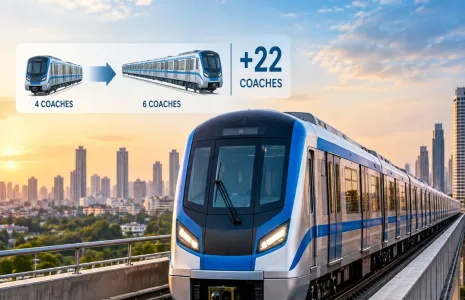
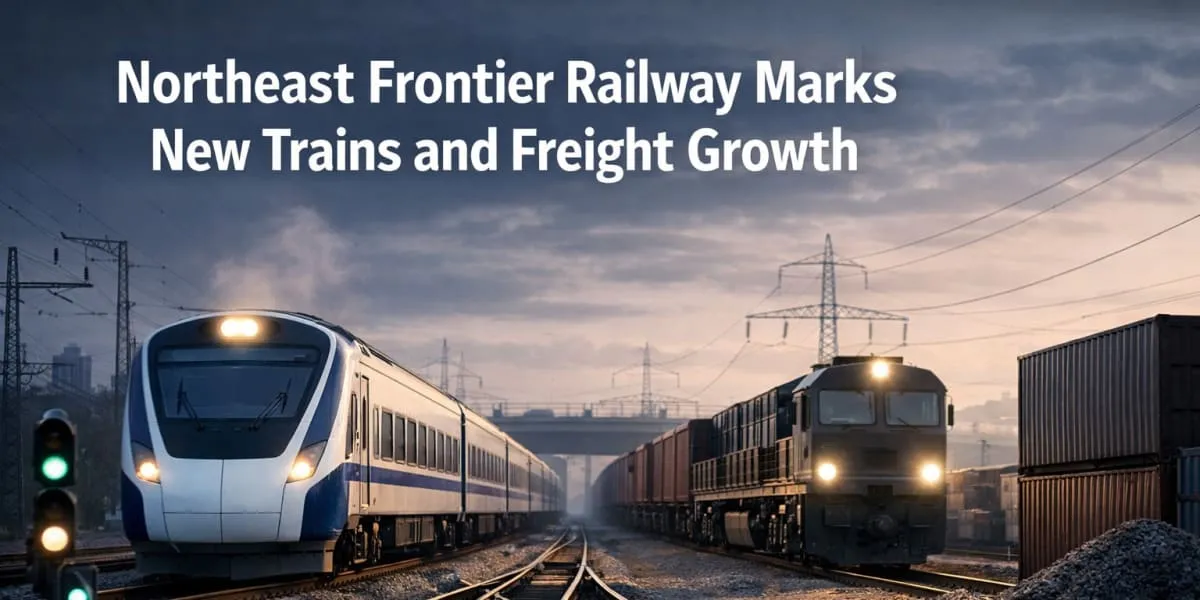
Northeast Frontier Railway (NFR) has marked key milestones after introducing new passenger services and reporting growth in freight traffic. The operator said the additions are intended to boost connectivity across the region and strengthen logistical links with neighbouring states. The actions form part of a broader plan to enhance capacity and modernise operations while improving punctuality and passenger amenities.

The new services include regular runs on established routes and improved timings to reduce journey durations for commuters and long distance travellers. Rolling stock upgrades and timetable revisions have been coordinated to provide greater reliability. Stations along the corridors have seen enhancements to waiting areas, accessibility and ticketing facilities to support increased passenger volumes and smoother interchange.

Freight operations have expanded with higher loadings across mineral, agricultural and industrial consignments, the railway reported. Capacity improvements at yards and the commissioning of dedicated freight terminals have reduced dwell times and improved turnaround. Coordination with road and port authorities has aided last mile connectivity, enabling more efficient movement of goods and supporting industrial supply chains across the north eastern region.

Investment in track renewal, signalling modernisation and maintenance regimes has underpinned service reliability and freight throughput. Digital initiatives for freight booking and passenger information have been expanded to streamline operations. Workforce training and safety audits have been intensified to sustain performance gains. Environmental measures have been incorporated in projects to reduce emissions and enhance energy efficiency across operations.

Officials said the milestones support regional economic activity and improve travel experience for millions of passengers and shippers annually. Continued focus on network optimisation, asset modernisation and stakeholder coordination will guide further enhancements. The railway intends to monitor performance indicators closely and adjust plans to maintain momentum in both passenger services and freight growth over coming years.

Northeast Frontier Railway (NFR) has marked key milestones after introducing new passenger services and reporting growth in freight traffic. The operator said the additions are intended to boost connectivity across the region and strengthen logistical links with neighbouring states. The actions form part of a broader plan to enhance capacity and modernise operations while improving punctuality and passenger amenities. The new services include regular runs on established routes and improved timings to reduce journey durations for commuters and long distance travellers. Rolling stock upgrades and timetable revisions have been coordinated to provide greater reliability. Stations along the corridors have seen enhancements to waiting areas, accessibility and ticketing facilities to support increased passenger volumes and smoother interchange. Freight operations have expanded with higher loadings across mineral, agricultural and industrial consignments, the railway reported. Capacity improvements at yards and the commissioning of dedicated freight terminals have reduced dwell times and improved turnaround. Coordination with road and port authorities has aided last mile connectivity, enabling more efficient movement of goods and supporting industrial supply chains across the north eastern region. Investment in track renewal, signalling modernisation and maintenance regimes has underpinned service reliability and freight throughput. Digital initiatives for freight booking and passenger information have been expanded to streamline operations. Workforce training and safety audits have been intensified to sustain performance gains. Environmental measures have been incorporated in projects to reduce emissions and enhance energy efficiency across operations. Officials said the milestones support regional economic activity and improve travel experience for millions of passengers and shippers annually. Continued focus on network optimisation, asset modernisation and stakeholder coordination will guide further enhancements. The railway intends to monitor performance indicators closely and adjust plans to maintain momentum in both passenger services and freight growth over coming years.

Related Stories

Gold Stories

Next Story
Real Estate

BMC OC Amnesty Scheme Requires Key Approvals from Mumbai Societies

The Brihanmumbai Municipal Corporation (BMC) has clarified that housing societies applying under its Occupation Certificate (OC) amnesty scheme must possess key approvals linked to the original construction. The requirements include a valid Intimation of Disapproval (IOD), an approved building plan and a Commencement Certificate (CC), along with a No Objection Certificate (NOC) from the developer or original construction applicant. The Standard Operating Procedure (SOP) makes clear that the absence of an OC alone will not qualify a building for relief. Societies must establish that their build..

Next Story
Real Estate

Gurugram Emerges as Luxury Senior Living Hub

Gurugram is emerging as a potential hub for luxury senior living, supported by available land, healthcare infrastructure, connectivity and a concentration of affluent professionals, high-net-worth individuals and non-resident Indians. These factors could give the city an advantage over land-constrained metros such as Mumbai. A report by the Association of Senior Living India (ASLI) and JLL estimates that India’s organised senior living market could represent a $10.1 bn opportunity by 2030. The sector had about 25,050 organised units as of June 2026, while penetration stood at only 1.5 per ce..

Next Story
Real Estate

Corrosion Costs India’s Infrastructure Rs. 142 bn Annually

Corrosion costs India an estimated Rs. 1.42 tn annually, equivalent to 4.3 per cent of gross domestic product, according to a report by the Confederation of Indian Industry and the National Research Institute. Infrastructure accounts for Rs. 142 bn of the annual burden, making it the sector with the largest absolute cost among those examined. The report, presented at the CII Annual Infrastructure Summit 2026, said the infrastructure-sector cost equals about 2.9 per cent of the sector’s gross domestic product. It estimated that effective measures could generate maximum savings of Rs. 495.8 bn..

Advertisement

Subscribe to Our Newsletter

Get daily newsletters around different themes from Construction world.

STAY CONNECTED

Advertisement

SPECIAL OFFER
QR Code