+
Railways Market Boosts Rural Producers Through OSOP
RAILWAYS & METRO RAIL

Railways Market Boosts Rural Producers Through OSOP

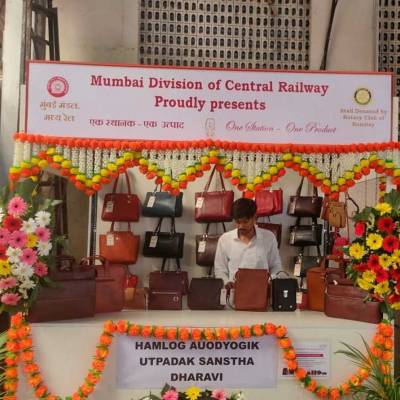
Indian Railways' One Station One Product scheme has become a major marketplace for local artisans, weavers, craftspeople and small-scale producers across the country. Official figures show over 2,300 OSOP outlets are operational at more than 2,000 railway stations, connecting local producers with millions of passengers and supporting over 0.154 million (mn) individuals. The railways reported cumulative sales of Rs 1,623.9 million (mn) under the scheme, while nearly 0.15 million (mn) direct beneficiaries have participated through stalls and rotational allocations. The scheme was launched on 25 March 2022 and has been expanded after a 15-day pilot across 19 stations.

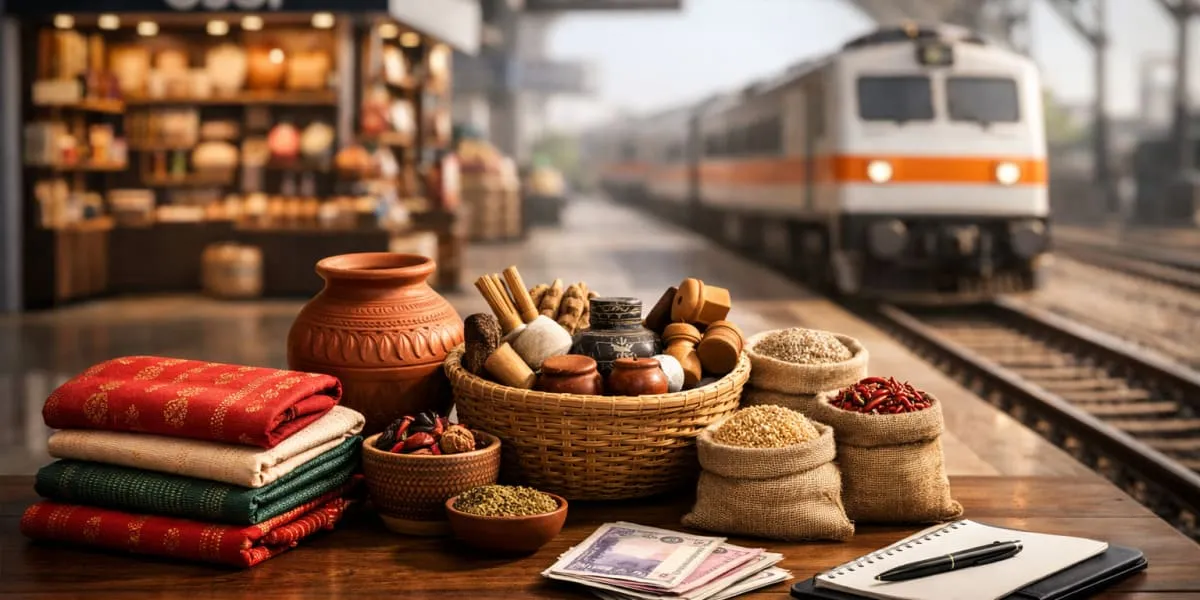
Stalls offer handicrafts, handloom items, textiles, toys, leather goods, traditional foods and jewellery that reflect regional identities. Products reaching stations include Madhubani paintings and Bhagalpuri silk from Bihar, Gamosa and Mekhela Chador from Assam, Kota Doria and Sanganeri prints from Rajasthan, Channapatna toys from Karnataka, Kanchipuram silk from Tamil Nadu, Kolhapuri footwear from Maharashtra and Moradabad brassware from Uttar Pradesh. Allocation of stalls on a rotational basis and nominal fees aim to widen participation among small producers and artisans. Registration for a 15-day slot has been set between Rs 500 and Rs 1,000 depending on the station category.

State-wise deployment shows West Bengal hosting 378 OSOP units, followed by Maharashtra with 205, Tamil Nadu with 199 and Uttar Pradesh with 196 units. The railways has encouraged cashless payments including UPI, BHIM, POS machines and digital wallets to facilitate transactions and reduce cash handling. Organisers said the structure is intended to lower entry barriers and provide predictable access to a steady stream of passengers. The expansion of outlets continues steadily under the railways' rollout plan.

Observers note that integrating local products into transit spaces leverages public infrastructure to promote inclusive growth and grassroots entrepreneurship. The initiative has helped preserve traditional skills while offering artisans greater visibility and economic stability. Travellers encounter regional stories and goods during routine journeys, turning stations into spaces where culture, commerce and community converge. As the network expands, the scheme continues to amplify local talent through a national platform.

Indian Railways' One Station One Product scheme has become a major marketplace for local artisans, weavers, craftspeople and small-scale producers across the country. Official figures show over 2,300 OSOP outlets are operational at more than 2,000 railway stations, connecting local producers with millions of passengers and supporting over 0.154 million (mn) individuals. The railways reported cumulative sales of Rs 1,623.9 million (mn) under the scheme, while nearly 0.15 million (mn) direct beneficiaries have participated through stalls and rotational allocations. The scheme was launched on 25 March 2022 and has been expanded after a 15-day pilot across 19 stations. Stalls offer handicrafts, handloom items, textiles, toys, leather goods, traditional foods and jewellery that reflect regional identities. Products reaching stations include Madhubani paintings and Bhagalpuri silk from Bihar, Gamosa and Mekhela Chador from Assam, Kota Doria and Sanganeri prints from Rajasthan, Channapatna toys from Karnataka, Kanchipuram silk from Tamil Nadu, Kolhapuri footwear from Maharashtra and Moradabad brassware from Uttar Pradesh. Allocation of stalls on a rotational basis and nominal fees aim to widen participation among small producers and artisans. Registration for a 15-day slot has been set between Rs 500 and Rs 1,000 depending on the station category. State-wise deployment shows West Bengal hosting 378 OSOP units, followed by Maharashtra with 205, Tamil Nadu with 199 and Uttar Pradesh with 196 units. The railways has encouraged cashless payments including UPI, BHIM, POS machines and digital wallets to facilitate transactions and reduce cash handling. Organisers said the structure is intended to lower entry barriers and provide predictable access to a steady stream of passengers. The expansion of outlets continues steadily under the railways' rollout plan. Observers note that integrating local products into transit spaces leverages public infrastructure to promote inclusive growth and grassroots entrepreneurship. The initiative has helped preserve traditional skills while offering artisans greater visibility and economic stability. Travellers encounter regional stories and goods during routine journeys, turning stations into spaces where culture, commerce and community converge. As the network expands, the scheme continues to amplify local talent through a national platform.

Related Stories

Gold Stories

Next Story
Infrastructure Transport

India To Build 100 New Airports Under UDAN Plan

The Civil Aviation Minister K Rammohan Naidu said that India will build 100 new airports over the next 10 years under the Centre's Regional Connectivity Scheme — Modified UDAN (UDAN) with an outlay of Rs 300 billion (Rs 300 bn). He inaugurated the country's third hub-and-spoke operation from Ahmedabad, intended to link passengers seamlessly to international destinations through domestic hubs. The minister indicated that the initiative forms part of a sustained expansion of air connectivity across the nation. Naidu recalled that there were 74 airports in 2014 and that the network has expanded..

Next Story
Infrastructure Urban

Auto PLI Draws Rs 454.77 Billion Investment Creates Over 67,000 Jobs

Union Minister for Heavy Industries and Steel HD Kumaraswamy said the production-linked incentive scheme for automobiles and auto components had attracted Rs 454.77 billion (Rs 454.77 bn) in investment and generated more than 67,000 jobs as of 30 June 2026. He told the Automotive Component Manufacturers Association of India that the next phase should focus on scale, deeper localisation, innovation and positioning India as a global hub for advanced and green mobility technologies. The minister urged industry to invest in cleaner technologies to help lead the global mobility transition. The gove..

Next Story
Infrastructure Energy

Coal India Production Falls in August as Supplies Rise

Coal India Limited's production declined five point seven per cent year-on-year in August 2026, while coal supplies rose five point five per cent during the month. The company produced 47.5 million tonnes (mn t) of coal in August, down from 50.4 mn t in the same month last year. Offtake rose to 60.6 mn t from 57.4 mn t a year earlier. Over the first five months of the current financial year, cumulative production during April–August was 267.5 mn t, down four point five per cent from 280.2 mn t a year earlier. Cumulative coal supplies rose six point seven per cent to 322.9 mn t in April–Aug..

Advertisement

Subscribe to Our Newsletter

Get daily newsletters around different themes from Construction world.

STAY CONNECTED

Advertisement

SPECIAL OFFER
QR Code