Vande Bharat Extended To Jammu Tawi With 20 Coaches
RAILWAYS & METRO RAIL

Vande Bharat Extended To Jammu Tawi With 20 Coaches

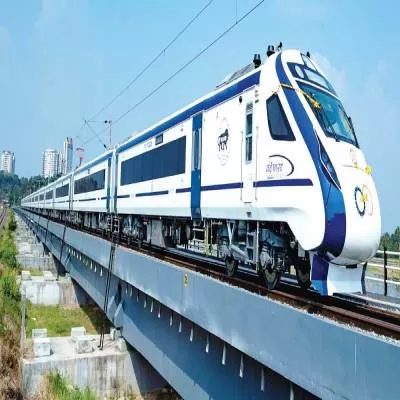
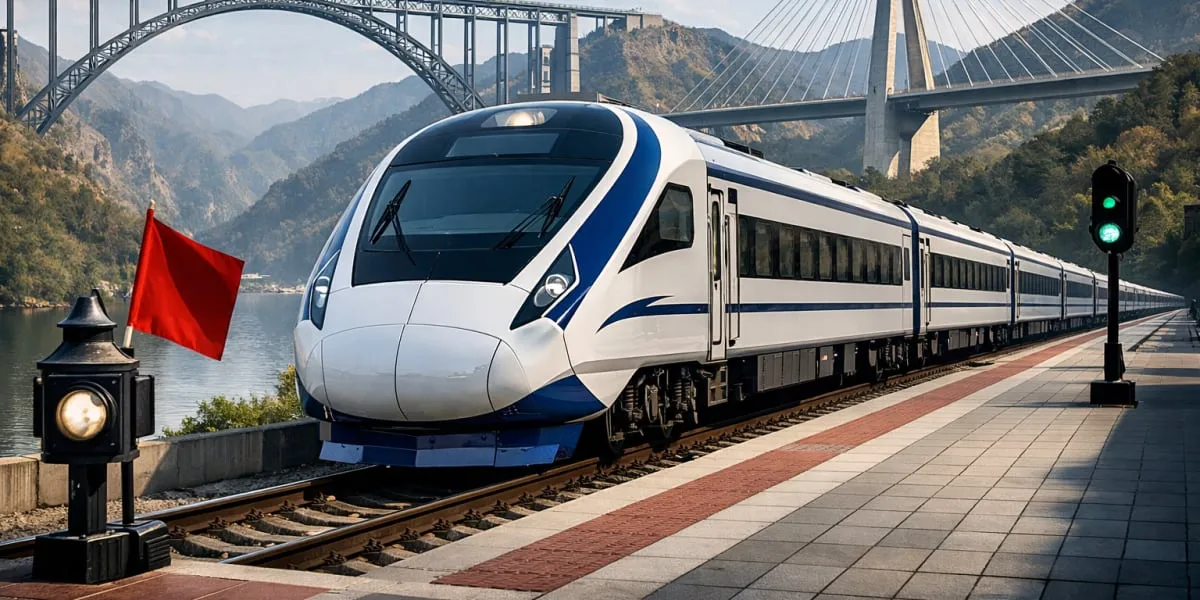
The Union Minister for Railways will flag off the extended Srinagar–Katra Vande Bharat Express from Jammu Tawi tomorrow, completing its run to the territory's largest city and railway hub. The rake has been augmented from eight to 20 coaches to meet sustained demand, and the minister will also inspect the Anji Khad Bridge and the Chenab Rail Bridge on the Udhampur?Srinagar?Baramulla Rail Link (USBRL). The extended service will enter regular operation from two May 2026 and will benefit pilgrims, tourists, traders and local commuters.

The augmentation more than doubles seating capacity and is aimed at easing pressure on reservations and waitlists during peak pilgrimage and tourist seasons. Two pairs of services will operate across the corridor covering 266 km, providing morning and afternoon options from both ends on most days. The change removes a previously mandatory interchange at Katra for passengers arriving at Jammu Tawi, allowing a single uninterrupted rail journey between Srinagar and Jammu Tawi.

The first pair will depart Jammu Tawi in the morning and reach Srinagar in under five hours, with a scheduled journey time of four hours and 50 minutes, running six days a week, except Tuesday. The second pair will provide a complementary morning departure from Srinagar and an afternoon return from Jammu Tawi, operating six days a week, except Wednesday. Together the services aim to give travellers meaningful flexibility and improve direct connectivity to the national rail network without interchange.

The extension is intended to ease pilgrimage circuits by allowing devotees to travel from Jammu Tawi to the Vaishno Devi base camp at Katra and onwards to Srinagar without changing trains, and to attract more tourists who can traverse the Chenab and Anji bridges. The minister will inspect the Anji Khad Bridge, rising 331 metres above the valley, and the Chenab Rail Bridge at 359 metres above the riverbed, both vital elements of the Udhampur?Srinagar?Baramulla Rail Link. The 272 km project was built at a total cost of Rs 437,800 mn and includes 36 tunnels spanning 119 km and 943 bridges.

The Union Minister for Railways will flag off the extended Srinagar–Katra Vande Bharat Express from Jammu Tawi tomorrow, completing its run to the territory's largest city and railway hub. The rake has been augmented from eight to 20 coaches to meet sustained demand, and the minister will also inspect the Anji Khad Bridge and the Chenab Rail Bridge on the Udhampur?Srinagar?Baramulla Rail Link (USBRL). The extended service will enter regular operation from two May 2026 and will benefit pilgrims, tourists, traders and local commuters. The augmentation more than doubles seating capacity and is aimed at easing pressure on reservations and waitlists during peak pilgrimage and tourist seasons. Two pairs of services will operate across the corridor covering 266 km, providing morning and afternoon options from both ends on most days. The change removes a previously mandatory interchange at Katra for passengers arriving at Jammu Tawi, allowing a single uninterrupted rail journey between Srinagar and Jammu Tawi. The first pair will depart Jammu Tawi in the morning and reach Srinagar in under five hours, with a scheduled journey time of four hours and 50 minutes, running six days a week, except Tuesday. The second pair will provide a complementary morning departure from Srinagar and an afternoon return from Jammu Tawi, operating six days a week, except Wednesday. Together the services aim to give travellers meaningful flexibility and improve direct connectivity to the national rail network without interchange. The extension is intended to ease pilgrimage circuits by allowing devotees to travel from Jammu Tawi to the Vaishno Devi base camp at Katra and onwards to Srinagar without changing trains, and to attract more tourists who can traverse the Chenab and Anji bridges. The minister will inspect the Anji Khad Bridge, rising 331 metres above the valley, and the Chenab Rail Bridge at 359 metres above the riverbed, both vital elements of the Udhampur?Srinagar?Baramulla Rail Link. The 272 km project was built at a total cost of Rs 437,800 mn and includes 36 tunnels spanning 119 km and 943 bridges.

Next Story
Infrastructure Transport

MMRDA Removes 1.14 lakh m of Metro Barricades

In a bid to ease congestion and improve urban mobility during monsoon, MMRDA has undertaken one of the largest coordinated barricade removal and monsoon preparedness drives across its ongoing metro and infrastructure projects.With substantial progress achieved in viaduct and structural works across multiple metro corridors, barricades from completed stretches beneath metro viaducts are being systematically removed, restoring maximum possible road space before the monsoon. Wider carriageways across key arterial roads are expected to improve traffic flow, reduce congestion, support better rainwa..

Next Story
Infrastructure Transport

Pune Division to Remove All Diamond Crossings by Year-End

The Pune railway division has announced plans to remove all 16 diamond crossings by the end of 2026 as part of a major yard remodelling project following the derailment of a Vande Bharat Express at Pune Junction on April 27. Railway authorities said the replacements aim to improve safety and streamline train operations across the busy station. The decision followed a Central Railway finding that the accident involved a non-standard diamond crossing and highlighted the need for replacement. Regular maintenance of existing crossings will continue until the replacement work is completed. Official..

Next Story
Infrastructure Urban

Goa Declares 80 Million Square Metres No Development Zone

The Goa state government has declared 80 million square metres (mn) of land a no development zone, designating the area as protected from new construction. The notification reclassifies tracts across the state under a no development category for planning and regulatory purposes. The declaration signals a formal halt to new building permits within the defined zone. Authorities indicated that maps will be issued to show broad boundaries while detailed surveys will refine precise limits. The move transfers responsibility for enforcement to local planning authorities and relevant departments, whic..

Advertisement

Subscribe to Our Newsletter

Get daily newsletters around different themes from Construction world.

STAY CONNECTED

Advertisement

Advertisement

Advertisement