Vande Bharat Sleeper Clears Final 180 kmph Safety Trial
RAILWAYS & METRO RAIL

Vande Bharat Sleeper Clears Final 180 kmph Safety Trial

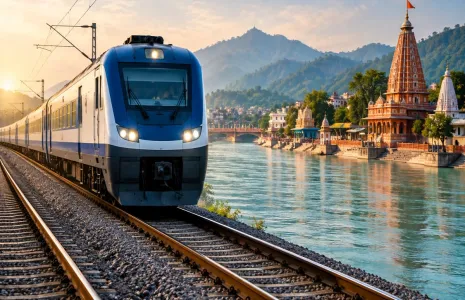
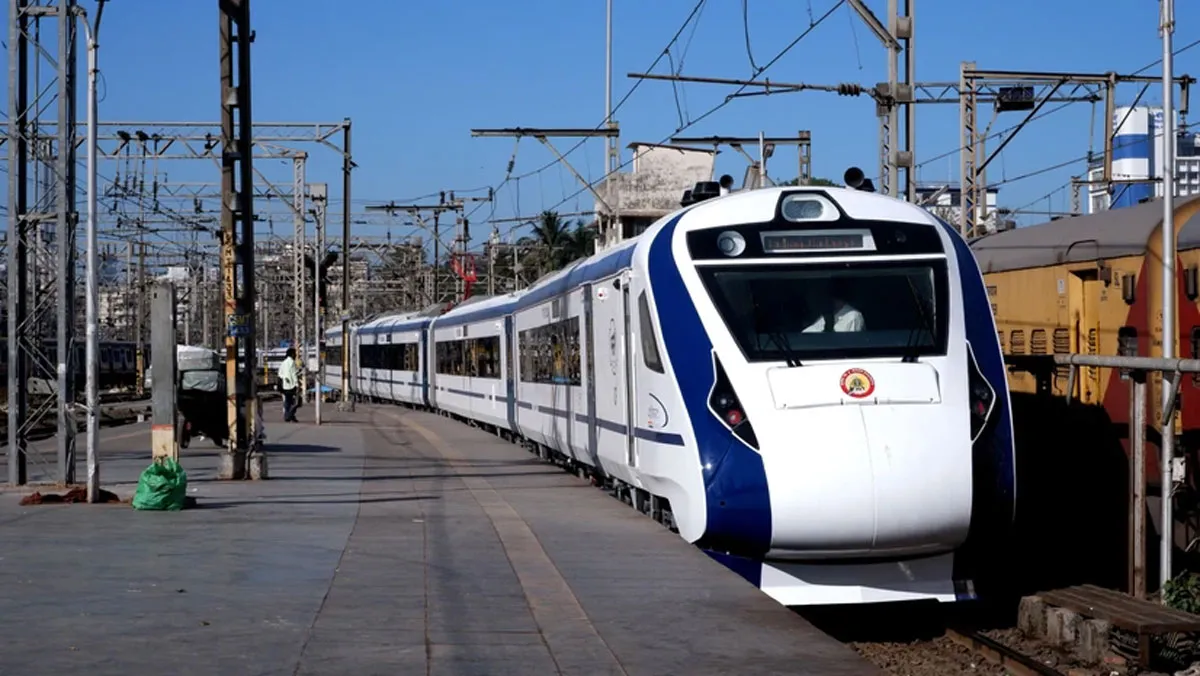
Indian Railways has achieved a key milestone in its push for self-reliant rail technology with the successful completion of the final high-speed safety trial of the indigenously developed Vande Bharat sleeper train, officials said on Wednesday. The trial was conducted under the supervision of the Commissioner of Railway Safety on the Kota–Nagda section, where the train achieved a top speed of 180 kmph.

While no fresh launch date was announced, the development brings the long-distance sleeper variant closer to commercial operations after missing several earlier deadlines. Railway Minister Ashwini Vaishnaw had earlier indicated that the train was expected to be launched in December 2025. On December 30, he shared a video of the trial on X, highlighting a water-glass stability test in which glasses filled with water remained steady without spillage even at high speed.

According to officials, the CRS-supervised trial involved comprehensive technical evaluations, including ride stability, oscillation and vibration behaviour, braking and emergency braking performance, safety systems and other critical parameters. The train’s performance at high speed was found to be fully satisfactory, and the trial was formally declared successful.

The 16-coach Vande Bharat sleeper train is designed for long-distance travel and is equipped with modern passenger amenities. These include comfortable sleeper berths, advanced suspension systems, automatic doors, modern toilets, fire detection and safety monitoring systems, CCTV-based surveillance, digital passenger information displays and energy-efficient technologies aimed at delivering a safe and comfortable travel experience.

Officials said the successful completion of the high-speed CRS trial marks a major technical achievement and clears the path for the introduction of Vande Bharat Sleeper services. The milestone also reflects Indian Railways’ focus on innovation, safety and indigenous manufacturing under the Atmanirbhar Bharat vision.

Indian Railways has achieved a key milestone in its push for self-reliant rail technology with the successful completion of the final high-speed safety trial of the indigenously developed Vande Bharat sleeper train, officials said on Wednesday. The trial was conducted under the supervision of the Commissioner of Railway Safety on the Kota–Nagda section, where the train achieved a top speed of 180 kmph. While no fresh launch date was announced, the development brings the long-distance sleeper variant closer to commercial operations after missing several earlier deadlines. Railway Minister Ashwini Vaishnaw had earlier indicated that the train was expected to be launched in December 2025. On December 30, he shared a video of the trial on X, highlighting a water-glass stability test in which glasses filled with water remained steady without spillage even at high speed. According to officials, the CRS-supervised trial involved comprehensive technical evaluations, including ride stability, oscillation and vibration behaviour, braking and emergency braking performance, safety systems and other critical parameters. The train’s performance at high speed was found to be fully satisfactory, and the trial was formally declared successful. The 16-coach Vande Bharat sleeper train is designed for long-distance travel and is equipped with modern passenger amenities. These include comfortable sleeper berths, advanced suspension systems, automatic doors, modern toilets, fire detection and safety monitoring systems, CCTV-based surveillance, digital passenger information displays and energy-efficient technologies aimed at delivering a safe and comfortable travel experience. Officials said the successful completion of the high-speed CRS trial marks a major technical achievement and clears the path for the introduction of Vande Bharat Sleeper services. The milestone also reflects Indian Railways’ focus on innovation, safety and indigenous manufacturing under the Atmanirbhar Bharat vision.

Next Story
Infrastructure Urban

Rosatom Delivers Nuclear Fuel for Kudankulam Unit 3

Rosatom has recently supplied nuclear fuel for the initial loading of the VVER-1000 reactor core at Unit 3 of the Kudankulam Nuclear Power Plant, marking a key milestone in the second stage of the Russian-designed nuclear power project in southern India.The fuel was supplied by Rosatom’s Nuclear Fuel Division, managed by TVEL, and manufactured at the Novosibirsk Chemical Concentrates Plant. The delivery includes the initial reactor load along with reserve fuel assemblies and is part of a long-term contract covering the entire operational life of Units 3 and 4.Building on operational experien..

Next Story
Infrastructure Transport

CBL International Enables First LNG Bunkering at Xiaomo Port

CBL International recently completed the first-ever LNG bunkering operation at Xiaomo Port, supplying liquefied natural gas to vessels operated by BYD in support of its maritime decarbonisation strategy. The operation was facilitated through a physical supplier in collaboration with China National Offshore Oil Corporation (CNOOC), which supported the port’s inaugural LNG bunkering activity. The milestone represents a strategic expansion of CBL International's sustainable fuel offerings beyond biofuels, while also diversifying revenue streams. As global shipping intensifies efforts to cut em..

Next Story
Infrastructure Urban

Aimtron, Aurassure Partner for IoT Weather Systems

Aimtron Electronics has recently entered into an OEM manufacturing engagement with Aurassure to produce new-age, IoT-enabled weather and environmental monitoring systems in India. The collaboration supports the growing demand for real-time environmental intelligence across urban, industrial and infrastructure applications. The engagement comes as global focus on climate-risk management and data-driven planning accelerates. The global weather monitoring systems market, valued at around USD 2.1 billion in 2024, is projected to reach nearly USD 4.8 billion by 2034, driven by the rapid adoption o..

Advertisement

Subscribe to Our Newsletter

Get daily newsletters around different themes from Construction world.

STAY CONNECTED

Advertisement

Advertisement

Advertisement

Advertisement

Open In App