Sagar Defence begins work on autonomous maritime shipyard
PORTS & SHIPPING

Sagar Defence begins work on autonomous maritime shipyard

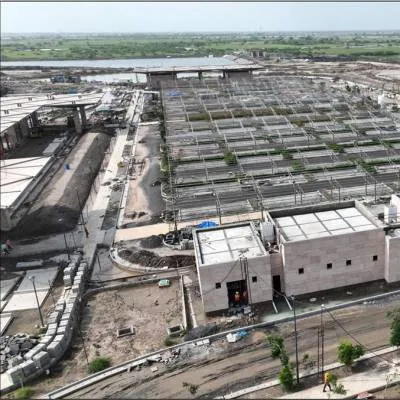
Sagar Defence Engineering Pvt. Ltd., a Pune-based company specialising in unmanned marine vehicle solutions for the scientific and defence sectors, will hold a stone-breaking ceremony for what it describes as the world’s first autonomous maritime shipyard and systems development centre.

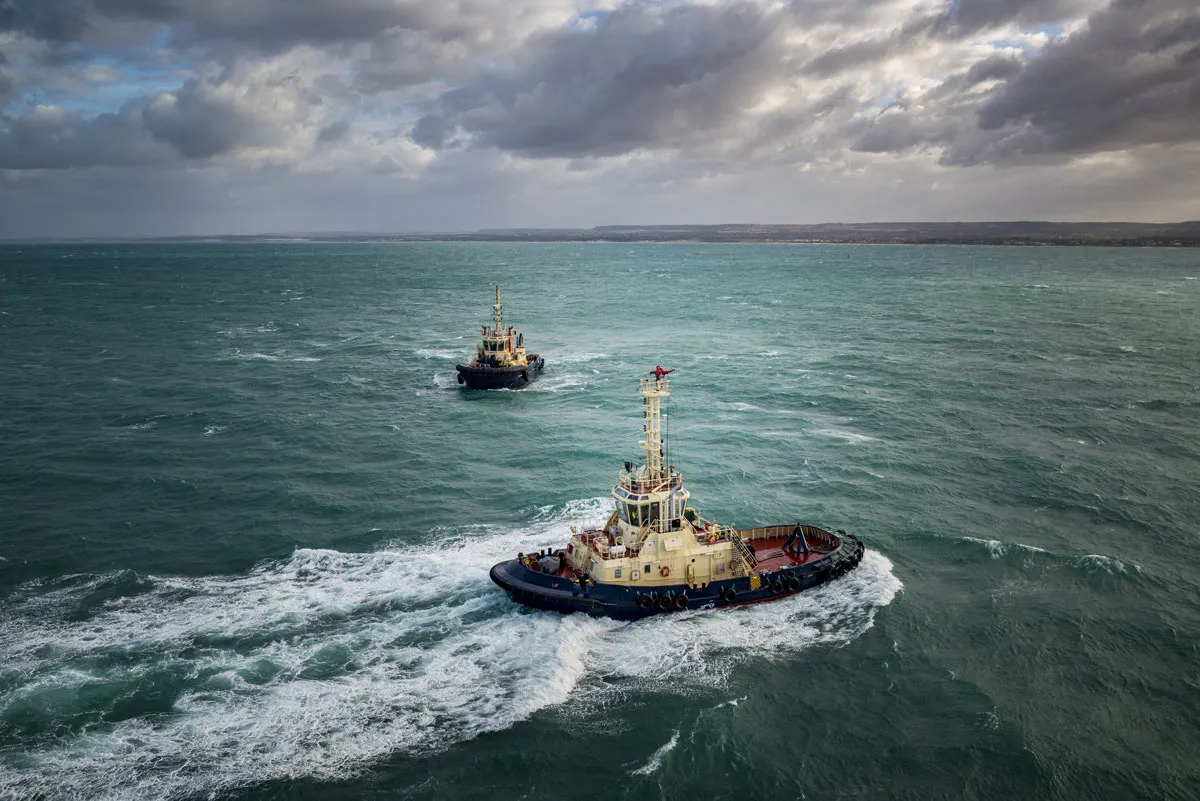
The upcoming facility is expected to focus on the development, testing and manufacturing of advanced unmanned maritime technologies designed for defence, research and commercial applications. The project reflects the growing emphasis on autonomous systems in maritime operations, where unmanned platforms are increasingly being deployed for surveillance, monitoring, and mission-critical tasks.

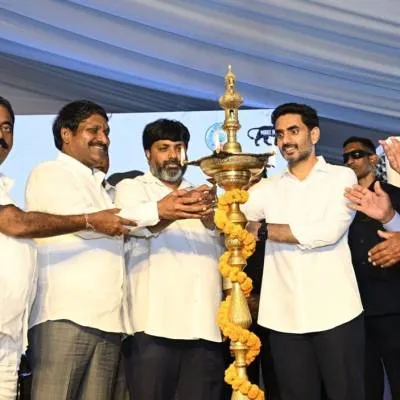
The ceremony will be officiated by Shri Nara Lokesh Ji, Minister of Information Technology, Electronics and Communications, RTGS and Human Resource Development, Government of Andhra Pradesh. The event marks the formal beginning of construction for the new facility, which aims to strengthen India’s capabilities in next-generation maritime technologies.

Sagar Defence Engineering has built a reputation for designing and developing unmanned marine vehicles that support a range of applications, including oceanographic research, coastal monitoring, and defence operations. By establishing the autonomous maritime shipyard and systems development centre, the company intends to expand its innovation and manufacturing capacity in the unmanned maritime domain.

The proposed centre is expected to play a key role in accelerating research and development of autonomous maritime systems, integrating advanced technologies such as artificial intelligence, autonomous navigation and remote operation capabilities.

Industry observers view the initiative as a step toward building a stronger domestic ecosystem for autonomous marine technologies in India. With increasing demand for unmanned maritime platforms across defence and scientific sectors, the new facility is likely to support the country’s broader push for indigenous technology development and maritime security.

Sagar Defence Engineering Pvt. Ltd., a Pune-based company specialising in unmanned marine vehicle solutions for the scientific and defence sectors, will hold a stone-breaking ceremony for what it describes as the world’s first autonomous maritime shipyard and systems development centre.The upcoming facility is expected to focus on the development, testing and manufacturing of advanced unmanned maritime technologies designed for defence, research and commercial applications. The project reflects the growing emphasis on autonomous systems in maritime operations, where unmanned platforms are increasingly being deployed for surveillance, monitoring, and mission-critical tasks.The ceremony will be officiated by Shri Nara Lokesh Ji, Minister of Information Technology, Electronics and Communications, RTGS and Human Resource Development, Government of Andhra Pradesh. The event marks the formal beginning of construction for the new facility, which aims to strengthen India’s capabilities in next-generation maritime technologies.Sagar Defence Engineering has built a reputation for designing and developing unmanned marine vehicles that support a range of applications, including oceanographic research, coastal monitoring, and defence operations. By establishing the autonomous maritime shipyard and systems development centre, the company intends to expand its innovation and manufacturing capacity in the unmanned maritime domain.The proposed centre is expected to play a key role in accelerating research and development of autonomous maritime systems, integrating advanced technologies such as artificial intelligence, autonomous navigation and remote operation capabilities.Industry observers view the initiative as a step toward building a stronger domestic ecosystem for autonomous marine technologies in India. With increasing demand for unmanned maritime platforms across defence and scientific sectors, the new facility is likely to support the country’s broader push for indigenous technology development and maritime security.

Next Story
Infrastructure Transport

Sector 51-52 Metro skywalk in Noida remains shut despite being ready for over a year

Thousands of commuters travelling between Delhi Metro Rail Corporation’s (DMRC) Sector 52 station and Noida Metro Rail Corporation’s (NMRC) Sector 51 station continue to face daily inconvenience as the 300-metre air-conditioned skywalk connecting the two stations remains closed, despite being completed over a year ago, according to a report.The Noida Metro Rail Corporation built the foot overbridge to enable a seamless interchange between the Delhi Metro and Noida Metro networks. However, pending finishing work and a structural obstruction have delayed its opening.Krishna Karunesh, Chief E..

Next Story
Infrastructure Transport

Maharashtra clears Metro Line 5A, expansion of Mumbai Metro Line 5

The Maharashtra government has approved the expansion of Mumbai Metro Line 5 along with a new integrated corridor, Metro Line 5A, forming a combined 34.2-km metro network across the Thane-Bhiwandi-Kalyan-Ulhasnagar belt. The integrated project has been cleared at an estimated cost of ₹18,130.55 crore, according to a government resolution (GR).Metro Line 5 was originally approved in October 2017 as a 24.9-km fully elevated corridor with 17 stations connecting Thane, Bhiwandi and Kalyan, with an initial project cost of ₹8,416.51 crore. The corridor is being developed in two phases.The first ..

Next Story
Infrastructure Transport

Bengaluru Metro expansion seen driving office demand

Bengaluru’s expanding metro network is expected to emerge as a major catalyst for real estate growth, with the Yellow and Pink Lines likely to boost both office demand and residential prices across key micro-markets, according to a report by Colliers India.The report estimates that over the next two years, Bengaluru could witness an additional 5–7 million sq ft of Grade A office space demand across the Central Business District (CBD), Secondary Business District (SBD) and Electronic City. Improved metro connectivity and reduced commute times are expected to drive higher occupier interest a..

Advertisement

Subscribe to Our Newsletter

Get daily newsletters around different themes from Construction world.

STAY CONNECTED

Advertisement

Advertisement

Advertisement