+
Solar Defence Announces Rs 128 Billion Investment In Robotics
DEFENSE

Solar Defence Announces Rs 128 Billion Investment In Robotics

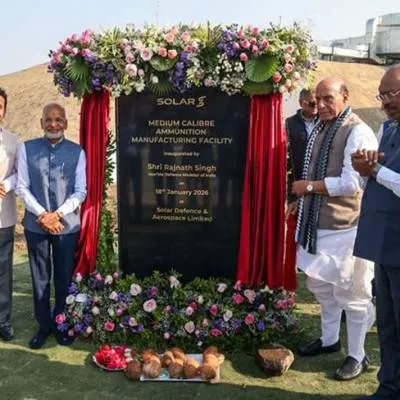
Solar Defence has announced an investment of Rs 128 billion (Rs 128 bn) to develop robotics, unmanned aerial vehicles and deep technology projects across the defence and security sectors. The company indicated that the funding will support research and development, prototype development and scaled manufacturing in India. The announcement positions the firm to accelerate indigenous capabilities in automation and advanced systems for defence applications. The funding will also support iterative testing cycles and pilot deployments to mature capability readiness.

The investment will span autonomous ground systems, aerial platforms, artificial intelligence driven control systems and other deep tech initiatives aligned with modern warfare requirements. Solar Defence said strategic allocations will be made for development of long range missiles, countermeasures and persistent surveillance capabilities while emphasising safety and compliance with export controls. The programme is intended to bridge gaps in supply chains and reduce reliance on imports for critical systems. Priority workstreams will include sensor integration, secure communications and mission planning software.

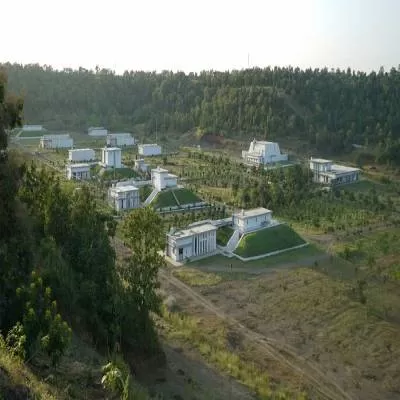
The company intends to establish research centres, test facilities and local manufacturing hubs to foster collaboration with domestic suppliers and academic institutions. Partnerships and joint ventures are expected to support technology transfer and workforce development to build a sustainable defence industrial base. The plan is presented as part of a broader drive to nurture an ecosystem for advanced robotics and autonomous systems domestically. The approach will aim to align research outcomes with operational requirements and to sustain lifecycle maintenance capabilities.

Industry analysts believe the move could stimulate investment in the wider defence technology sector and provide new opportunities for startups and established firms to scale innovations. Solar Defence affirmed that the rollout will be phased over several years with an emphasis on meeting regulatory standards and operational reliability. The initiative is portrayed as a strategic effort to bolster national preparedness and technological leadership in defence automation. Stakeholder engagement is expected to guide responsible deployment and to address export and regulatory considerations.

Solar Defence has announced an investment of Rs 128 billion (Rs 128 bn) to develop robotics, unmanned aerial vehicles and deep technology projects across the defence and security sectors. The company indicated that the funding will support research and development, prototype development and scaled manufacturing in India. The announcement positions the firm to accelerate indigenous capabilities in automation and advanced systems for defence applications. The funding will also support iterative testing cycles and pilot deployments to mature capability readiness. The investment will span autonomous ground systems, aerial platforms, artificial intelligence driven control systems and other deep tech initiatives aligned with modern warfare requirements. Solar Defence said strategic allocations will be made for development of long range missiles, countermeasures and persistent surveillance capabilities while emphasising safety and compliance with export controls. The programme is intended to bridge gaps in supply chains and reduce reliance on imports for critical systems. Priority workstreams will include sensor integration, secure communications and mission planning software. The company intends to establish research centres, test facilities and local manufacturing hubs to foster collaboration with domestic suppliers and academic institutions. Partnerships and joint ventures are expected to support technology transfer and workforce development to build a sustainable defence industrial base. The plan is presented as part of a broader drive to nurture an ecosystem for advanced robotics and autonomous systems domestically. The approach will aim to align research outcomes with operational requirements and to sustain lifecycle maintenance capabilities. Industry analysts believe the move could stimulate investment in the wider defence technology sector and provide new opportunities for startups and established firms to scale innovations. Solar Defence affirmed that the rollout will be phased over several years with an emphasis on meeting regulatory standards and operational reliability. The initiative is portrayed as a strategic effort to bolster national preparedness and technological leadership in defence automation. Stakeholder engagement is expected to guide responsible deployment and to address export and regulatory considerations.

Next Story
Infrastructure Urban

Implementation Status of Jal Jeevan Mission

Since August 2019 the Government has implemented Jal Jeevan Mission to provide assured potable water through household tap connections in rural India. At the start of the mission only 32.3 million (mn) rural households, representing 16.7 per cent, were reported to have tap water connections. States and union territories have reported that 125.8 mn additional rural households have since been provided with tap connections. As a result, of about 193.6 mn rural households roughly 158.2 mn, or 81.71 per cent, are reported to have tap water supply at home.\n\nThe State, district and village level st..

Next Story
Infrastructure Urban

Jal Jeevan Mission Reaches Eighty One Per Cent Rural Coverage

The Government reported substantial progress under the Jal Jeevan Mission, launched in August 2019 to provide tap water to every rural household. At launch only 32.3 million (mn) rural households had tap connections and states and Union territories reported provision of 125.8 mn additional households by March 2026. Consequently, out of about 193.6 mn rural households around 158.2 mn, or 81.71 per cent, are reported to have tap water at home. The Finance Minister announced extension of the mission until 2028 in the 2025-26 budget speech. The Swachh Bharat Mission Grameen, launched in October 20..

Next Story
Infrastructure Urban

Empowering Local Governance for Sustainable Rural Water Supply

The Ministry of Jal Shakti has aligned the Jal Jeevan Mission (JJM) with the 73rd Amendment to strengthen village level planning and community ownership of water supply. Gram Panchayats, village water and sanitation committees and Pani Samitis are to plan, implement, manage and maintain piped water systems, with gram sabha processes formalising handover and oversight. Implementation support agencies including non government organisations, community based organisations and self help groups have been empanelled to train local committees and promote women participation. Under JJM, the department ..

Advertisement

Subscribe to Our Newsletter

Get daily newsletters around different themes from Construction world.

STAY CONNECTED

Advertisement

Advertisement

Advertisement