+
Two New STP Projects To Strengthen Waste Water Management In UP
WATER & WASTE

Two New STP Projects To Strengthen Waste Water Management In UP

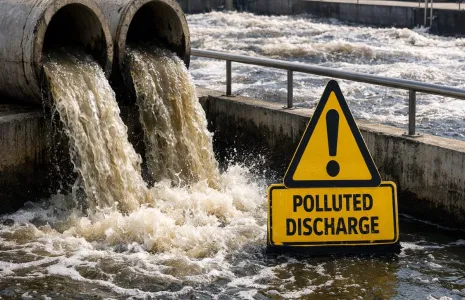
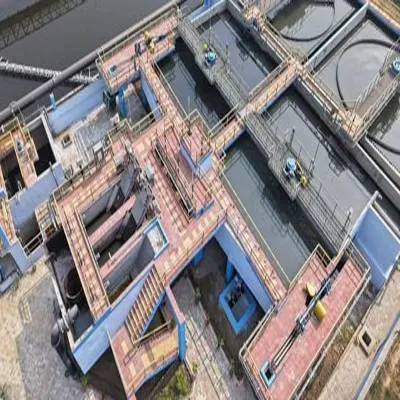
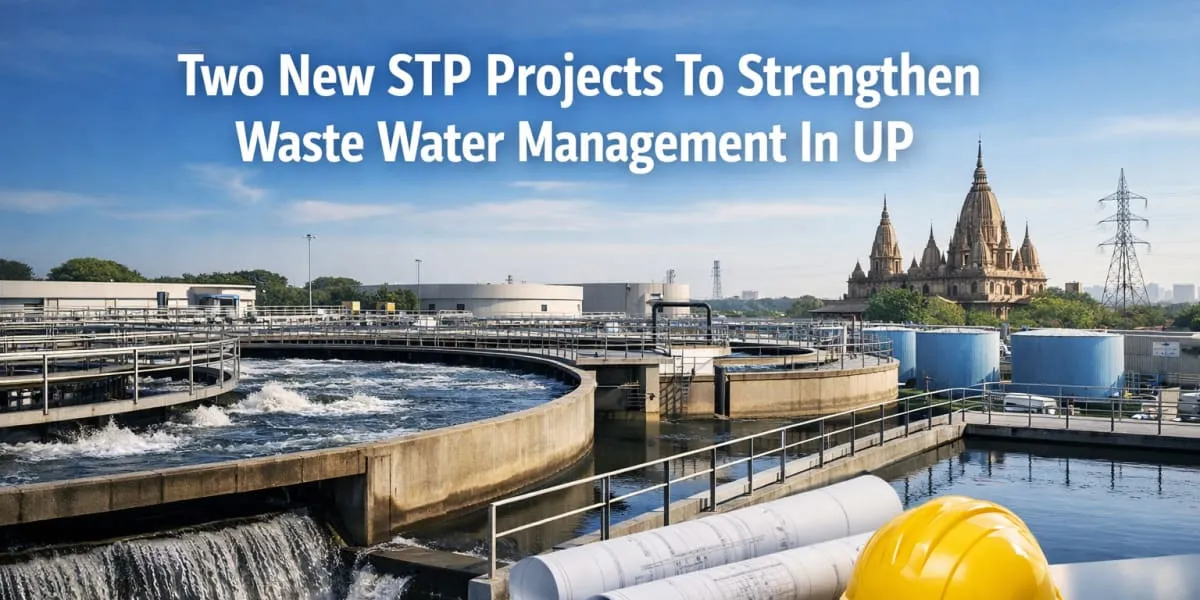
The National Mission for Clean Ganga said concession agreements were signed at its headquarters for two sewage treatment plant projects in Uttar Pradesh to strengthen waste water management in Varanasi and Pt Deen Dayal Upadhyay Nagar. The contracts cover a 60 million litres per day (60 mn) plant at Lohta in Varanasi and a 45 million litres per day (45 mn) plant at Pt Deen Dayal Upadhyay Nagar. The mission presented the projects as measures to intercept untreated sewage flows and expand local treatment capacity.

The Lohta installation will intercept and treat untreated sewage flowing through Durga Drain into the Varuna River, which meets the Ganga near Adi Keshav Ghat, the mission said. Work will focus on interception infrastructure and conveyance to the new plant so sewage that currently bypasses treatment does not reach the river network. The executing agency described the Lohta plant as a critical component in reducing contaminant loads in the Varuna and downstream sections of the Ganga.

The 45 mn plant at Pt Deen Dayal Upadhyay Nagar is designed to address untreated sewage entering the Ganga through Railway Nala and Ganda Nala and to ensure all drains emerging from the town are intercepted and connected to treatment. Both projects will be implemented under a hybrid annuity based public private partnership model and are being executed by Uttar Pradesh Jal Nigam, with Varanasi Lohta STP Pvt Ltd and Varanasi DDU Nagar STP Pvt Ltd as concessionaires. The Lohta project will include 15 years of operation and maintenance obligations for the concessionaire.

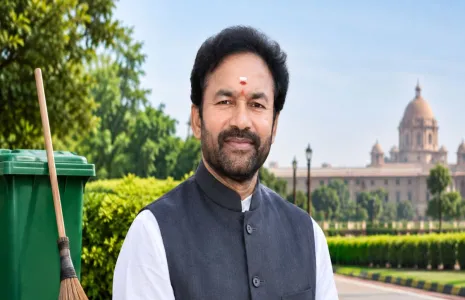
The agreements were signed by officials from UP Jal Nigam and the NMCG and by directors of the concessionaire companies in the presence of the NMCG director general, who highlighted the importance of the projects in reducing pollution, improving water quality and strengthening sewage treatment infrastructure. He urged the executing agency and concessionaires to complete the projects ahead of schedule. The mission presented the contracts as another step towards the objectives of Nirmal Ganga, cleaner tributaries and healthier river ecosystems that support wider rejuvenation efforts.

The National Mission for Clean Ganga said concession agreements were signed at its headquarters for two sewage treatment plant projects in Uttar Pradesh to strengthen waste water management in Varanasi and Pt Deen Dayal Upadhyay Nagar. The contracts cover a 60 million litres per day (60 mn) plant at Lohta in Varanasi and a 45 million litres per day (45 mn) plant at Pt Deen Dayal Upadhyay Nagar. The mission presented the projects as measures to intercept untreated sewage flows and expand local treatment capacity. The Lohta installation will intercept and treat untreated sewage flowing through Durga Drain into the Varuna River, which meets the Ganga near Adi Keshav Ghat, the mission said. Work will focus on interception infrastructure and conveyance to the new plant so sewage that currently bypasses treatment does not reach the river network. The executing agency described the Lohta plant as a critical component in reducing contaminant loads in the Varuna and downstream sections of the Ganga. The 45 mn plant at Pt Deen Dayal Upadhyay Nagar is designed to address untreated sewage entering the Ganga through Railway Nala and Ganda Nala and to ensure all drains emerging from the town are intercepted and connected to treatment. Both projects will be implemented under a hybrid annuity based public private partnership model and are being executed by Uttar Pradesh Jal Nigam, with Varanasi Lohta STP Pvt Ltd and Varanasi DDU Nagar STP Pvt Ltd as concessionaires. The Lohta project will include 15 years of operation and maintenance obligations for the concessionaire. The agreements were signed by officials from UP Jal Nigam and the NMCG and by directors of the concessionaire companies in the presence of the NMCG director general, who highlighted the importance of the projects in reducing pollution, improving water quality and strengthening sewage treatment infrastructure. He urged the executing agency and concessionaires to complete the projects ahead of schedule. The mission presented the contracts as another step towards the objectives of Nirmal Ganga, cleaner tributaries and healthier river ecosystems that support wider rejuvenation efforts.

Related Stories

Gold Stories
Next Story
Real Estate

BMC OC Amnesty Scheme Requires Key Approvals from Mumbai Societies

The Brihanmumbai Municipal Corporation (BMC) has clarified that housing societies applying under its Occupation Certificate (OC) amnesty scheme must possess key approvals linked to the original construction. The requirements include a valid Intimation of Disapproval (IOD), an approved building plan and a Commencement Certificate (CC), along with a No Objection Certificate (NOC) from the developer or original construction applicant. The Standard Operating Procedure (SOP) makes clear that the absence of an OC alone will not qualify a building for relief. Societies must establish that their build..

Next Story
Real Estate

Gurugram Emerges as Luxury Senior Living Hub

Gurugram is emerging as a potential hub for luxury senior living, supported by available land, healthcare infrastructure, connectivity and a concentration of affluent professionals, high-net-worth individuals and non-resident Indians. These factors could give the city an advantage over land-constrained metros such as Mumbai. A report by the Association of Senior Living India (ASLI) and JLL estimates that India’s organised senior living market could represent a $10.1 bn opportunity by 2030. The sector had about 25,050 organised units as of June 2026, while penetration stood at only 1.5 per ce..

Next Story
Real Estate

Corrosion Costs India’s Infrastructure Rs. 142 bn Annually

Corrosion costs India an estimated Rs. 1.42 tn annually, equivalent to 4.3 per cent of gross domestic product, according to a report by the Confederation of Indian Industry and the National Research Institute. Infrastructure accounts for Rs. 142 bn of the annual burden, making it the sector with the largest absolute cost among those examined. The report, presented at the CII Annual Infrastructure Summit 2026, said the infrastructure-sector cost equals about 2.9 per cent of the sector’s gross domestic product. It estimated that effective measures could generate maximum savings of Rs. 495.8 bn..

Advertisement

Subscribe to Our Newsletter

Get daily newsletters around different themes from Construction world.

STAY CONNECTED

Advertisement

SPECIAL OFFER
QR Code