Gujarat Cuts Carbon Emissions By 49.79 Million Tonnes In FY26
POWER & RENEWABLE ENERGY

Gujarat Cuts Carbon Emissions By 49.79 Million Tonnes In FY26

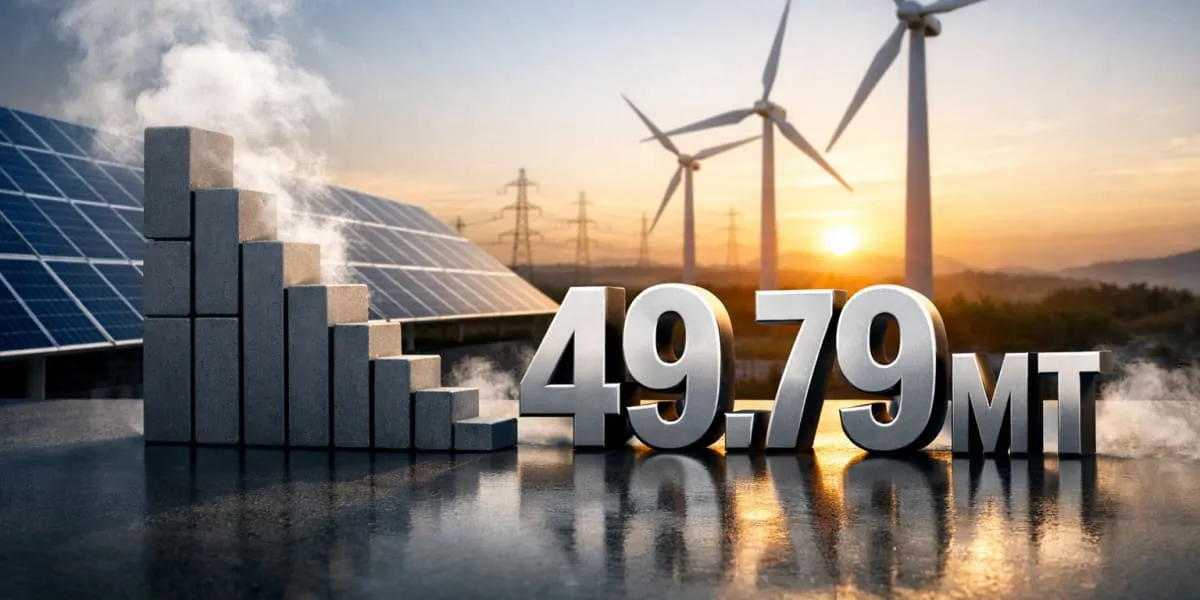
Gujarat reduced carbon emissions by 49.79 million tonnes (mn t) in fiscal year 2026 as a result of a sustained push into renewable energy. The Government of Gujarat expanded large-scale solar and wind farms alongside rooftop installations and grid modernisation measures. Policy incentives and streamlined approvals supported faster deployment across the state.

The reduction was driven by accelerated commissioning of renewable plants, enhanced grid integration and increased uptake of rooftop solar among commercial and household consumers. Energy efficiency measures in industry and public electrification of transport contributed to lower fossil fuel consumption. The state also strengthened regulatory frameworks to ensure predictable offtake and investment.

The lower emissions translated into tangible environmental benefits, including reductions in air pollution and associated public health burdens. The shift towards renewables has also supported the development of a domestic clean energy supply chain and created employment opportunities in installation, operations and maintenance. Plans in the sector aim to expand capacity further and to integrate storage solutions to balance variable output. The fiscal and regulatory support has been pivotal in attracting private capital.

The renewable transition has implications for energy security and long-term economic resilience as the state reduces dependence on fossil fuel imports. Officials have signalled intentions to scale storage and grid flexibility to accommodate higher variable generation. The outcome in fiscal year 2026 positions Gujarat as a key contributor to India's national climate goals.

State agencies attributed the measured decline to tracked reductions in coal generation and to higher renewable output across the year. Financial instruments including green bonds and tariff incentives eased capital flows into project development, while public investment upgraded transmission corridors and metering. Continued monitoring and transparent reporting of emissions will help policymakers calibrate future measures and assess progress against climate commitments.

Gujarat reduced carbon emissions by 49.79 million tonnes (mn t) in fiscal year 2026 as a result of a sustained push into renewable energy. The Government of Gujarat expanded large-scale solar and wind farms alongside rooftop installations and grid modernisation measures. Policy incentives and streamlined approvals supported faster deployment across the state. The reduction was driven by accelerated commissioning of renewable plants, enhanced grid integration and increased uptake of rooftop solar among commercial and household consumers. Energy efficiency measures in industry and public electrification of transport contributed to lower fossil fuel consumption. The state also strengthened regulatory frameworks to ensure predictable offtake and investment. The lower emissions translated into tangible environmental benefits, including reductions in air pollution and associated public health burdens. The shift towards renewables has also supported the development of a domestic clean energy supply chain and created employment opportunities in installation, operations and maintenance. Plans in the sector aim to expand capacity further and to integrate storage solutions to balance variable output. The fiscal and regulatory support has been pivotal in attracting private capital. The renewable transition has implications for energy security and long-term economic resilience as the state reduces dependence on fossil fuel imports. Officials have signalled intentions to scale storage and grid flexibility to accommodate higher variable generation. The outcome in fiscal year 2026 positions Gujarat as a key contributor to India's national climate goals. State agencies attributed the measured decline to tracked reductions in coal generation and to higher renewable output across the year. Financial instruments including green bonds and tariff incentives eased capital flows into project development, while public investment upgraded transmission corridors and metering. Continued monitoring and transparent reporting of emissions will help policymakers calibrate future measures and assess progress against climate commitments.

Next Story
Technology

AI-Enabled Workflows Lift Profitability and Productivity

Organisations modernising frontline workflows with artificial intelligence, automation and real-time data are reporting stronger financial performance, higher productivity and improved employee engagement, according to a global study by Zebra Technologies and Oxford Economics.The research covered 1,000 senior leaders across retail, manufacturing, transportation and logistics in the US, Mexico, the UK, Germany, India, Japan, Australia and New Zealand.In transportation and logistics, 54 per cent of companies that improved picking and packing operations reported faster operational performance, wh..

Next Story
Real Estate

India Leads Global AI Readiness but Implementation Lags

Indian companies lead global averages across all eight artificial intelligence readiness indicators tracked by JLL, but only 19 per cent have started making changes to their workplaces, according to the JLL 2026 Future of Work Survey.The study found that 77 per cent of Indian business leaders expect AI to change their office requirements, creating a 58-percentage-point gap between awareness and implementation. The survey covered more than 2,200 CEOs, CFOs and real estate leaders across 21 countries during the first quarter of 2026.Despite concerns over automation, 58 per cent of Indian leaders..

Next Story
Equipment

Three WOLFF Cranes Build Riyadh Cable-Stayed Bridges

Three WOLFF 180 B luffing jib cranes are supporting the construction of two cable-stayed bridges alongside the existing Wadi Laban Bridge in Riyadh, Saudi Arabia. The project is being developed for the Royal Commission for Riyadh City and executed by the ICRC joint venture comprising IC Ictas and Al Rashid Trading & Contracting Company.The cranes are handling lifting operations including formwork, reinforcement, concrete placement, work platforms, surveying equipment and other construction materials. Each crane is fitted with a 40 m jib, reaches a hook height of 157 m and offers a maximum ..

Advertisement

Subscribe to Our Newsletter

Get daily newsletters around different themes from Construction world.

STAY CONNECTED

Advertisement

Advertisement

Advertisement