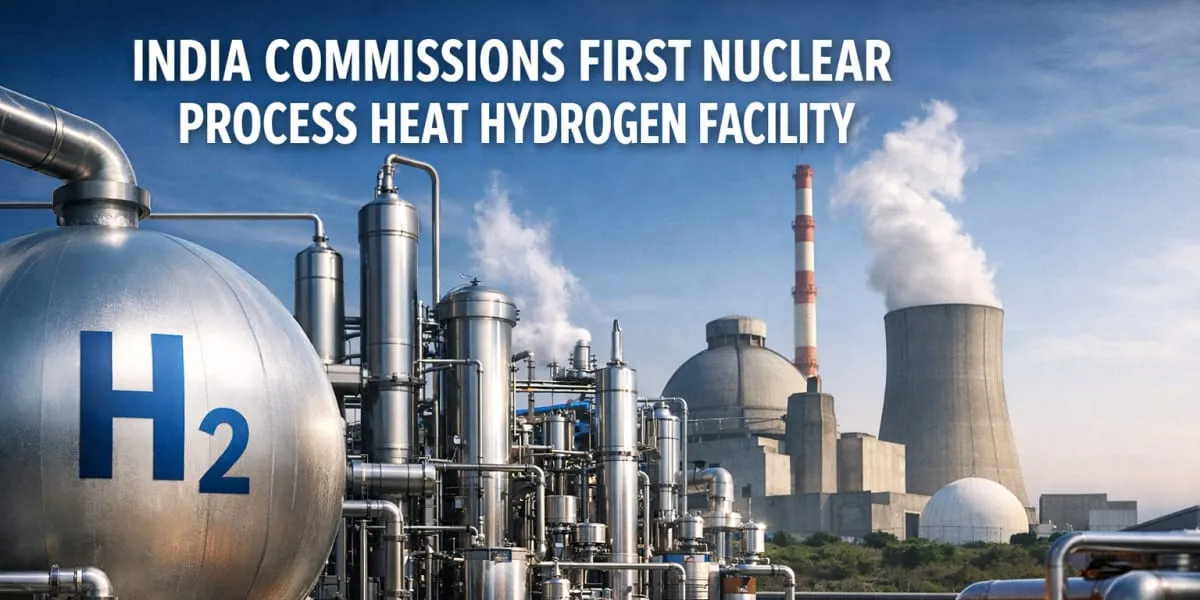
India Commissions First Nuclear Process Heat Hydrogen Facility
POWER & RENEWABLE ENERGY

India Commissions First Nuclear Process Heat Hydrogen Facility

Secretary of the Department of Atomic Energy (DAE), Ajit Kumar Mohanty, inaugurated the world’s first hydrogen production facility based on the Copper-Chlorine (Cu-Cl) thermochemical cycle utilising nuclear process heat from the Fast Breeder Test Reactor (FBTR) at the Indira Gandhi Centre for Atomic Research (IGCAR) in Kalpakkam. The project was established as a technology demonstrator to validate hydrogen production using nuclear energy through the Cu-Cl thermochemical process developed indigenously by BARC. DAE described the commissioning as the culmination of extensive research, process development, engineering, equipment fabrication, installation, testing and commissioning efforts undertaken jointly by BARC and IGCAR.

The demonstrator will allow engineers to test process integration, materials performance and control systems under reactor heat conditions while producing hydrogen for analysis. BARC developed the Cu-Cl process and provided process design and key equipment, while IGCAR supplied reactor heat integration expertise and support for systems engineering. The commissioning followed phased trials that included component testing, hot trials and safety validation to ensure operational readiness.

Officials from DAE described the integration of nuclear power with emerging clean energy technologies as a strategic pathway towards a sustainable energy future. They said nuclear power, with its ability to provide reliable carbon-free electricity, is suited to support large-scale hydrogen production and to contribute to India’s energy security, decarbonisation goals and long-term sustainable development objectives. The facility is intended to inform scale-up studies, industry partnerships and regulatory frameworks required for commercial deployment.

Project teams noted that operation of the demonstrator will build domestic experience in materials handling, process chemistry and operational safety and will help prepare a specialised workforce. Data from the facility will be used to refine techno-economic assessments, inform manufacturing requirements for key components and to guide investment decisions. The project was presented as an example of leveraging established reactor heat systems to advance low carbon hydrogen pathways and to strengthen national capabilities in clean energy innovation.

"Join industry leaders at RAHSTA Expo, India's premier platform for roads, highways and traffic infrastructure. Register now to explore innovations, network with experts and shape the future of mobility."

Secretary of the Department of Atomic Energy (DAE), Ajit Kumar Mohanty, inaugurated the world’s first hydrogen production facility based on the Copper-Chlorine (Cu-Cl) thermochemical cycle utilising nuclear process heat from the Fast Breeder Test Reactor (FBTR) at the Indira Gandhi Centre for Atomic Research (IGCAR) in Kalpakkam. The project was established as a technology demonstrator to validate hydrogen production using nuclear energy through the Cu-Cl thermochemical process developed indigenously by BARC. DAE described the commissioning as the culmination of extensive research, process development, engineering, equipment fabrication, installation, testing and commissioning efforts undertaken jointly by BARC and IGCAR. The demonstrator will allow engineers to test process integration, materials performance and control systems under reactor heat conditions while producing hydrogen for analysis. BARC developed the Cu-Cl process and provided process design and key equipment, while IGCAR supplied reactor heat integration expertise and support for systems engineering. The commissioning followed phased trials that included component testing, hot trials and safety validation to ensure operational readiness. Officials from DAE described the integration of nuclear power with emerging clean energy technologies as a strategic pathway towards a sustainable energy future. They said nuclear power, with its ability to provide reliable carbon-free electricity, is suited to support large-scale hydrogen production and to contribute to India’s energy security, decarbonisation goals and long-term sustainable development objectives. The facility is intended to inform scale-up studies, industry partnerships and regulatory frameworks required for commercial deployment. Project teams noted that operation of the demonstrator will build domestic experience in materials handling, process chemistry and operational safety and will help prepare a specialised workforce. Data from the facility will be used to refine techno-economic assessments, inform manufacturing requirements for key components and to guide investment decisions. The project was presented as an example of leveraging established reactor heat systems to advance low carbon hydrogen pathways and to strengthen national capabilities in clean energy innovation.

Next Story
Infrastructure Urban

Nagaland Signs MoU With T-Works To Boost MSMEs

Nagaland marked Micro, Small and Medium Enterprises (MSMEs) Day by launching Naturally Nagaland and signing an MoU with T-Works to bolster the entrepreneurial ecosystem. Advisor Hekani Jakhalu launched the initiative at the Industries & Commerce directorate in Kohima and the MoU was signed by the director of Industries and Commerce and the chief executive officer of T-Works. The agreement is intended to strengthen innovation, product development and prototyping support across the state. Jakhalu said 52,801 enterprises were registered on Udyam as of June 25, 2026, about 4,000 more than three mo..

Next Story
Infrastructure Urban

Tiruchy MSME Engineering Units Seek Revival Package

The Tamil Nadu Boilers Association has urged the state chief minister to announce a comprehensive revival package for stressed micro, small and medium enterprises (MSME) engineering units, citing years of recession, the impact of the Covid-19 pandemic, mounting debt burdens and delayed payments from customers. In a letter sent last week the association sought a range of measures to reboot local industry and restore employment and production levels. It said the proposal aimed to bring closed units back into operation and to ease financial bottlenecks that have constrained growth. The measures r..

Next Story
Infrastructure Energy

Delhi And Tehran Explore Energy Cooperation As US Sanctions Ease

India and Iran have agreed to explore cooperation in the oil and gas sector after a temporary US sanctions waiver opened access for Iranian crude to global markets. The understanding was reached on the sidelines of the 11th BRICS Energy Ministers' Meeting in Gurugram where officials discussed bilateral engagement. The talks were framed as part of efforts to strengthen energy ties and address security concerns. Union Minister for Petroleum and Natural Gas Hardeep Singh Puri met his Iranian counterpart Mohsen Paknejad and conveyed that India remained committed to enhancing energy security throug..

Advertisement

Subscribe to Our Newsletter

Get daily newsletters around different themes from Construction world.

STAY CONNECTED

Advertisement

Advertisement

Advertisement