+
Large Solar Parks Crucial For India's Green Transition
POWER & RENEWABLE ENERGY

Large Solar Parks Crucial For India's Green Transition

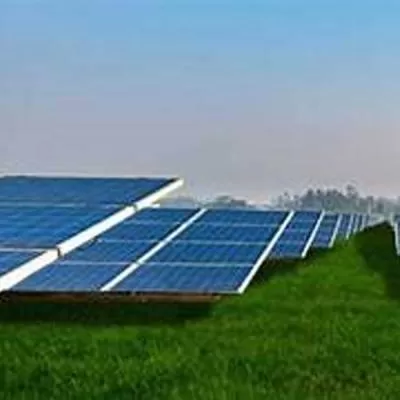
Industry experts said that large scale solar parks can play a key role in making renewable energy more financially viable and supporting India's green transition, but cautioned that realising that potential will require coordinated investment in infrastructure and manufacturing. They argued that bringing together policy support, industry participation and large scale projects helps reduce costs and strengthens the sector's long-term prospects. The experts noted that these parks also create economic activity in remote areas and can unlock land that was previously unused.

Sanjay Ganjoo, director general of the Indian Federation of Green Energy, urged investment in technologies that extend the period during which solar power can be generated and in mechanisms to evacuate electricity from high potential regions such as Ladakh. He pointed to projects including the Khavda solar park as examples of how otherwise marginal land can be utilised to produce electricity for domestic use. Ganjoo also emphasised the need to strengthen the domestic supply chain so that wafers and batteries are produced locally and research and manufacturing receive greater investment.

Mohammad Rihan, director general of the National Institute of Solar Energy, said large solar parks have improved financial viability by aligning policy, industry and infrastructure, driving down prices and supporting sector growth. He noted that the projects have generated employment and local economic benefits in challenging locations. Rihan added that solar installations had reached 165 gigawatt (GW), module manufacturing capacity had crossed 213 GW and cell manufacturing capacity stood at more than 30 GW, signalling progress towards longer-term renewable targets.

Looking ahead, the experts said India will need to combine large scale renewable projects with stronger transmission links, enhanced technology development and deeper domestic manufacturing to increase energy self-reliance. They recommended focused investment in power evacuation infrastructure for remote sites and in storage or generation extending technologies to make solar output more reliable. The consensus was that while large solar parks will continue to be central to the green transition, complementary measures will determine how quickly capacity can be expanded.

Industry experts said that large scale solar parks can play a key role in making renewable energy more financially viable and supporting India's green transition, but cautioned that realising that potential will require coordinated investment in infrastructure and manufacturing. They argued that bringing together policy support, industry participation and large scale projects helps reduce costs and strengthens the sector's long-term prospects. The experts noted that these parks also create economic activity in remote areas and can unlock land that was previously unused. Sanjay Ganjoo, director general of the Indian Federation of Green Energy, urged investment in technologies that extend the period during which solar power can be generated and in mechanisms to evacuate electricity from high potential regions such as Ladakh. He pointed to projects including the Khavda solar park as examples of how otherwise marginal land can be utilised to produce electricity for domestic use. Ganjoo also emphasised the need to strengthen the domestic supply chain so that wafers and batteries are produced locally and research and manufacturing receive greater investment. Mohammad Rihan, director general of the National Institute of Solar Energy, said large solar parks have improved financial viability by aligning policy, industry and infrastructure, driving down prices and supporting sector growth. He noted that the projects have generated employment and local economic benefits in challenging locations. Rihan added that solar installations had reached 165 gigawatt (GW), module manufacturing capacity had crossed 213 GW and cell manufacturing capacity stood at more than 30 GW, signalling progress towards longer-term renewable targets. Looking ahead, the experts said India will need to combine large scale renewable projects with stronger transmission links, enhanced technology development and deeper domestic manufacturing to increase energy self-reliance. They recommended focused investment in power evacuation infrastructure for remote sites and in storage or generation extending technologies to make solar output more reliable. The consensus was that while large solar parks will continue to be central to the green transition, complementary measures will determine how quickly capacity can be expanded.

Related Stories

Gold Stories

Next Story
Real Estate

BMC OC Amnesty Scheme Requires Key Approvals from Mumbai Societies

The Brihanmumbai Municipal Corporation (BMC) has clarified that housing societies applying under its Occupation Certificate (OC) amnesty scheme must possess key approvals linked to the original construction. The requirements include a valid Intimation of Disapproval (IOD), an approved building plan and a Commencement Certificate (CC), along with a No Objection Certificate (NOC) from the developer or original construction applicant. The Standard Operating Procedure (SOP) makes clear that the absence of an OC alone will not qualify a building for relief. Societies must establish that their build..

Next Story
Real Estate

Gurugram Emerges as Luxury Senior Living Hub

Gurugram is emerging as a potential hub for luxury senior living, supported by available land, healthcare infrastructure, connectivity and a concentration of affluent professionals, high-net-worth individuals and non-resident Indians. These factors could give the city an advantage over land-constrained metros such as Mumbai. A report by the Association of Senior Living India (ASLI) and JLL estimates that India’s organised senior living market could represent a $10.1 bn opportunity by 2030. The sector had about 25,050 organised units as of June 2026, while penetration stood at only 1.5 per ce..

Next Story
Real Estate

Corrosion Costs India’s Infrastructure Rs. 142 bn Annually

Corrosion costs India an estimated Rs. 1.42 tn annually, equivalent to 4.3 per cent of gross domestic product, according to a report by the Confederation of Indian Industry and the National Research Institute. Infrastructure accounts for Rs. 142 bn of the annual burden, making it the sector with the largest absolute cost among those examined. The report, presented at the CII Annual Infrastructure Summit 2026, said the infrastructure-sector cost equals about 2.9 per cent of the sector’s gross domestic product. It estimated that effective measures could generate maximum savings of Rs. 495.8 bn..

Advertisement

Subscribe to Our Newsletter

Get daily newsletters around different themes from Construction world.

STAY CONNECTED

Advertisement

SPECIAL OFFER
QR Code