NEEPCO And GRIDCO Sign MoU To Develop Renewable Energy In Odisha
POWER & RENEWABLE ENERGY

NEEPCO And GRIDCO Sign MoU To Develop Renewable Energy In Odisha

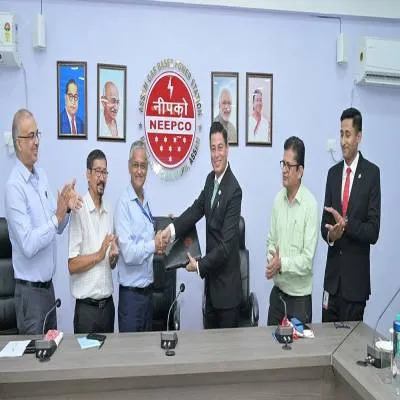
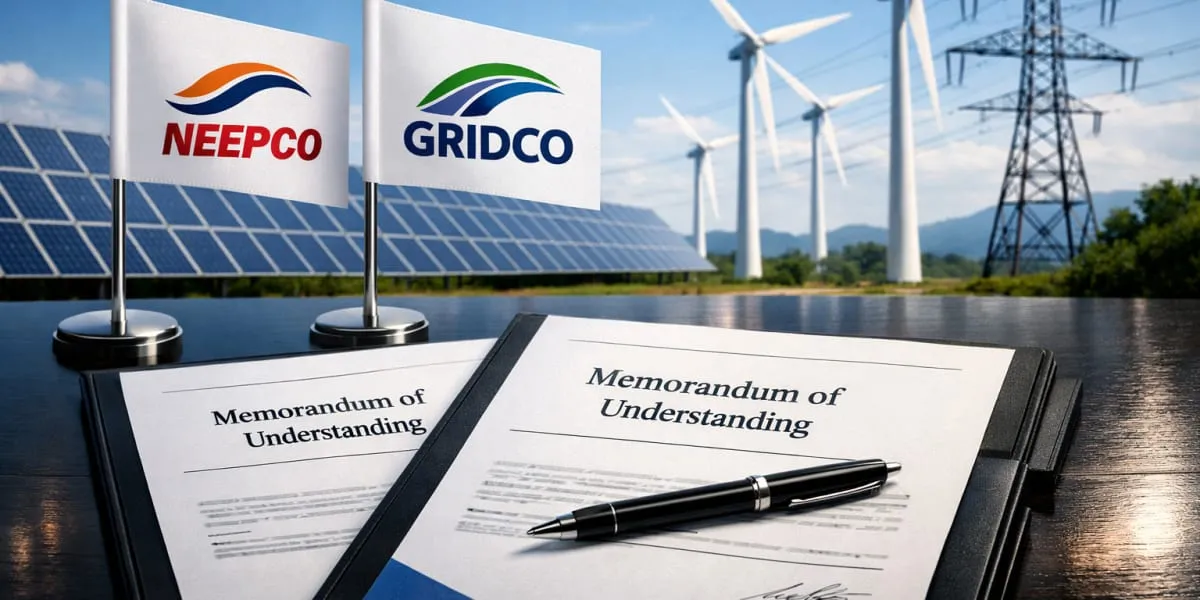
North Eastern Electric Power Corporation Limited (NEEPCO) and Grid Corporation of Odisha Limited (GRIDCO) have signed a memorandum of understanding to jointly identify and develop renewable energy projects across Odisha. The agreement aims to leverage each organisation's strengths to accelerate clean energy deployment in the state, including planning for implementation timelines, resource mobilisation and financing arrangements. The partnership will focus on project development, grid integration and resource assessment, and will support early stage grid studies to ensure feasibility and reliability. The organisations will work with state and central stakeholders and relevant regulatory bodies to align projects with policy objectives.

Under the MoU the partners will undertake joint feasibility studies and site evaluations to assess wind, solar and hybrid potential, together with technical and commercial due diligence. They will explore land assembly, transmission evacuation and necessary environmental and regulatory clearances while engaging with local communities and stakeholders. A joint working group will be constituted to prioritise projects and develop a pipeline for implementation and to coordinate financing and contractor selection. Technical studies will inform project sizing, interconnection arrangements and measures to enhance operational resilience.

The collaboration is expected to strengthen the renewable energy ecosystem in Odisha by improving project bankability, facilitating timely execution and supporting viable off take arrangements. It should support local supply chains, incentivise component manufacturing and provide opportunities for capacity building and skill development in the region. The initiative is framed to contribute to the state's energy transition and to enhance grid flexibility as renewable penetration increases, thereby supporting stable power supplies. Project selection will consider social and environmental safeguards and include mechanisms for community engagement to ensure sustainable outcomes.

Next steps include detailed engineering, financing plans and stakeholder consultations to move selected proposals towards construction readiness. The partners will seek requisite approvals and coordinate with distribution utilities for evacuation planning and operational integration. Progress will be monitored through periodic reviews and a shared governance structure to ensure accountability and timely decision making. The MoU reflects a joint commitment to expand clean capacity and support Odisha's long term energy objectives.

North Eastern Electric Power Corporation Limited (NEEPCO) and Grid Corporation of Odisha Limited (GRIDCO) have signed a memorandum of understanding to jointly identify and develop renewable energy projects across Odisha. The agreement aims to leverage each organisation's strengths to accelerate clean energy deployment in the state, including planning for implementation timelines, resource mobilisation and financing arrangements. The partnership will focus on project development, grid integration and resource assessment, and will support early stage grid studies to ensure feasibility and reliability. The organisations will work with state and central stakeholders and relevant regulatory bodies to align projects with policy objectives. Under the MoU the partners will undertake joint feasibility studies and site evaluations to assess wind, solar and hybrid potential, together with technical and commercial due diligence. They will explore land assembly, transmission evacuation and necessary environmental and regulatory clearances while engaging with local communities and stakeholders. A joint working group will be constituted to prioritise projects and develop a pipeline for implementation and to coordinate financing and contractor selection. Technical studies will inform project sizing, interconnection arrangements and measures to enhance operational resilience. The collaboration is expected to strengthen the renewable energy ecosystem in Odisha by improving project bankability, facilitating timely execution and supporting viable off take arrangements. It should support local supply chains, incentivise component manufacturing and provide opportunities for capacity building and skill development in the region. The initiative is framed to contribute to the state's energy transition and to enhance grid flexibility as renewable penetration increases, thereby supporting stable power supplies. Project selection will consider social and environmental safeguards and include mechanisms for community engagement to ensure sustainable outcomes. Next steps include detailed engineering, financing plans and stakeholder consultations to move selected proposals towards construction readiness. The partners will seek requisite approvals and coordinate with distribution utilities for evacuation planning and operational integration. Progress will be monitored through periodic reviews and a shared governance structure to ensure accountability and timely decision making. The MoU reflects a joint commitment to expand clean capacity and support Odisha's long term energy objectives.

Next Story
Infrastructure Transport

Contracts, Corridors and Cash Flows

India’s roads sector enters 2026 at a decisive junction, where the conversation is no longer about kilometres alone but contracts that allocate risk wisely, corridors that unlock economic value, and cash flows that remain credible over the long term. After more than a decade of relentless expansion, India’s road-building ecosystem is moving into a phase of maturity – where engineering complexity, financial discipline and institutional coordination matter more than sheer scale.Between 2014 and 2024, India built highways at a pace few nations have ever matched. National Highway length expa..

Next Story
Real Estate

The Walled Garden

I am not suggesting Indian architects are inadequate. The profession has produced extraordinary work – from Charles Correa's quiet humanism to Balkrishna Doshi's Nobel-recognised genius. However, the regulatory barriers meant to protect the profession are holding it back. It is time for an honest conversation about this.The Architects Act of 1972 established the Council of Architecture (COA) as the statutory body regulating architecture practice in India. Its founding logic was sound: to ensure those calling themselves architects meet a minimum standard of competence and to protect the publi..

Next Story
Real Estate

We completed a 1BHK home on a private island in 7 days!

Reimagining construction through a ‘War on Waste’, Circato founders T Paul Koshy, Sushma Joseph and Praveen Crasta speak to CW on turning single-use plastic into high-performance building systems – demonstrated at Bengaluru International Airport with a 16-ft wall installed in just 48 hours.What specific gap in the construction ecosystem led to the creation of Circato?Sushma Joseph: We felt the industry had normalised inefficiency. In construction, timelines, costs and outcomes often remain uncertain, yet that is widely accepted. We wanted to show that inefficiencies can be..

Advertisement

Subscribe to Our Newsletter

Get daily newsletters around different themes from Construction world.

STAY CONNECTED

Advertisement

Advertisement

Advertisement