Rooftop Solar To Drive Over 20 GW Renewable Addition
POWER & RENEWABLE ENERGY

Rooftop Solar To Drive Over 20 GW Renewable Addition

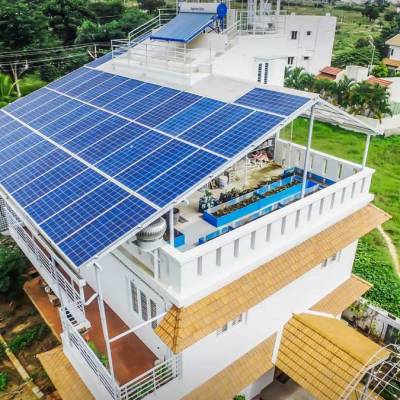
India is expected to add more than 20 gigawatt (GW) of distributed renewable energy capacity in the current financial year, up from 16 GW added in the previous year. The growth is attributed to government schemes and greater uptake of rooftop installations and solar pumps. Distributed renewable energy refers to generation such as rooftop solar and pumps that operate independently of centralised systems. This shift reflects policy emphasis on decentralised clean power.

The PM Surya Ghar Muft Bijli Yojana aims to install solar systems in 10 million (mn) households with a combined capacity of 30 gigawatt (GW) by the end of the year, and beneficiary numbers have crossed five mn households. The PM Kisan Urja Suraksha Evam Utthaan Mahabhiyan is also cited as supporting distributed capacity. Rooftop solar and solar irrigation pumps are therefore seen as immediate drivers of FY27 additions. Analysts point to existing scheme momentum and subsidy design as key enablers.

Beyond small scale installations, commercial demand is expected to expand with data centres and green hydrogen projects adding significant clean power requirements. Data centres are projected to add more than 26 GW of clean power demand to the grid by 2032 as artificial intelligence, cloud infrastructure and data localisation expand. A tender being run by the Solar Energy Corporation of India seeks round the clock renewable supply with higher storage obligations and additional wind capacity to deliver firm power profiles. Such contracts are intended to align supply with distribution company needs.

Policy measures include a floating solar programme backed with Rs 50.7 billion (bn) for projects sanctioned between FY27 and FY31 and a two hour energy storage requirement for such schemes. While the resulting electricity may be costlier than conventional renewable supply, it is expected to be comparable with round the clock power from coal and nuclear sources. Market participants anticipate that a combination of rooftop rollouts, pump electrification and purpose built corporate procurement will underpin distributed additions over the rest of the decade.

India is expected to add more than 20 gigawatt (GW) of distributed renewable energy capacity in the current financial year, up from 16 GW added in the previous year. The growth is attributed to government schemes and greater uptake of rooftop installations and solar pumps. Distributed renewable energy refers to generation such as rooftop solar and pumps that operate independently of centralised systems. This shift reflects policy emphasis on decentralised clean power. The PM Surya Ghar Muft Bijli Yojana aims to install solar systems in 10 million (mn) households with a combined capacity of 30 gigawatt (GW) by the end of the year, and beneficiary numbers have crossed five mn households. The PM Kisan Urja Suraksha Evam Utthaan Mahabhiyan is also cited as supporting distributed capacity. Rooftop solar and solar irrigation pumps are therefore seen as immediate drivers of FY27 additions. Analysts point to existing scheme momentum and subsidy design as key enablers. Beyond small scale installations, commercial demand is expected to expand with data centres and green hydrogen projects adding significant clean power requirements. Data centres are projected to add more than 26 GW of clean power demand to the grid by 2032 as artificial intelligence, cloud infrastructure and data localisation expand. A tender being run by the Solar Energy Corporation of India seeks round the clock renewable supply with higher storage obligations and additional wind capacity to deliver firm power profiles. Such contracts are intended to align supply with distribution company needs. Policy measures include a floating solar programme backed with Rs 50.7 billion (bn) for projects sanctioned between FY27 and FY31 and a two hour energy storage requirement for such schemes. While the resulting electricity may be costlier than conventional renewable supply, it is expected to be comparable with round the clock power from coal and nuclear sources. Market participants anticipate that a combination of rooftop rollouts, pump electrification and purpose built corporate procurement will underpin distributed additions over the rest of the decade.

Next Story
Real Estate

BXB Estates Sets AED 110 Million Jumeirah Golf Estates Record

BXB Estates has completed an AED 110 million residential transaction at Jumeirah Golf Estates, setting a new sales record for the prestigious Dubai residential community.Negotiated by Alfie Tabrez, Managing Partner of BXB Estates, the deal surpassed the previous record of AED 58 million for a completed ready villa in the development.The six-bedroom residence offers 21,714 sq ft of built-up space on a 15,873-sq-ft plot. It features nine bathrooms, four living lounges, a home office, bar lounge, private cinema and rooftop terrace.The property also includes a dedicated wellness area comprising a ..

Next Story
Infrastructure Urban

SECR Floats Rs 6,019 Mn EPC Tender For Paradol Nagpur Link

South East Central Railway (SECR) has invited bids for an Engineering, Procurement and Construction (EPC) contract to build a new broad gauge single line between Paradol Takeoff Point and Nagpur Road Station in Chhattisgarh. The contract carries an estimated cost of Rs 6,019.0 mn and requires an earnest money deposit of Rs 120.4 mn. The work is framed as an EPC assignment intended to strengthen regional rail infrastructure. The tender, issued under number CAO-C-BSP-26-27-15, specifies a completion period of 730 days and a bid validity of 180 days. Two pre-bid meetings are scheduled for 24 Augu..

Next Story
Infrastructure Transport

Indian Railways Reports Nine Per Cent Rise In July Freight Loading

Indian Railways handled 141.3 million tonnes (141.3 mn t) of freight in July, marking a rise of nine per cent year on year. Freight loading maintained a positive trajectory across the network compared with the same month last year. Passenger traffic also increased in July, contributing to higher overall network utilisation. The July outcome continued a pattern of steady monthly gains, reflecting gradual improvement in industrial and logistics activity. The growth in freight volumes reflected stronger demand across multiple sectors and improvements in logistics and train turnarounds. Enhanced r..

Advertisement

Subscribe to Our Newsletter

Get daily newsletters around different themes from Construction world.

STAY CONNECTED

Advertisement

Advertisement

Advertisement