



TNPDCL Targets 40,000 Rooftop Solar Homes
POWER & RENEWABLE ENERGY

TNPDCL Targets 40,000 Rooftop Solar Homes

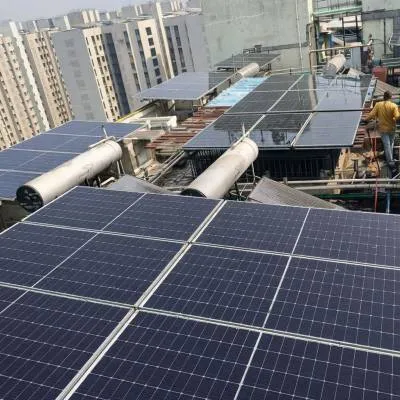
The Tamil Nadu Power Distribution Corporation Limited has set a target to cover 40,000 homes under the PM Surya Ghar initiative, which incentivises residential rooftop solar installations.

A senior TNPDCL official in Coimbatore said nearly 9,000 households across Coimbatore, Tiruppur and The Nilgiris have already installed rooftop solar systems under the scheme. Of these, almost 6,700 homes are located in Coimbatore district alone.

At a recent meeting with solar system vendors, TNPDCL shared details of residential consumers with bimonthly electricity consumption exceeding 500 units. There are around 212,000 such consumers across the region, the official said, indicating significant potential for rooftop solar adoption.

The utility aims to enable 40,000 consumers to switch to solar energy by the end of the next financial year. TNPDCL now installs bidirectional meters for all new electricity service connections, which can be programmed to support rooftop solar systems when consumers opt for solar power.

To accelerate adoption, TNPDCL is conducting awareness campaigns for residential consumers and organising facilitation camps with banks to help households access financing for solar installations.

Separately, TNPDCL has received 132 applications—largely from oil marketing companies—for setting up electric vehicle charging stations across Coimbatore, Tiruppur and the Nilgiris districts. Of these, 71 charging stations are already operational, primarily along highways, at restaurants and petrol stations.

The Tamil Nadu Power Distribution Corporation Limited has set a target to cover 40,000 homes under the PM Surya Ghar initiative, which incentivises residential rooftop solar installations. A senior TNPDCL official in Coimbatore said nearly 9,000 households across Coimbatore, Tiruppur and The Nilgiris have already installed rooftop solar systems under the scheme. Of these, almost 6,700 homes are located in Coimbatore district alone. At a recent meeting with solar system vendors, TNPDCL shared details of residential consumers with bimonthly electricity consumption exceeding 500 units. There are around 212,000 such consumers across the region, the official said, indicating significant potential for rooftop solar adoption. The utility aims to enable 40,000 consumers to switch to solar energy by the end of the next financial year. TNPDCL now installs bidirectional meters for all new electricity service connections, which can be programmed to support rooftop solar systems when consumers opt for solar power. To accelerate adoption, TNPDCL is conducting awareness campaigns for residential consumers and organising facilitation camps with banks to help households access financing for solar installations. Separately, TNPDCL has received 132 applications—largely from oil marketing companies—for setting up electric vehicle charging stations across Coimbatore, Tiruppur and the Nilgiris districts. Of these, 71 charging stations are already operational, primarily along highways, at restaurants and petrol stations.

Next Story
Infrastructure Urban

Study Highlights Freshwater Sponges’ Role in Fighting Metal Pollution

Scientists have identified freshwater sponges and their associated microbial communities as powerful natural allies in tackling toxic metal pollution, offering new hope for sustainable water quality management. A recent study has revealed that these sponges can act both as bioindicators and effective absorbents of harmful metals such as arsenic, lead and cadmium.The findings come from a study published in Microbiology Spectrum by researchers from Bose Institute, an autonomous institute under the Department of Science and Technology, Government of India. The research focused on freshwater spong..

Next Story
Infrastructure Transport

79% of Indian Railways Track now Supports Speeds of 110 Kmph+

Indian Railways has significantly enhanced the speed potential of its track network over the past decade, with 79 per cent of tracks now capable of supporting speeds of 110 kmph and above, compared with just 40 per cent in 2014. The improvement reflects sustained investment in track modernisation and maintenance aimed at faster and safer train operations.According to official data, large-scale upgradation works have been undertaken over the last 11 years to improve track quality and performance. Key measures include the use of heavier 60 kg rails, wider-base concrete sleepers, thick web switch..

Next Story
Infrastructure Transport

Indian Railways Clocks 80% Punctuality Nationwide from Dec 8–14

Indian Railways has reported strong operational performance, achieving an overall punctuality of 80 per cent across the network during the period from December 8 to December 14. The achievement reflects sustained efforts by railway divisions to enhance efficiency and ensure reliable and timely services for passengers and freight users.According to official data, 37 railway divisions recorded punctuality levels exceeding 80 per cent during the review period. Notably, 22 divisions achieved punctuality above 90 per cent, while 10 divisions went a step further by crossing the 95 per cent mark, hig..

Advertisement

Subscribe to Our Newsletter

Get daily newsletters around different themes from Construction world.

STAY CONNECTED

Advertisement

Advertisement

Advertisement

Advertisement

Open In App