Delhi Vidhan Sabha Achieves Net Zero With 500 kW Solar
ECONOMY & POLICY

Delhi Vidhan Sabha Achieves Net Zero With 500 kW Solar

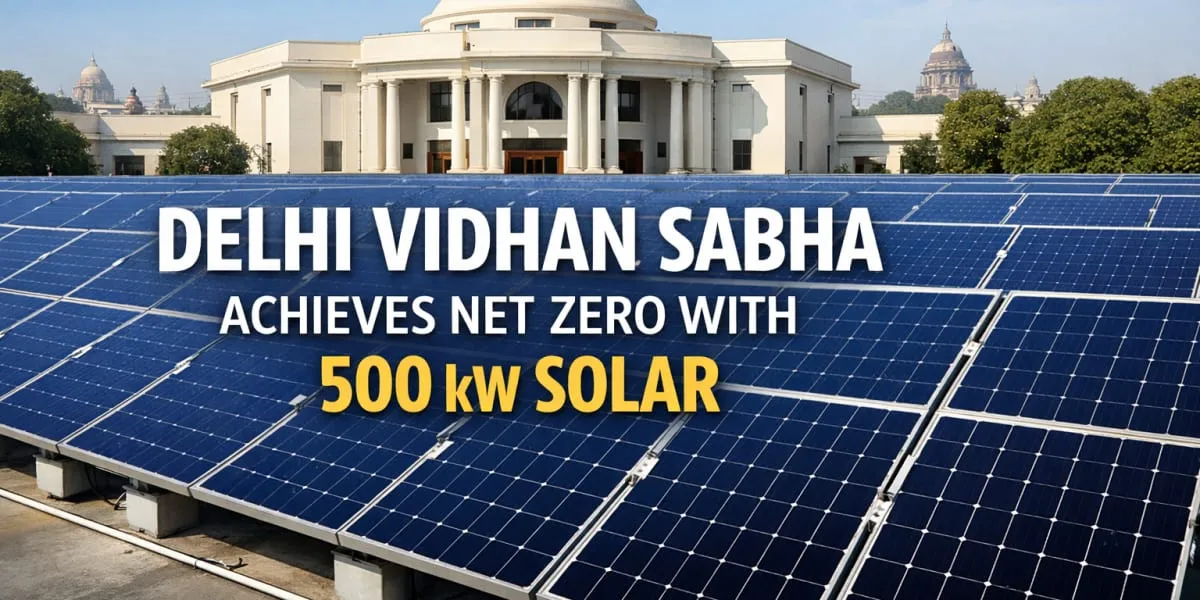
The Delhi Vidhan Sabha has achieved net zero electricity status following the commissioning of a 500 kilowatt (kW) rooftop solar system on the historic assembly building. The redevelopment replaced an earlier 200 kilowatt (kW) installation that was generating less than 10 per cent of its rated capacity, and the work was completed within 90 days at a reported cost of Rs 29.4 million (mn). The upgrade has been presented as an example of institutional adoption of solar in the national capital and as an illustration of retrofitting older infrastructure to meet contemporary performance expectations.

The project addressed operational challenges such as tree shading, ageing infrastructure and damage caused by animals, and involved the installation of approximately 850 solar panels on a 14-foot elevated mounting structure designed to overcome shading constraints and optimise rooftop utilisation. The design incorporated SolarEdge power optimisers to reduce generation losses from partial shading by enabling individual panel-level optimisation rather than reliance on conventional string-level performance. Project planners noted that most agencies had earlier estimated the rooftop could support only 300–350 kW under conventional mounting configurations, and the new approach increased usable capacity without extensive roof interventions.

One engineering constraint was the need to preserve the heritage roof structure of the building originally constructed in 1912, which led the project team to develop a wall-anchored structural solution transferring load through masonry walls rather than the roof slab and enabling certification for 180 km/h wind load under STAAD Pro analysis. The installation stretches across a rooftop gallery of nearly 1.5 km and involved more than 100 personnel across structural, electrical and logistics operations. The project was inaugurated on 3 August 2025 by senior officials and legislators, marking a milestone in institutional sustainability measures.

The system has generated over 558,000 units of electricity up to May 2026, yielding estimated savings of more than Rs 4.4 mn for the exchequer, and is expected to inform similar retrofits of government and institutional buildings where space and structural constraints require customised engineering solutions. The redevelopment is being cited as a case study in how elevated mounting, panel-level optimisation and careful structural design can increase generation potential on constrained heritage rooftops while keeping the architectural fabric intact.

The Delhi Vidhan Sabha has achieved net zero electricity status following the commissioning of a 500 kilowatt (kW) rooftop solar system on the historic assembly building. The redevelopment replaced an earlier 200 kilowatt (kW) installation that was generating less than 10 per cent of its rated capacity, and the work was completed within 90 days at a reported cost of Rs 29.4 million (mn). The upgrade has been presented as an example of institutional adoption of solar in the national capital and as an illustration of retrofitting older infrastructure to meet contemporary performance expectations. The project addressed operational challenges such as tree shading, ageing infrastructure and damage caused by animals, and involved the installation of approximately 850 solar panels on a 14-foot elevated mounting structure designed to overcome shading constraints and optimise rooftop utilisation. The design incorporated SolarEdge power optimisers to reduce generation losses from partial shading by enabling individual panel-level optimisation rather than reliance on conventional string-level performance. Project planners noted that most agencies had earlier estimated the rooftop could support only 300–350 kW under conventional mounting configurations, and the new approach increased usable capacity without extensive roof interventions. One engineering constraint was the need to preserve the heritage roof structure of the building originally constructed in 1912, which led the project team to develop a wall-anchored structural solution transferring load through masonry walls rather than the roof slab and enabling certification for 180 km/h wind load under STAAD Pro analysis. The installation stretches across a rooftop gallery of nearly 1.5 km and involved more than 100 personnel across structural, electrical and logistics operations. The project was inaugurated on 3 August 2025 by senior officials and legislators, marking a milestone in institutional sustainability measures. The system has generated over 558,000 units of electricity up to May 2026, yielding estimated savings of more than Rs 4.4 mn for the exchequer, and is expected to inform similar retrofits of government and institutional buildings where space and structural constraints require customised engineering solutions. The redevelopment is being cited as a case study in how elevated mounting, panel-level optimisation and careful structural design can increase generation potential on constrained heritage rooftops while keeping the architectural fabric intact.

Next Story
Infrastructure Transport

Pune Division to Remove All Diamond Crossings by Year-End

The Pune railway division has announced plans to remove all 16 diamond crossings by the end of 2026 as part of a major yard remodelling project following the derailment of a Vande Bharat Express at Pune Junction on April 27. Railway authorities said the replacements aim to improve safety and streamline train operations across the busy station. The decision followed a Central Railway finding that the accident involved a non-standard diamond crossing and highlighted the need for replacement. Regular maintenance of existing crossings will continue until the replacement work is completed. Official..

Next Story
Infrastructure Urban

Goa Declares 80 Million Square Metres No Development Zone

The Goa state government has declared 80 million square metres (mn) of land a no development zone, designating the area as protected from new construction. The notification reclassifies tracts across the state under a no development category for planning and regulatory purposes. The declaration signals a formal halt to new building permits within the defined zone. Authorities indicated that maps will be issued to show broad boundaries while detailed surveys will refine precise limits. The move transfers responsibility for enforcement to local planning authorities and relevant departments, whic..

Next Story
Infrastructure Urban

Micro Mitti To Invest Rs Three Billion In Indore Project

Micro Mitti has announced an investment of Rs three billion (Rs 3 bn) to develop a commercial project in Indore. The company said the allocation marks a significant commitment to the city's real estate sector and will target commercial space demand. The announcement follows the firm's stated strategy to expand its asset base outside its existing markets. Company executives outlined the plan in a corporate release and provided limited additional details. The commercial project is intended to serve office, retail and related uses in response to demand from businesses and consumers in the region...

Advertisement

Subscribe to Our Newsletter

Get daily newsletters around different themes from Construction world.

STAY CONNECTED

Advertisement

Advertisement

Advertisement