Ajni Laxman Jhula First Phase Likely to Miss Pre-Monsoon Deadline
ECONOMY & POLICY

Ajni Laxman Jhula First Phase Likely to Miss Pre-Monsoon Deadline

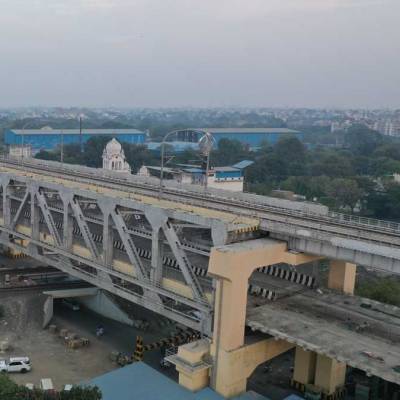
The Rs 3.32 billion (bn) Ajni Laxman Jhula six-lane twin cable-stayed bridge project has entered a stage in which the first phase is likely to miss its pre-monsoon completion target, with significant work still pending at the site. The structure is intended to replace the 125-year-old British-era Ajni railway overbridge.

Maharashtra Rail Infrastructure Development Corporation (MRIDC), also known as MahaRail, is constructing one carriageway in the first phase, comprising three lanes to allow two-way traffic, while the second carriageway will be taken up after demolition of the existing bridge. Once fully completed, both carriageways will operate as one-way roadways to improve traffic flow between South and Central Nagpur.

The project has experienced repeated delays owing to design modifications linked to parallel infrastructure projects, complexities of working directly above a busy railway line and prolonged statutory approval processes for the cable-stayed elements. MRIDC has completed two major abutments on either side of the railway, and work on the central pylon is underway, with the remaining pylon work estimated to require about one month. Precasting of slabs has been completed, and girders are being readied, but several key components remain unfinished.

Construction began in April 2023, and the authority initially planned to open one side by October 2025, a schedule later moved to March 2026 and then to the pre-monsoon period; however, a recent site inspection indicated substantial residual work, making that target unlikely. MRIDC has not issued an official revised completion date, and sources indicate the first phase may now be finished only by the end of the year.

Once operational the twin cable-stayed bridge is expected to reduce traffic congestion substantially and enhance connectivity across central Nagpur while also serving as an architectural landmark with LED theme lighting, footpaths on both sides and dedicated selfie points. Phased construction has avoided the need for traffic diversions and the design prepared by a Taiwan-based firm and approved by IIT Bombay has required multiple technical clearances that have contributed to the execution timeline.

The Rs 3.32 billion (bn) Ajni Laxman Jhula six-lane twin cable-stayed bridge project has entered a stage in which the first phase is likely to miss its pre-monsoon completion target, with significant work still pending at the site. The structure is intended to replace the 125-year-old British-era Ajni railway overbridge. Maharashtra Rail Infrastructure Development Corporation (MRIDC), also known as MahaRail, is constructing one carriageway in the first phase, comprising three lanes to allow two-way traffic, while the second carriageway will be taken up after demolition of the existing bridge. Once fully completed, both carriageways will operate as one-way roadways to improve traffic flow between South and Central Nagpur. The project has experienced repeated delays owing to design modifications linked to parallel infrastructure projects, complexities of working directly above a busy railway line and prolonged statutory approval processes for the cable-stayed elements. MRIDC has completed two major abutments on either side of the railway, and work on the central pylon is underway, with the remaining pylon work estimated to require about one month. Precasting of slabs has been completed, and girders are being readied, but several key components remain unfinished. Construction began in April 2023, and the authority initially planned to open one side by October 2025, a schedule later moved to March 2026 and then to the pre-monsoon period; however, a recent site inspection indicated substantial residual work, making that target unlikely. MRIDC has not issued an official revised completion date, and sources indicate the first phase may now be finished only by the end of the year. Once operational the twin cable-stayed bridge is expected to reduce traffic congestion substantially and enhance connectivity across central Nagpur while also serving as an architectural landmark with LED theme lighting, footpaths on both sides and dedicated selfie points. Phased construction has avoided the need for traffic diversions and the design prepared by a Taiwan-based firm and approved by IIT Bombay has required multiple technical clearances that have contributed to the execution timeline.

Next Story
Products

Fynd Launches AI Platform to Accelerate Fashion Creation

Fynd, an AI-native retail technology company backed by Reliance Retail Ventures, has launched Fynd Create, a platform designed to bring design intelligence, sourcing and manufacturing onto a single connected ecosystem. The platform aims to help brands respond faster to changing consumer preferences and shorten product development cycles.As social media trends continue to compress traditional fashion seasons, brands are under increasing pressure to move from seasonal planning to demand-driven production. Conventional supply chains, often characterised by long lead times and fragmented operation..

Next Story
Resources

Modis Navnirman Appointed For Neel Kiran CHSL Redevelopment

Modis Navnirman (MNL) has been appointed as the developer for the redevelopment of Neel Kiran Co-operative Housing Society Ltd in Khar West, Mumbai, following a selection process in which members chose MNL as their preferred partner. The appointment will add approximately Rs two point five billion (Rs two point five bn) to the company's Gross Development Value pipeline and strengthen its focus on redevelopment and urban renewal projects across the Mumbai Metropolitan Region. The project site is a landmark residential society in Khar West, and the selection reflects members' preference for a pa..

Next Story
Infrastructure Energy

Diamond Power Commissions Eighth MV and EHV Cable Line

Diamond Power Infrastructure (DPIL) has commissioned its eighth Medium Voltage (MV) and Extra High Voltage (EHV) power cable production line at its manufacturing facility in Vadodara, Gujarat. The new line enhances the company's manufacturing capacity in the technologically advanced MV and EHV underground power cable segment. This segment supplies cables for power transmission networks, power generation projects and renewable energy evacuation systems. The development is presented as a step to meet evolving infrastructure needs. The MV and EHV cables produced at the Vadodara facility serve urb..

Advertisement

Subscribe to Our Newsletter

Get daily newsletters around different themes from Construction world.

STAY CONNECTED

Advertisement

Advertisement

Advertisement