+
Chennai MTC Invites Tenders for 1,000 AC Electric Buses
ECONOMY & POLICY

Chennai MTC Invites Tenders for 1,000 AC Electric Buses

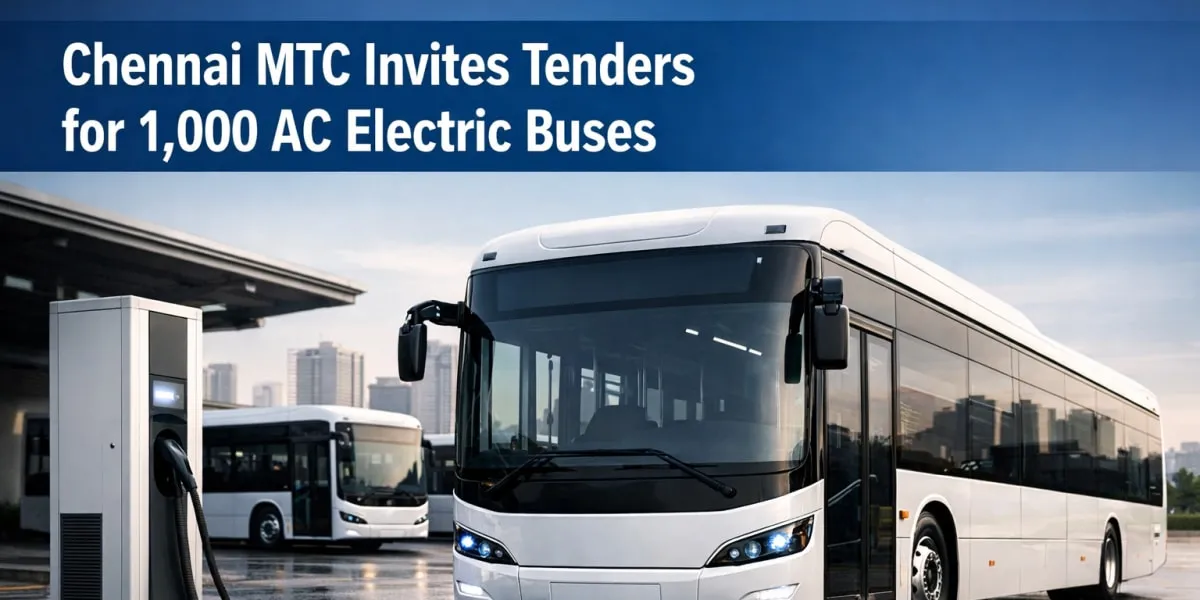
Metropolitan Transport Corporation (MTC) in Chennai has invited tenders to procure 1,000 air-conditioned low-floor luxury electric buses to strengthen public transport across Tamil Nadu. The tender notice specifies procurement under a Gross Cost Contract (GCC) model, under which private operators will supply and maintain buses while the corporation manages operations. The authority indicated that the initiative is part of a broader effort to modernise urban mobility and to support sustainable transport objectives.

Previously the corporation procured 625 low-floor electric buses, including air-conditioned variants, to modernise the city's bus services. Those buses were introduced for public use in five phases between June 2025 and March 2026 and were deployed to improve passenger comfort and reduce emissions. Officials said the earlier acquisition provided operational experience that will inform the new procurement.

Companies interested in participating can download application documents from the MTC website and must submit bids between March 25 and April 7 until four pm. The tender opening is scheduled for April 7 at four thirty pm, following which eligible companies will be evaluated and the contract awarded. Officials indicated that procurement and subsequent deployment will be expedited to ensure the buses enter service at the earliest opportunity.

Authorities said the second phase of procurement for 1,000 buses will enhance passenger comfort, reduce pollution and strengthen sustainable public transport in Chennai. The corporation will retain operational oversight while the contracted operators will handle vehicle supply, maintenance and daily operations under the GCC arrangement. Stakeholders will monitor performance and service levels as the fleet expands to meet rising demand.

Officials noted that lessons from the initial 625-bus deployment will inform specifications, charging infrastructure planning and operator selection to improve reliability and uptime. The corporation expects that careful performance monitoring and contractual safeguards under the GCC will protect public interest and deliver a more comfortable and efficient bus network for commuters across the metropolitan area.

Metropolitan Transport Corporation (MTC) in Chennai has invited tenders to procure 1,000 air-conditioned low-floor luxury electric buses to strengthen public transport across Tamil Nadu. The tender notice specifies procurement under a Gross Cost Contract (GCC) model, under which private operators will supply and maintain buses while the corporation manages operations. The authority indicated that the initiative is part of a broader effort to modernise urban mobility and to support sustainable transport objectives. Previously the corporation procured 625 low-floor electric buses, including air-conditioned variants, to modernise the city's bus services. Those buses were introduced for public use in five phases between June 2025 and March 2026 and were deployed to improve passenger comfort and reduce emissions. Officials said the earlier acquisition provided operational experience that will inform the new procurement. Companies interested in participating can download application documents from the MTC website and must submit bids between March 25 and April 7 until four pm. The tender opening is scheduled for April 7 at four thirty pm, following which eligible companies will be evaluated and the contract awarded. Officials indicated that procurement and subsequent deployment will be expedited to ensure the buses enter service at the earliest opportunity. Authorities said the second phase of procurement for 1,000 buses will enhance passenger comfort, reduce pollution and strengthen sustainable public transport in Chennai. The corporation will retain operational oversight while the contracted operators will handle vehicle supply, maintenance and daily operations under the GCC arrangement. Stakeholders will monitor performance and service levels as the fleet expands to meet rising demand. Officials noted that lessons from the initial 625-bus deployment will inform specifications, charging infrastructure planning and operator selection to improve reliability and uptime. The corporation expects that careful performance monitoring and contractual safeguards under the GCC will protect public interest and deliver a more comfortable and efficient bus network for commuters across the metropolitan area.

Next Story
Infrastructure Urban

Implementation Status of Jal Jeevan Mission

Since August 2019 the Government has implemented Jal Jeevan Mission to provide assured potable water through household tap connections in rural India. At the start of the mission only 32.3 million (mn) rural households, representing 16.7 per cent, were reported to have tap water connections. States and union territories have reported that 125.8 mn additional rural households have since been provided with tap connections. As a result, of about 193.6 mn rural households roughly 158.2 mn, or 81.71 per cent, are reported to have tap water supply at home.\n\nThe State, district and village level st..

Next Story
Infrastructure Urban

Jal Jeevan Mission Reaches Eighty One Per Cent Rural Coverage

The Government reported substantial progress under the Jal Jeevan Mission, launched in August 2019 to provide tap water to every rural household. At launch only 32.3 million (mn) rural households had tap connections and states and Union territories reported provision of 125.8 mn additional households by March 2026. Consequently, out of about 193.6 mn rural households around 158.2 mn, or 81.71 per cent, are reported to have tap water at home. The Finance Minister announced extension of the mission until 2028 in the 2025-26 budget speech. The Swachh Bharat Mission Grameen, launched in October 20..

Next Story
Infrastructure Urban

Empowering Local Governance for Sustainable Rural Water Supply

The Ministry of Jal Shakti has aligned the Jal Jeevan Mission (JJM) with the 73rd Amendment to strengthen village level planning and community ownership of water supply. Gram Panchayats, village water and sanitation committees and Pani Samitis are to plan, implement, manage and maintain piped water systems, with gram sabha processes formalising handover and oversight. Implementation support agencies including non government organisations, community based organisations and self help groups have been empanelled to train local committees and promote women participation. Under JJM, the department ..

Advertisement

Subscribe to Our Newsletter

Get daily newsletters around different themes from Construction world.

STAY CONNECTED

Advertisement

Advertisement

Advertisement