Genesys Secures NMCG Aerial LiDAR Survey Along Ganga Corridor
ECONOMY & POLICY

Genesys Secures NMCG Aerial LiDAR Survey Along Ganga Corridor

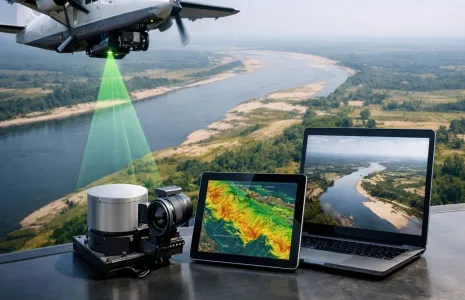
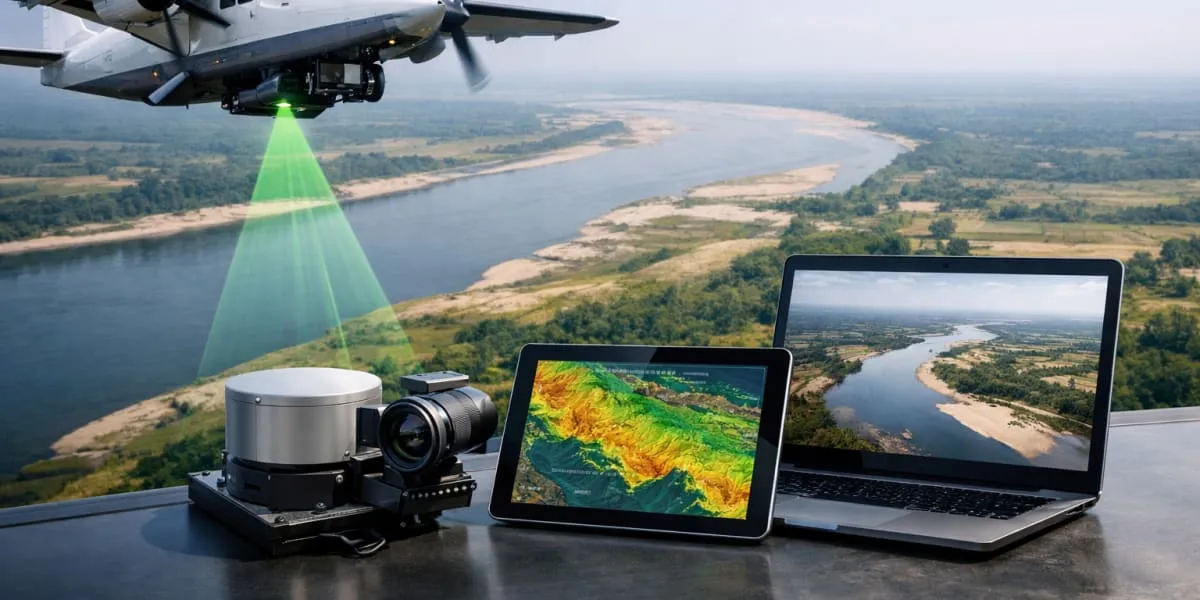
Genesys International Corporation Limited (Genesys) said on 14 May 2026 that it has won a landmark contract from the National Mission for Clean Ganga (NMCG), Ministry of Jal Shakti, Government of India, to undertake an aerial LiDAR survey and geotagged videography of the drainage system along the Ganga corridor. The assignment covers the Ballia-to-Farakka stretch across four states: Uttar Pradesh, Bihar, Jharkhand and West Bengal. The programme will employ a combination of manned aircraft and unmanned aerial vehicles to collect high-resolution geospatial data.

The work scope comprises aerial LiDAR mapping, photogrammetry, orthorectified imagery and annotated aerial video, together with geotagged drainage information to support river corridor assessment and drainage identification. Outputs will include a three-dimensional LiDAR point cloud, orthorectified imagery layers and a geotagged drainage inventory that is intended to be decision ready for technical review and management planning. The dataset is designed to enable terrain understanding, downstream planning and targeted interventions along the river and its tributaries.

Genesys said the project demonstrates how integrated manned and unmanned aerial platforms, combined with a constellation of sensors, can accelerate data acquisition and create robust river intelligence at scale. Management noted the relevance of such geospatial verticals for environmental restoration, wastewater planning, floodplain management and infrastructure design along river edges. The engagement is presented as a strategic capability that can assist pollution hotspot identification, drain and confluence mapping and the development of digital decision support tools for basin management.

The company will deliver the datasets to NMCG for use in monitoring and technical review and said it expects the outputs to inform targeted interventions and compliance monitoring. The contract underscores Genesys position in the domestic geospatial sector and aligns with government efforts to modernise river management. Media contact details and company background were provided in the release.

Genesys International Corporation Limited (Genesys) said on 14 May 2026 that it has won a landmark contract from the National Mission for Clean Ganga (NMCG), Ministry of Jal Shakti, Government of India, to undertake an aerial LiDAR survey and geotagged videography of the drainage system along the Ganga corridor. The assignment covers the Ballia-to-Farakka stretch across four states: Uttar Pradesh, Bihar, Jharkhand and West Bengal. The programme will employ a combination of manned aircraft and unmanned aerial vehicles to collect high-resolution geospatial data. The work scope comprises aerial LiDAR mapping, photogrammetry, orthorectified imagery and annotated aerial video, together with geotagged drainage information to support river corridor assessment and drainage identification. Outputs will include a three-dimensional LiDAR point cloud, orthorectified imagery layers and a geotagged drainage inventory that is intended to be decision ready for technical review and management planning. The dataset is designed to enable terrain understanding, downstream planning and targeted interventions along the river and its tributaries. Genesys said the project demonstrates how integrated manned and unmanned aerial platforms, combined with a constellation of sensors, can accelerate data acquisition and create robust river intelligence at scale. Management noted the relevance of such geospatial verticals for environmental restoration, wastewater planning, floodplain management and infrastructure design along river edges. The engagement is presented as a strategic capability that can assist pollution hotspot identification, drain and confluence mapping and the development of digital decision support tools for basin management. The company will deliver the datasets to NMCG for use in monitoring and technical review and said it expects the outputs to inform targeted interventions and compliance monitoring. The contract underscores Genesys position in the domestic geospatial sector and aligns with government efforts to modernise river management. Media contact details and company background were provided in the release.

Next Story
Infrastructure Urban

Centre Clears Power Distribution Upgrade for Uttar Pradesh

The Central Government has approved power distribution projects worth Rs 407.39 billion for Uttar Pradesh under the Revamped Distribution Sector Scheme (RDSS). The investment will be used to modernise the state's electricity distribution infrastructure and strengthen network capacity across urban and rural areas. The package targets one of the country's largest distribution networks as the state experiences rapid urbanisation and rising electricity consumption. Planned interventions include the strengthening of distribution lines, modernisation of substations, replacement of ageing electrical ..

Next Story
Infrastructure Energy

India Data Centres To Consume 191 TWh By 2040 Driving Renewables

A Wood Mackenzie report says India's operational data centre capacity is projected to increase more than fivefold to 12 gigawatt (GW) by 2030 from 2.2 GW in 2025 as artificial intelligence (AI) and cloud computing drive demand. It projects electricity consumption to rise from 10 terawatt-hour (TWh) in 2025 to 191 TWh by 2040. The study forecasts a compound annual growth rate of around 40 per cent and notes AI-dedicated capacity will surge nearly 24-fold from 275 megawatt (MW) in 2025 to 6,546 MW by 2030. The report places India's digital economy at Rs 32 trillion (tn) in 2025 and says it contr..

Next Story
Infrastructure Transport

Hydrogen Train Completes 1,200 Kilometres Of Trials

India's first hydrogen train was flagged off between Jind and Sonipat on July 17 and has travelled over 1,200 kilometres in trials, saving diesel consumption of more than 3,200 litres, a Railway Ministry press release said. The deployment marks the introduction of a zero-emission fuel cell train into route testing and represents a milestone in domestic rail innovation. The train generates electricity onboard through a chemical reaction between hydrogen and oxygen, producing electricity to propel the vehicle while emitting only water vapour as a by-product. There is no smoke and no tailpipe car..

Advertisement

Subscribe to Our Newsletter

Get daily newsletters around different themes from Construction world.

STAY CONNECTED

Advertisement

Advertisement

Advertisement