INOX India Supplies LNG Systems For Dual-Fuel DEMU Trial
ECONOMY & POLICY

INOX India Supplies LNG Systems For Dual-Fuel DEMU Trial

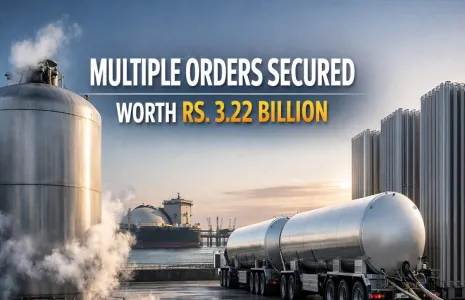
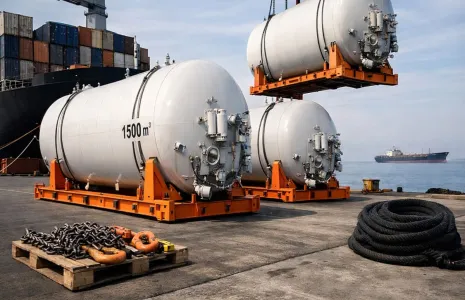
Indian Railways has operationalised the nation’s first liquefied natural gas (LNG)-diesel dual-fuel diesel electric multiple unit (DEMU) train at Sabarmati, Ahmedabad, following installation of 2,200-litre LNG receiving, storage and regasification systems supplied by INOX India Limited (INOXCVA). The systems were integrated with 1,400 HP driving power cars (DPUs) of the dual-fuel DEMU to enable simultaneous use of LNG and diesel. INOXCVA supplied these cryogenic systems as part of its contract with Indian Railways.

The cryogenic systems were engineered to permit substitution of up to 40 per cent of diesel with LNG, improving fuel efficiency and reducing greenhouse gas emissions on short and medium-distance routes. The initiative was developed by Indian Railways’ Alternative Fuels Division to convert an initial batch of 10 DPUs from conventional diesel to a dual-fuel hybrid model. Earlier deliveries included two units which underwent trials and certification by Indian Railways at the Sabarmati division.

Following successful trials, Indian Railways has signalled readiness to induct additional units and INOXCVA has indicated readiness to deliver further systems under the contract. CLH Gaseous Fuel Applications Pvt. Ltd managed the engine conversion from standalone diesel to dual-fuel operation and facilitated delivery of the LNG fuel tank system. INOXCVA remains the only technology provider in India to have delivered, tested and validated such cryogenic LNG systems for rail applications.

INOX India positions LNG as a transition fuel while pursuing liquid hydrogen for future zero-emission solutions, reflecting the company’s research and development focus and decades of cryogenic expertise. The company, with operations in India, Brazil and Europe, serves a user base across more than 100 countries and maintains after-sales support associates in 25 countries. Plans are under way to double on-board LNG capacity so that dual-fuel trains can cover longer distances beyond current shorter hauls. The deployment is presented as a significant step in India’s rail decarbonisation and in advancing energy-efficient rail mobility.

Indian Railways has operationalised the nation’s first liquefied natural gas (LNG)-diesel dual-fuel diesel electric multiple unit (DEMU) train at Sabarmati, Ahmedabad, following installation of 2,200-litre LNG receiving, storage and regasification systems supplied by INOX India Limited (INOXCVA). The systems were integrated with 1,400 HP driving power cars (DPUs) of the dual-fuel DEMU to enable simultaneous use of LNG and diesel. INOXCVA supplied these cryogenic systems as part of its contract with Indian Railways. The cryogenic systems were engineered to permit substitution of up to 40 per cent of diesel with LNG, improving fuel efficiency and reducing greenhouse gas emissions on short and medium-distance routes. The initiative was developed by Indian Railways’ Alternative Fuels Division to convert an initial batch of 10 DPUs from conventional diesel to a dual-fuel hybrid model. Earlier deliveries included two units which underwent trials and certification by Indian Railways at the Sabarmati division. Following successful trials, Indian Railways has signalled readiness to induct additional units and INOXCVA has indicated readiness to deliver further systems under the contract. CLH Gaseous Fuel Applications Pvt. Ltd managed the engine conversion from standalone diesel to dual-fuel operation and facilitated delivery of the LNG fuel tank system. INOXCVA remains the only technology provider in India to have delivered, tested and validated such cryogenic LNG systems for rail applications. INOX India positions LNG as a transition fuel while pursuing liquid hydrogen for future zero-emission solutions, reflecting the company’s research and development focus and decades of cryogenic expertise. The company, with operations in India, Brazil and Europe, serves a user base across more than 100 countries and maintains after-sales support associates in 25 countries. Plans are under way to double on-board LNG capacity so that dual-fuel trains can cover longer distances beyond current shorter hauls. The deployment is presented as a significant step in India’s rail decarbonisation and in advancing energy-efficient rail mobility.

Related Stories

Gold Stories

Next Story
Infrastructure Urban

KONE Opens India's First Digital Experience Centre in Pune

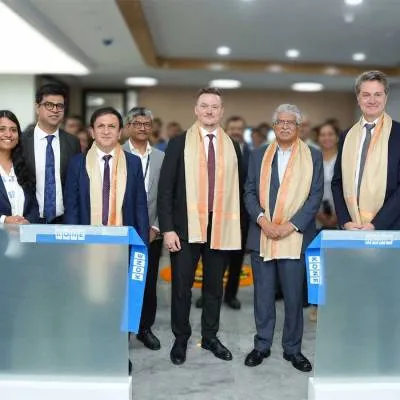
KONE, a global elevator and escalator manufacturer, has inaugurated its first Digital Experience Centre (DEC) in India, located in Pune. The facility aims to showcase how artificial intelligence (AI), connectivity and data-driven technologies can enhance customer experiences and improve building operations.The centre was inaugurated by Jussi Herlin, Executive Vice Chair, KONE Corporation; Philippe Delorme, President and CEO, KONE; and Nandan Nilekani, Co-founder and Chairman of the Board, Infosys.Designed as an interactive customer environment, the facility demonstrates digital solutions cover..

Next Story
Infrastructure Urban

CII GreenCo Launches Circularity Guidelines for Indian Industry

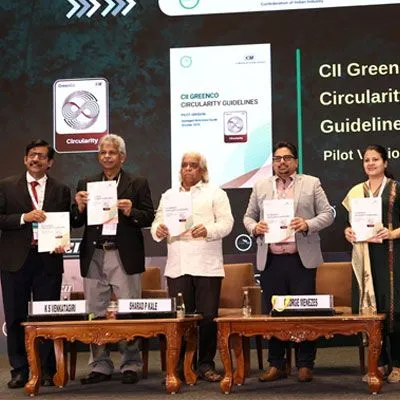
The Confederation of Indian Industry (CII) GreenCo Council has launched the CII GreenCo Circularity Guidelines – Pilot Version at the 17th CII GreenCo Waste & Resource Management Summit 2026 in Chennai. The initiative aims to strengthen resource efficiency, waste reduction and circular economy practices across Indian manufacturing and process industries.The guidelines introduce a structured framework with circularity indices covering raw materials, consumables, packaging and other resource inputs. These indicators will help industries assess existing practices, identify opportunities to ..

Next Story
Infrastructure Energy

Global Electronics Association Launches IPC-1783-CO2E Standard

The Global Electronics Association has introduced IPC-1783-CO2E, a new international standard aimed at improving consistency, transparency and comparability in product carbon footprint reporting across the electronics manufacturing industry.The standard, titled International Standard for Data Collection and Reporting of CO2 Equivalent (CO2e) Emissions for the Electronics Manufacturing Supply Chain, provides industry-specific guidance for collecting, estimating and reporting carbon emissions data.With increasing regulatory requirements and customer expectations, electronics manufacturers face c..

Advertisement

Subscribe to Our Newsletter

Get daily newsletters around different themes from Construction world.

STAY CONNECTED

Advertisement

SPECIAL OFFER
QR Code