

+
Kazatomprom Inks Massive Supply Deal With India
ECONOMY & POLICY

Kazatomprom Inks Massive Supply Deal With India

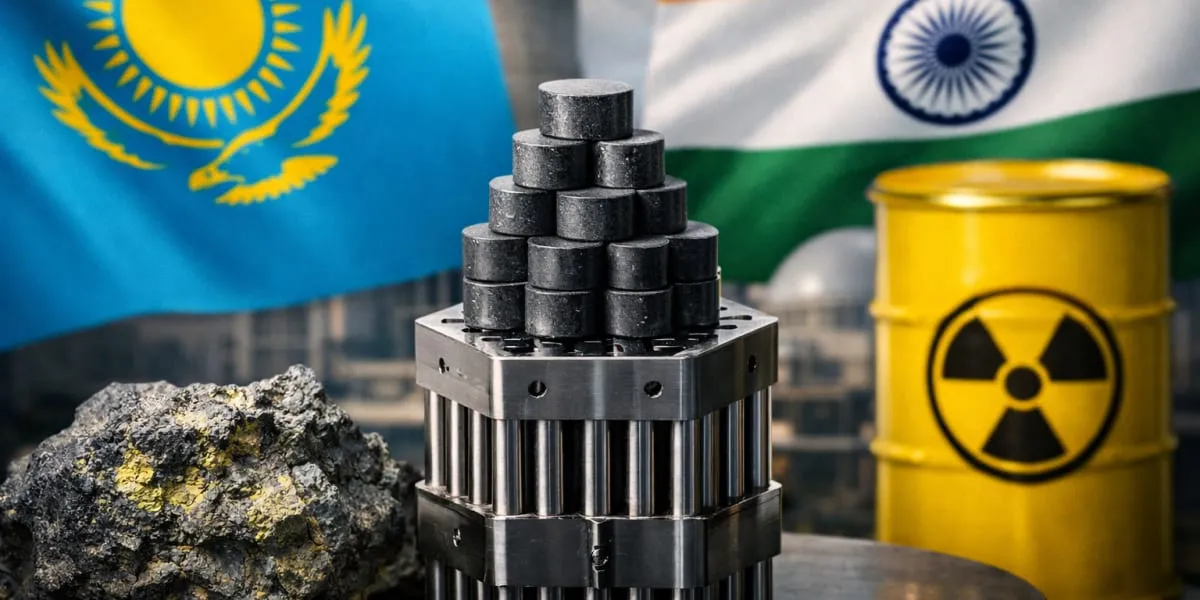
Kazakhstan's state nuclear company Kazatomprom has signed a significant supply agreement with India that will bolster bilateral energy cooperation and support India's expanding civil nuclear programme. The arrangement was described by company sources as a major step in securing reliable fuel supplies for Indian reactors. Observers noted the deal underscores Kazakhstan's role as a key supplier in the global uranium market. Market participants indicated the pact may enhance investor confidence in the sector.

Kazakhstan's state nuclear company Kazatomprom will be the principal supplier under the agreement and will deliver uranium for use in India's civilian power plants. The deal is expected to form part of a broader, multi-year relationship aimed at ensuring predictability of supply and supporting long term planning by utilities. Indian officials indicated that the arrangement will contribute to energy security and to efforts to reduce carbon emissions from the power sector. Both sides reaffirmed commitments to regulatory compliance and to international safeguards governing peaceful nuclear cooperation.

The agreement is likely to influence market dynamics by improving visibility on supply flows and by encouraging investment in downstream fuel processing and reactor operations. Analysts expect that clearer contractual frameworks between producers and consumers can reduce volatility and assist utilities in managing procurement cycles. The transaction may also prompt other producer nations to pursue comparable long term arrangements with importing countries.

The supply deal is a strategic milestone that could pave the way for deeper industrial collaboration in areas such as fuel fabrication, technical services and training. Industry participants emphasised that long term contracts contribute to project financing and to the stability of supply chains. Both governments signalled willingness to explore further cooperation to support safe and sustainable nuclear energy development.

Kazakhstan's state nuclear company Kazatomprom has signed a significant supply agreement with India that will bolster bilateral energy cooperation and support India's expanding civil nuclear programme. The arrangement was described by company sources as a major step in securing reliable fuel supplies for Indian reactors. Observers noted the deal underscores Kazakhstan's role as a key supplier in the global uranium market. Market participants indicated the pact may enhance investor confidence in the sector. Kazakhstan's state nuclear company Kazatomprom will be the principal supplier under the agreement and will deliver uranium for use in India's civilian power plants. The deal is expected to form part of a broader, multi-year relationship aimed at ensuring predictability of supply and supporting long term planning by utilities. Indian officials indicated that the arrangement will contribute to energy security and to efforts to reduce carbon emissions from the power sector. Both sides reaffirmed commitments to regulatory compliance and to international safeguards governing peaceful nuclear cooperation. The agreement is likely to influence market dynamics by improving visibility on supply flows and by encouraging investment in downstream fuel processing and reactor operations. Analysts expect that clearer contractual frameworks between producers and consumers can reduce volatility and assist utilities in managing procurement cycles. The transaction may also prompt other producer nations to pursue comparable long term arrangements with importing countries. The supply deal is a strategic milestone that could pave the way for deeper industrial collaboration in areas such as fuel fabrication, technical services and training. Industry participants emphasised that long term contracts contribute to project financing and to the stability of supply chains. Both governments signalled willingness to explore further cooperation to support safe and sustainable nuclear energy development.

Next Story
Infrastructure Urban

Implementation Status of Jal Jeevan Mission

Since August 2019 the Government has implemented Jal Jeevan Mission to provide assured potable water through household tap connections in rural India. At the start of the mission only 32.3 million (mn) rural households, representing 16.7 per cent, were reported to have tap water connections. States and union territories have reported that 125.8 mn additional rural households have since been provided with tap connections. As a result, of about 193.6 mn rural households roughly 158.2 mn, or 81.71 per cent, are reported to have tap water supply at home.\n\nThe State, district and village level st..

Next Story
Infrastructure Urban

Jal Jeevan Mission Reaches Eighty One Per Cent Rural Coverage

The Government reported substantial progress under the Jal Jeevan Mission, launched in August 2019 to provide tap water to every rural household. At launch only 32.3 million (mn) rural households had tap connections and states and Union territories reported provision of 125.8 mn additional households by March 2026. Consequently, out of about 193.6 mn rural households around 158.2 mn, or 81.71 per cent, are reported to have tap water at home. The Finance Minister announced extension of the mission until 2028 in the 2025-26 budget speech. The Swachh Bharat Mission Grameen, launched in October 20..

Next Story
Infrastructure Urban

Empowering Local Governance for Sustainable Rural Water Supply

The Ministry of Jal Shakti has aligned the Jal Jeevan Mission (JJM) with the 73rd Amendment to strengthen village level planning and community ownership of water supply. Gram Panchayats, village water and sanitation committees and Pani Samitis are to plan, implement, manage and maintain piped water systems, with gram sabha processes formalising handover and oversight. Implementation support agencies including non government organisations, community based organisations and self help groups have been empanelled to train local committees and promote women participation. Under JJM, the department ..

Advertisement

Subscribe to Our Newsletter

Get daily newsletters around different themes from Construction world.

STAY CONNECTED

Advertisement

Advertisement

Advertisement