MG Unveils ADAPT Platform and Plans EV and PHEV SUVs in FY27
ECONOMY & POLICY

MG Unveils ADAPT Platform and Plans EV and PHEV SUVs in FY27

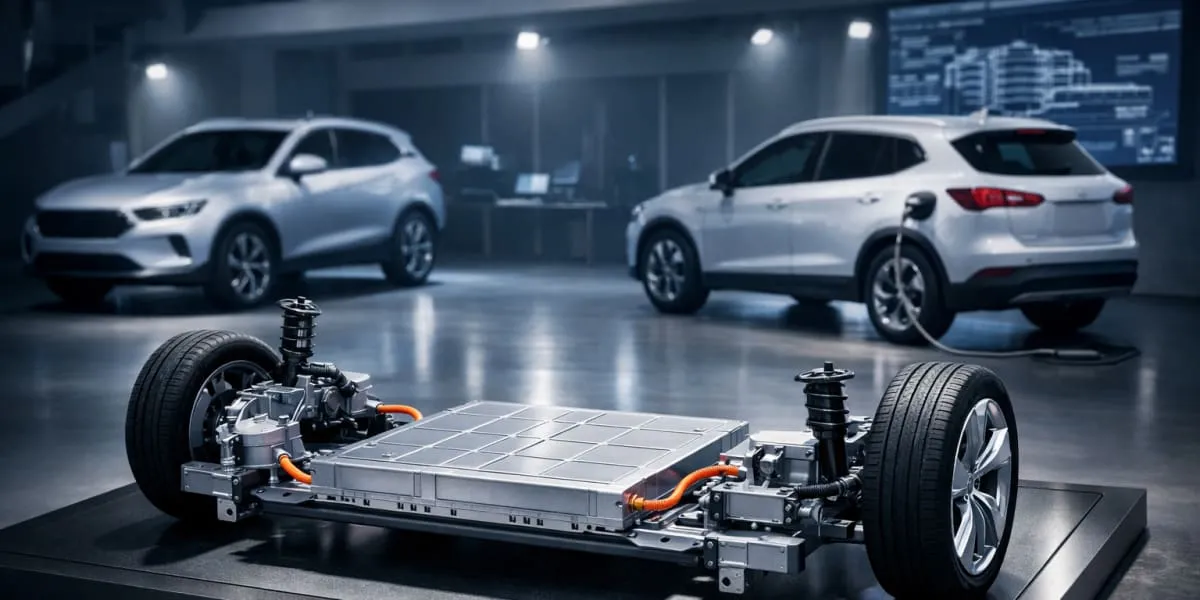
MG unveiled the ADAPT platform, which will underpin a future portfolio by supporting electric vehicles (EVs), hybrid electric vehicles (HEVs), plug?in hybrid electric vehicles (PHEVs) and range?extender electric vehicles (REEVs) on a common modular architecture. The company confirmed it will launch one electric vehicle and one plug?in hybrid vehicle this financial year, both SUVs. Managing Director Anurag Mehrotra said India will require multiple technologies to accelerate adoption.

To support the pipeline, the firm plans to invest Rs 30 billion (bn) to Rs 40 billion (bn) over the next few years, including about Rs 14 bn in FY27, with spending focused on localisation, new products and plant expansion. The company said capital expenditure will prioritise localisation, product development and manufacturing capacity.

The first phase at the Halol plant is due by March 2027, lifting annual capacity from 120,000 units to 160,000 units, with a second phase planned to take installed capacity to 300,000 units. The company targets 70 per cent localisation for ADAPT?based vehicles, noting the remaining 30 per cent comprises battery cells and proprietary systems that most other original equipment manufacturers (OEMs) also do not localise.

The company chose a flexible architecture to accommodate four propulsion technologies on a single platform, which it said yields high capital efficiency and commonality across models. It added that almost 80 per cent of engineering work is already complete, allowing future development to focus on body styles rather than core platform work. Typical development spans four to five years, but products from the engineered platform could reach market within 12 to 24 months.

The management declined to comment on reports of a potential investment by KKR and said it remained focused on executing the board?approved strategy centred on localisation, accelerating new product development and funding planned investments. The approach seeks fewer but more flexible platforms to drive higher commonality, improve capital efficiency and enable competitive pricing and profitable growth.

MG unveiled the ADAPT platform, which will underpin a future portfolio by supporting electric vehicles (EVs), hybrid electric vehicles (HEVs), plug?in hybrid electric vehicles (PHEVs) and range?extender electric vehicles (REEVs) on a common modular architecture. The company confirmed it will launch one electric vehicle and one plug?in hybrid vehicle this financial year, both SUVs. Managing Director Anurag Mehrotra said India will require multiple technologies to accelerate adoption. To support the pipeline, the firm plans to invest Rs 30 billion (bn) to Rs 40 billion (bn) over the next few years, including about Rs 14 bn in FY27, with spending focused on localisation, new products and plant expansion. The company said capital expenditure will prioritise localisation, product development and manufacturing capacity. The first phase at the Halol plant is due by March 2027, lifting annual capacity from 120,000 units to 160,000 units, with a second phase planned to take installed capacity to 300,000 units. The company targets 70 per cent localisation for ADAPT?based vehicles, noting the remaining 30 per cent comprises battery cells and proprietary systems that most other original equipment manufacturers (OEMs) also do not localise. The company chose a flexible architecture to accommodate four propulsion technologies on a single platform, which it said yields high capital efficiency and commonality across models. It added that almost 80 per cent of engineering work is already complete, allowing future development to focus on body styles rather than core platform work. Typical development spans four to five years, but products from the engineered platform could reach market within 12 to 24 months. The management declined to comment on reports of a potential investment by KKR and said it remained focused on executing the board?approved strategy centred on localisation, accelerating new product development and funding planned investments. The approach seeks fewer but more flexible platforms to drive higher commonality, improve capital efficiency and enable competitive pricing and profitable growth.

Related Stories

Gold Stories

Next Story
Infrastructure Energy

Asian Energy Services Q1 FY27 PAT Rises 129 Per Cent

Asian Energy Services Limited reported a 129 per cent year-on-year rise in net profit to Rs 128 million for Q1 FY27, compared with the corresponding quarter last year.Revenue increased 135 per cent year-on-year to Rs 2.71 billion, supported by continued momentum across its services business, disciplined execution and contributions from domestic and international operations. EBITDA grew 81 per cent year-on-year during the quarter.As of June 30, 2026, the company’s standalone order book stood at Rs 17.54 billion, with around 60 per cent coming from oil and gas services and 40 per cent from min..

Next Story
Infrastructure Urban

BioBTX to Build First Commercial-Scale Circular Chemicals Plant

Dutch circular chemistry technology developer BioBTX is building what it says will be the world’s first commercial-scale plant to convert mixed plastic waste into high-quality aromatic chemicals using its proprietary Integrated Catalytic Cracking Process (ICCP) technology.The facility will be built at Chemical Park Delfzijl on the northern coast of the Netherlands and is expected to create 35 jobs. Covestro, which has been a shareholder and strategic partner of BioBTX since 2024, holds a mid-single-digit million-euro investment in the company.BioBTX’s ICCP technology uses catalytic pyrolys..

Next Story
Real Estate

Awfis Q1 FY27 PAT Jumps 140% as Revenue Rises 27%

Awfis Space Solutions reported a 140 per cent year-on-year rise in consolidated profit after tax (PAT) to Rs 240 million for Q1 FY27, compared with Rs 100 million in the corresponding quarter last year.Revenue from operations increased 27 per cent to Rs 4.25 billion from Rs 3.35 billion, while EBITDA rose 28 per cent to Rs 1.62 billion. EBITDA margin improved to 38.2 per cent from 37.8 per cent. Profit before tax increased 135 per cent to Rs 240 million.The company's co-working business recorded 27 per cent year-on-year growth, supported by demand from enterprises, Global Capability Centres (G..

Advertisement

Subscribe to Our Newsletter

Get daily newsletters around different themes from Construction world.

STAY CONNECTED

Advertisement