


Public EV Charging Stations Reach 27,737 Nationwide
ECONOMY & POLICY

Public EV Charging Stations Reach 27,737 Nationwide

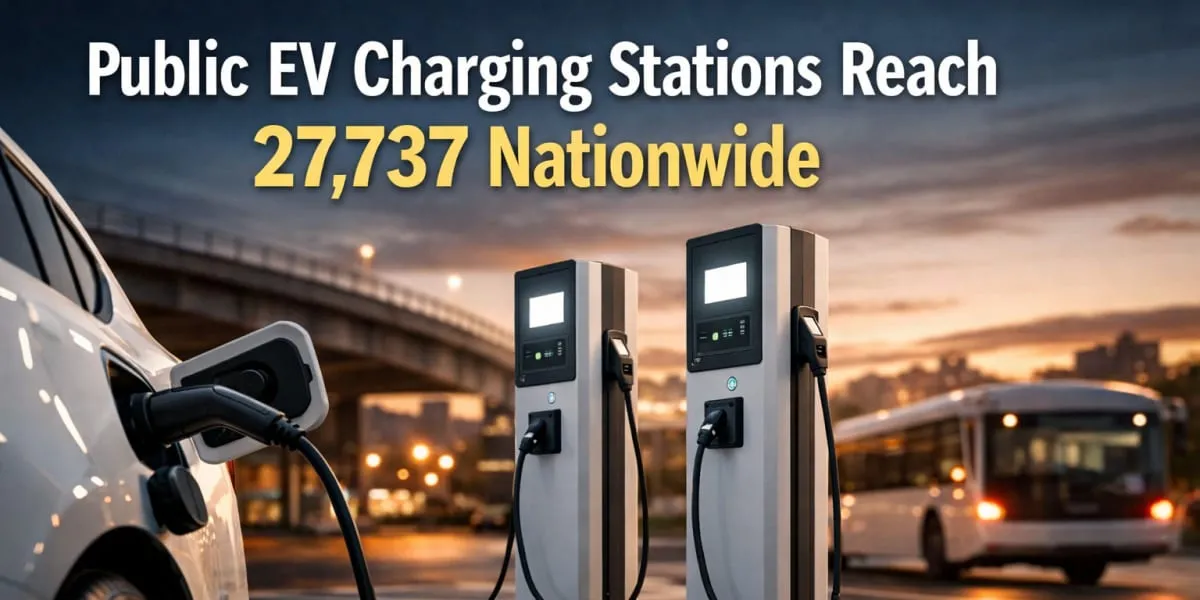
The government informed the Rajya Sabha that the number of public electric vehicle (EV) charging stations across India has reached 27,737, reflecting steady progress in charging infrastructure deployment. The expansion is intended to support growing adoption of electric mobility among passenger cars, commercial fleets and public transport. Wider availability of chargers is expected to reduce range anxiety and improve convenience for daily commuting and intercity travel.

Central programmes and policy incentives have encouraged both public and private investment in charging networks, supporting faster deployment across urban centres and highways. State governments and public sector entities have partnered with private companies to expand coverage and improve accessibility for users. The collaborative approach has sought to ensure that chargers cater to diverse needs, including slow and fast charging for different vehicle types. Investment models have included subsidies, concessional funding and public private partnerships to attract targeted capital for regional roll out.

Charging stations have been positioned at strategic locations such as highways, urban clusters, parking areas, commercial complexes and transport hubs to maximise convenience. Interoperability and standardisation efforts have been promoted to enhance usability, with common charging standards and digital platforms helping users locate stations and access services. These measures aim to improve user confidence and support seamless operation as vehicle numbers increase. Operators have been urged to provide clear pricing and payment options to streamline customer experience.

The growth in charging infrastructure also complements environmental objectives by encouraging a shift from conventional fuel based vehicles to electric mobility, contributing to lower emissions and improved air quality. Continued expansion of networks, supported by policy and investment, is expected to underpin further growth in EV sales and long term decarbonisation goals. Ongoing monitoring and targeted interventions will be important to maintain momentum and address regional disparities in infrastructure availability.

The government informed the Rajya Sabha that the number of public electric vehicle (EV) charging stations across India has reached 27,737, reflecting steady progress in charging infrastructure deployment. The expansion is intended to support growing adoption of electric mobility among passenger cars, commercial fleets and public transport. Wider availability of chargers is expected to reduce range anxiety and improve convenience for daily commuting and intercity travel. Central programmes and policy incentives have encouraged both public and private investment in charging networks, supporting faster deployment across urban centres and highways. State governments and public sector entities have partnered with private companies to expand coverage and improve accessibility for users. The collaborative approach has sought to ensure that chargers cater to diverse needs, including slow and fast charging for different vehicle types. Investment models have included subsidies, concessional funding and public private partnerships to attract targeted capital for regional roll out. Charging stations have been positioned at strategic locations such as highways, urban clusters, parking areas, commercial complexes and transport hubs to maximise convenience. Interoperability and standardisation efforts have been promoted to enhance usability, with common charging standards and digital platforms helping users locate stations and access services. These measures aim to improve user confidence and support seamless operation as vehicle numbers increase. Operators have been urged to provide clear pricing and payment options to streamline customer experience. The growth in charging infrastructure also complements environmental objectives by encouraging a shift from conventional fuel based vehicles to electric mobility, contributing to lower emissions and improved air quality. Continued expansion of networks, supported by policy and investment, is expected to underpin further growth in EV sales and long term decarbonisation goals. Ongoing monitoring and targeted interventions will be important to maintain momentum and address regional disparities in infrastructure availability.

Next Story
Real Estate

Loomcraft Enters South India with Kerala Store Launch

Loomcraft has launched its exclusive store in Kerala, marking its entry into South India and a key step in its nationwide expansion strategy. The move targets a region driven by tourism and premium real estate demand, where outdoor spaces play a central role in hospitality and residential experiences.Kerala’s growing base of luxury resorts, boutique hotels, villas and gated communities has created strong demand for specialised outdoor furniture. However, the region has remained underserved, with buyers relying on imports or generic products not suited to humid, coastal and monsoon-heavy cond..

Next Story
Building Material

Mild Steel Prices Seen Rising to Rs 61,000 Per Tonne

Mild steel prices in India, currently around Rs 58,000 per tonne, are expected to rise to nearly Rs 61,000 per tonne in April, indicating an increase of about Rs 3,000 per tonne. The anticipated rise reflects structural pressures driven by geopolitical tensions, energy constraints and limited raw material availability.Ongoing global conflict has disrupted energy markets, leading to LNG shortages that are affecting domestic steel production. Small and mid-sized manufacturers, particularly those dependent on gas-based processes, are witnessing production cuts due to constrained energy supply, re..

Next Story
Infrastructure Urban

Vedanta Expands Transgender Workforce to 75 Employees

Vedanta has strengthened its commitment to workplace inclusion by employing 75 transgender individuals across its businesses, including Vedanta Aluminium, Hindustan Zinc, Sesa Goa, FACOR and Cairn Oil & Gas. The initiative reflects sustained hiring efforts since 2022 to build equitable opportunities across operations, corporate and technical roles.Transgender employees are engaged in functions such as operations, finance, logistics, HR, CSR, healthcare and security, with provisions for internal mobility to support career progression. The company has implemented structured policies, includi..

Advertisement

Subscribe to Our Newsletter

Get daily newsletters around different themes from Construction world.

STAY CONNECTED

Advertisement

Advertisement

Advertisement