Speed Trial Likely On Vadapalani To Poonamallee Metro Stretch
ECONOMY & POLICY

Speed Trial Likely On Vadapalani To Poonamallee Metro Stretch

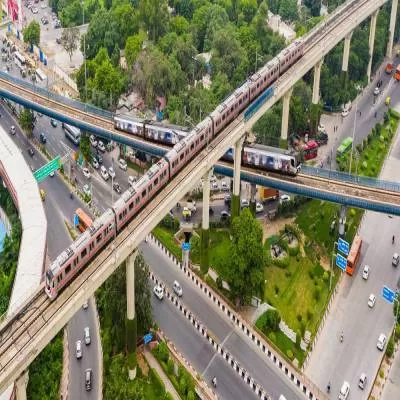
The final speed trial for Chennai Metro Rail Limited (CMRL) Corridor four Phase two stretch from Vadapalani to Poonamallee Bypass is expected towards the end of the third week of February ahead of regulatory approval. The Metro Rail Safety Commissioner (CMRS) continued statutory inspections on the priority section for a second consecutive day, bringing the project closer to the start of commercial operations. The schedule reflects completion of core systems and the planned sequencing of safety certification steps prior to passenger services.

Anant Madhukar Chowdhary, commissioner of Metro Rail Safety (Bengaluru Circle), inspected the elevated section between Iyyapanthangal and Vadapalani, covering eight and a half kilometre of the 14.64-kilometre priority corridor. The two-day inspection conducted on February 11 and 12 spanned 11 stations between Poonamallee Bypass and Vadapalani, including Porur Junction and Iyyapanthangal. The inspections focused on electrical systems, track alignment and civil infrastructure as part of the mandatory safety clearance process.

A CMRL release said the authority has chosen to prioritise extending services up to Vadapalani rather than commissioning the stretch only to Porur Junction in view of expected ridership patterns. The decision was taken to mitigate limited patronage resulting from the absence of direct connectivity with the operational Phase one network. Project teams are aligning commissioning plans to ensure integration with existing services when safety clearance permits.

With statutory inspections advanced and the speed trial planned, regulatory approval remains the final milestone before commercial operations can commence. Officials indicated completion of remedial works identified during inspections will determine the precise opening date and that coordination with the safety regulator will continue until all criteria are satisfied. The priority corridor advancement is intended to enhance connectivity and support network expansion once passenger services begin.

The final speed trial for Chennai Metro Rail Limited (CMRL) Corridor four Phase two stretch from Vadapalani to Poonamallee Bypass is expected towards the end of the third week of February ahead of regulatory approval. The Metro Rail Safety Commissioner (CMRS) continued statutory inspections on the priority section for a second consecutive day, bringing the project closer to the start of commercial operations. The schedule reflects completion of core systems and the planned sequencing of safety certification steps prior to passenger services. Anant Madhukar Chowdhary, commissioner of Metro Rail Safety (Bengaluru Circle), inspected the elevated section between Iyyapanthangal and Vadapalani, covering eight and a half kilometre of the 14.64-kilometre priority corridor. The two-day inspection conducted on February 11 and 12 spanned 11 stations between Poonamallee Bypass and Vadapalani, including Porur Junction and Iyyapanthangal. The inspections focused on electrical systems, track alignment and civil infrastructure as part of the mandatory safety clearance process. A CMRL release said the authority has chosen to prioritise extending services up to Vadapalani rather than commissioning the stretch only to Porur Junction in view of expected ridership patterns. The decision was taken to mitigate limited patronage resulting from the absence of direct connectivity with the operational Phase one network. Project teams are aligning commissioning plans to ensure integration with existing services when safety clearance permits. With statutory inspections advanced and the speed trial planned, regulatory approval remains the final milestone before commercial operations can commence. Officials indicated completion of remedial works identified during inspections will determine the precise opening date and that coordination with the safety regulator will continue until all criteria are satisfied. The priority corridor advancement is intended to enhance connectivity and support network expansion once passenger services begin.

Next Story
Technology

AI-Enabled Workflows Lift Profitability and Productivity

Organisations modernising frontline workflows with artificial intelligence, automation and real-time data are reporting stronger financial performance, higher productivity and improved employee engagement, according to a global study by Zebra Technologies and Oxford Economics.The research covered 1,000 senior leaders across retail, manufacturing, transportation and logistics in the US, Mexico, the UK, Germany, India, Japan, Australia and New Zealand.In transportation and logistics, 54 per cent of companies that improved picking and packing operations reported faster operational performance, wh..

Next Story
Real Estate

India Leads Global AI Readiness but Implementation Lags

Indian companies lead global averages across all eight artificial intelligence readiness indicators tracked by JLL, but only 19 per cent have started making changes to their workplaces, according to the JLL 2026 Future of Work Survey.The study found that 77 per cent of Indian business leaders expect AI to change their office requirements, creating a 58-percentage-point gap between awareness and implementation. The survey covered more than 2,200 CEOs, CFOs and real estate leaders across 21 countries during the first quarter of 2026.Despite concerns over automation, 58 per cent of Indian leaders..

Next Story
Equipment

Three WOLFF Cranes Build Riyadh Cable-Stayed Bridges

Three WOLFF 180 B luffing jib cranes are supporting the construction of two cable-stayed bridges alongside the existing Wadi Laban Bridge in Riyadh, Saudi Arabia. The project is being developed for the Royal Commission for Riyadh City and executed by the ICRC joint venture comprising IC Ictas and Al Rashid Trading & Contracting Company.The cranes are handling lifting operations including formwork, reinforcement, concrete placement, work platforms, surveying equipment and other construction materials. Each crane is fitted with a 40 m jib, reaches a hook height of 157 m and offers a maximum ..

Advertisement

Subscribe to Our Newsletter

Get daily newsletters around different themes from Construction world.

STAY CONNECTED

Advertisement

Advertisement

Advertisement