+
TDB And DST Back Indigenous 700 Bar Hydrogen Storage
ECONOMY & POLICY

TDB And DST Back Indigenous 700 Bar Hydrogen Storage

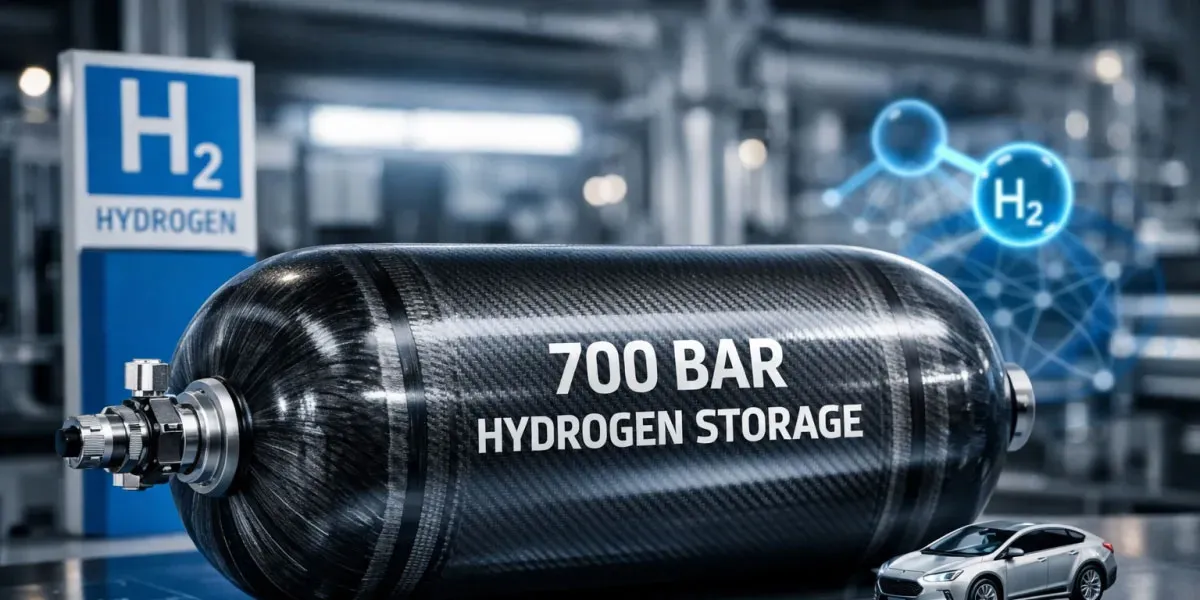
The Technology Development Board (TDB), Department of Science and Technology (DST), Government of India, has signed an agreement with Gudlyf Mobility Private Limited of Madurai to provide financial assistance for the development and commercialisation of indigenous high-pressure hydrogen storage systems based on advanced composite technologies. The support targets next-generation 700 bar working pressure Composite Overwrapped Pressure Vessels (COPVs) and related manufacturing processes developed by the deep-tech startup. The company has developed proprietary intellectual property in Type IV and Type V composite cylinder technologies that address challenges in lightweight high-pressure hydrogen storage.

The project supported by TDB aims to establish an advanced manufacturing facility in Madurai for high-performance composite pressure vessels and associated testing infrastructure. The technology is intended to cater to mobility and stationary hydrogen storage, unmanned aerial vehicles, compressed natural gas and compressed biogas storage solutions, and defence and aerospace applications. The initiative is designed to reduce import dependence in high-pressure storage systems and strengthen domestic manufacturing capabilities in advanced composites.

The Secretary of TDB said that hydrogen is central to India's long-term clean energy and decarbonisation strategy and that supporting indigenous high-pressure storage technologies is critical to building a resilient hydrogen value chain within the country. TDB described its assistance to Gudlyf Mobility as a reflection of continued commitment to enabling commercialisation of strategic deep-tech innovations that bolster energy security and advanced manufacturing. Founders of Gudlyf Mobility welcomed the support and indicated that the partnership validates their indigenous composite pressure vessel technology and will enable scaling of advanced manufacturing capabilities in Madurai to contribute to the clean energy transition and strategic sectors.

The focus on COPVs at 700 bar working pressure is positioned as a critical enabler for the emerging hydrogen economy and for reducing reliance on imports of specialised high-pressure storage hardware. The project is expected to support development of testing protocols, quality assurance and workforce skills necessary for scale. TDB assistance is presented as part of a broader effort to nurture strategic deep-tech enterprises and to strengthen domestic value chains in advanced composites and hydrogen systems.

The Technology Development Board (TDB), Department of Science and Technology (DST), Government of India, has signed an agreement with Gudlyf Mobility Private Limited of Madurai to provide financial assistance for the development and commercialisation of indigenous high-pressure hydrogen storage systems based on advanced composite technologies. The support targets next-generation 700 bar working pressure Composite Overwrapped Pressure Vessels (COPVs) and related manufacturing processes developed by the deep-tech startup. The company has developed proprietary intellectual property in Type IV and Type V composite cylinder technologies that address challenges in lightweight high-pressure hydrogen storage. The project supported by TDB aims to establish an advanced manufacturing facility in Madurai for high-performance composite pressure vessels and associated testing infrastructure. The technology is intended to cater to mobility and stationary hydrogen storage, unmanned aerial vehicles, compressed natural gas and compressed biogas storage solutions, and defence and aerospace applications. The initiative is designed to reduce import dependence in high-pressure storage systems and strengthen domestic manufacturing capabilities in advanced composites. The Secretary of TDB said that hydrogen is central to India's long-term clean energy and decarbonisation strategy and that supporting indigenous high-pressure storage technologies is critical to building a resilient hydrogen value chain within the country. TDB described its assistance to Gudlyf Mobility as a reflection of continued commitment to enabling commercialisation of strategic deep-tech innovations that bolster energy security and advanced manufacturing. Founders of Gudlyf Mobility welcomed the support and indicated that the partnership validates their indigenous composite pressure vessel technology and will enable scaling of advanced manufacturing capabilities in Madurai to contribute to the clean energy transition and strategic sectors. The focus on COPVs at 700 bar working pressure is positioned as a critical enabler for the emerging hydrogen economy and for reducing reliance on imports of specialised high-pressure storage hardware. The project is expected to support development of testing protocols, quality assurance and workforce skills necessary for scale. TDB assistance is presented as part of a broader effort to nurture strategic deep-tech enterprises and to strengthen domestic value chains in advanced composites and hydrogen systems.

Next Story
Infrastructure Energy

Jyoti Structures expands manufacturing capacity in Nashik

The announcement Jyoti Structures (JSL) reported steady operational performance in 2025, supported by stable project execution across its power transmission portfolio. The company commissioned galvanisation operations at its second Nashik manufacturing unit, adding 33,000 MT of annual capacity. This increased aggregate tower manufacturing capability at Nashik to approximately 69,000 MT per annum, aimed at improving fabrication accuracy, scheduling control and delivery predictability. JSL also expanded its workforce to over 750 employees, onboarding more than 70 engineers during the year. C..

Next Story
Infrastructure Energy

TSPL Mega Health Camp Reaches 338 Residents in Mansa

Talwandi Sabo Power (TSPL), Punjab’s largest and North India’s largest private thermal power plant, organised a Mega Health Camp at Village Raipur, Mansa, under its flagship healthcare initiative Project SEHAT. The camp benefitted 338 community members through free consultations and diagnostic services.A team comprising a General Physician, Gynaecologist, Dermatologist and Dentist provided medical advice and treatment. Beneficiaries received free diagnostic tests including BP, HB, blood sugar, malaria, dengue and blood group tests, along with free medicines.The camp was inaugurated by Vill..

Next Story
Infrastructure Transport

Mumbai Coastal Road Musical Path Plays Jai Ho

Mumbai inaugurated India’s first musical path on the Coastal Road that plays the song Jai Ho for motorists. The civic administration said the installation used Hungarian technology and that the intention was to implement the concept of Sangeet Marg in future projects. A senior official suggested implementing a pilot on the Samruddhi Expressway, which connects Mumbai and Nagpur. City officials described the inauguration as a symbolic demonstration of collaboration between municipal authorities and foreign partners. The inauguration was attended by the Consul General of Hungary Ferenc Jari, f..

Advertisement

Subscribe to Our Newsletter

Get daily newsletters around different themes from Construction world.

STAY CONNECTED

Advertisement

Advertisement

Advertisement

Open In App